Tag: Brad Whitford

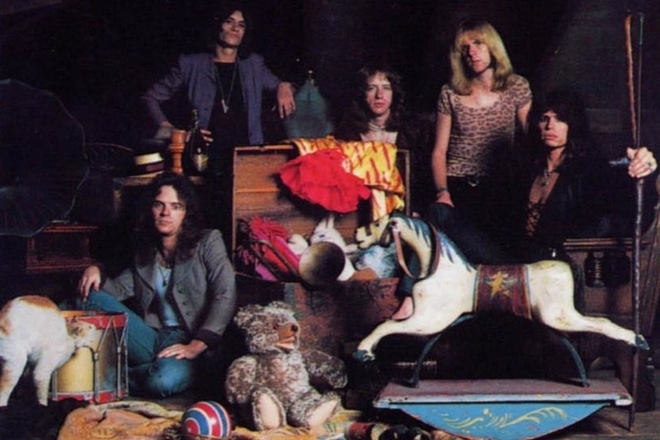
  • Aerosmith- Rocks 50th! Steven Tyler, Joe Perry, Tom Hamilton, Brad Whitford, Joey Kramer

    Aerosmith- Rocks 50th! Steven Tyler, Joe Perry, Tom Hamilton, Brad Whitford, Joey Kramer

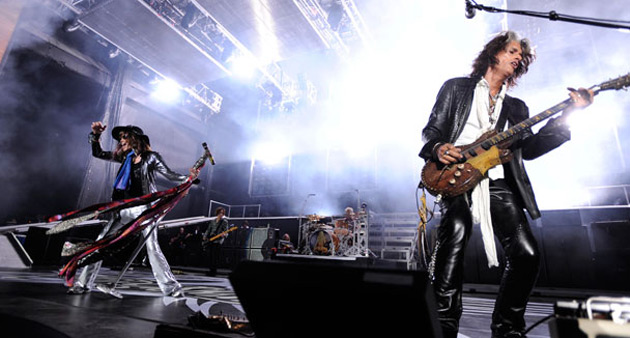
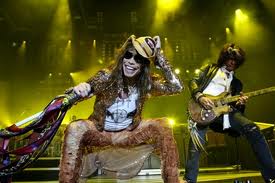
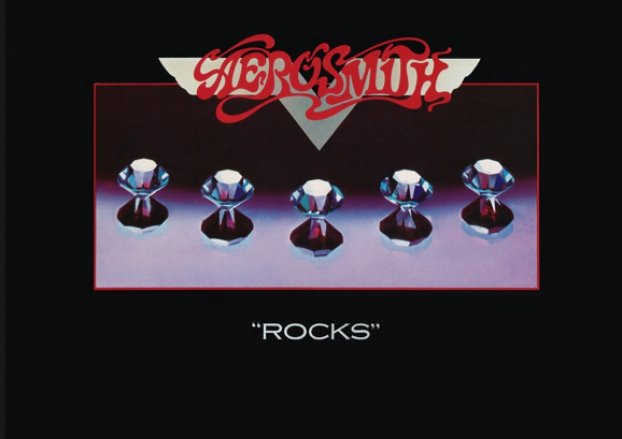
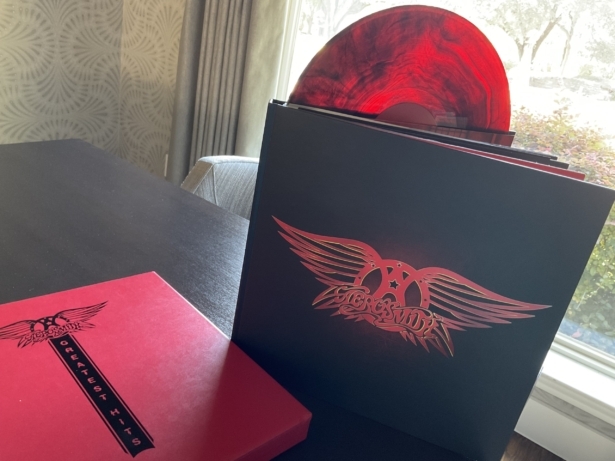
    Aerosmith Rocks was the two-word musical manifesto decreed in May 1976 by America’s pre-eminent hard rock band. With timeless rockers “Back in the Saddle”, “Sick as a Dog”, the musical answer to “Toys in the Attic” with the clever “Rats in the Cellar”, and the toe-tapper against type “Last Child” all on board, Aerosmith Rocks was both a statement of intent as well as a warning fifty years ago.

    Without equivocation, Aerosmith Rocks in Spring 1976 was a declarative statement.  If Toys in the Attic a year earlier had been the definitive mid-Seventies  American hard rock statement, then Aerosmith Rocks made it musically imperative. The Boston-based quintet pummeled us with “Back in the Saddle”, “Sick as a Dog”, the clever sequel to “Toys…” with “Rats in the Cellar”, and another infectious Steven Tyler/Brad Whitford hit, “Last Child”.  At the Hartford radio station I worked at then, we rushed the plain white test pressing of Aerosmith Rocks  into the control room and onto the air so quickly that it had to be over a year before I ever saw what the actual cover art looked like. Joe Perry, Tom Hamilton, Brad Whitford, Joey Kramer, and the inimitable Steven Tyler weigh in on this diamond-hard classic, Rocks (#366 on Rolling Stone magazine’s Top 500 list as of 2020), on its golden anniversary.

    This is not the first time in the band’s fifty+ years that Aerosmith has been on hiatus. Joe Perry took time for my classic rock interview to discuss the challenges of maintaining the same personnel over the long career arc of this seminal American band.

    Redbeard: Joe, there was one song some fifty-plus years ago that was on the set list for both Steven Tyler’s New York City high school band, which played the Lake Sunapee NH resort clubs in the summer,  and  the garage band that you and New Hampshire bass player Tom Hamilton had.

    Joe Perry: “I think it was Train Kept a Rollin’ ‘. That Yardbirds song.  But the blues in the English form of the word, ya know, the blues that had been already taken and redefined by the English bands.  I mean, I knew people that were these blues players.  In fact  in our band, Tom Hamilton and I had a guy named John McGuire, and he really wanted to play blues.  He really wanted to wear baggy jeans and be barefoot and  just play Howlin’ Wolf songs and Muddy Waters songs , just the way that they did it.  Ya know?  We basically made a decision.  We said, ‘”No, we want to wear white Capezios  and play some big amps and wear tight pants.  Ya know, we want to rock.  And at  that point he left and stayed up in the woods, up in New Hampshire, and Tom and I went down to Boston to seek our fortunes.  So we weren’t really like blues fanatics, I mean we knew where it came from and we were inspired by it.  But we liked the energy and the excitement of the rock.  So the song that we had in common (with Steven Tyler) was this song called “Train Kept A’Rollin’ “.  And you’re right, it is a blues song, and as we kinda learned who did it,  and then we listened back and it was actually not even a blues song, in the form that basically the Yardbirds took.  If you listen to the Tiny Bradshaw version with all the answer backs and the callin’  , it was all like kinda swingy and big band-y and the blues was definitely this kind of thing beneath it all.  And I don’t think we realized it at that point,  how important it was to us.”
    RB: By listening to Yardbirds songs from England, even though the song was written by African-Americans,  blues was then and is now a common language between musical strangers.

    JP: “That was kind of traditional in the way bands (like Aerosmith ) got together.  If it was somebody that you were basically looking for a guitar player or a drummer, you’d first start talking to them and kind of see where they’re at, if you got along, and you had some common interest, then obviously you talk about music.  And then when you got down to it, the more songs that you knew in common defined what kind of taste you had ,  and kind of put you in the running to join the band or form a band with these other guys.  So, for us it was just that one song.  ‘Cause Steven’s band was a little more vocal heavy.  They, they had two or three guys that could sing and sing really strong harmony.  So they were able to cover Beatles songs and Steve Miller songs and Byrds songs.  So they were able to sing more of that kind of pop harmony- driven kind of thing.  Whereas Tom and I were more into the crunchy guitar stuff and to us singing was just something to take up space between guitar solos !There are a lot of people that make a living at reproducing ,or trying to reproduce, the old classics.  And we don’t consider Aerosmith as blues players so to speak.  And I just wanted to make that clear that we don’t and didn’t and don’t feel like we wouldn’t put ourselves in that driver’s seat.  I mean we’re a rock band and we have been influenced by the blues.  I mean all of our pop music that we listen to now comes from the blues.  Everything has its roots there. Aerosmith just wanted  to kind of honor that and then put our own stamp on those kind of tunes.  There are a lot of people that hear blues and they think BB King, Eric Clapton and Buddy Guy and that’s it.  And then the new guys are, ya know, Johnny Lang and somewhat new guy is Robert Cray.  And that’s it.  That’s what they think of as blues.  I mean they are only exposed to so much. I think the music does the talking.  Once you hear it, you don’t have to talk about it anymore.”
    RB: To prove to you that blues is the musical ground that Aerosmith sprang from, and is rooted in to this day, recall the very first song you ever wrote with Aerosmith lead singer Steven Tyler 50 years ago.

    JP: “Yeah, that’s easy.  That’s like (plays guitar).  That was” Movin’ Out”.  That was the first Aerosmith song that we wrote.  And the lyric was very descriptive of our life, what was going on for us.  Which again, is very bluesy.  (Sings “We all live on the edge of town, where we all live ain’t no one around…” ).  That’s why we got a really good singer !  We figured if there was somebody going to be taking up time with two guitar solos, you got to be as good as you can be.”

    RB: “Movin’ Out” on the first Aerosmith album was unadulterated blues no matter how you slice it.  But self-appointed blues purists can be very territorial,  and unfortunately that’s nothing new.  I reminded Joe Perry of Aerosmith how Texas blues rocker Johnny Winter had used his celebrity in the mid-seventies at the peak of his career to do a series of Muddy Waters albums on Winter’s Blue Sky label.  The attacks that the critics launched against Winter were alarming.  But the series was certainly one of Muddy’s biggest paydays ever,  and exposed Muddy Waters’ music to a whole new mainstream audience.

    JP: “Yeah, it did.  And at that point in Muddy’s career, he was kind of resting on his laurels at that point.  And I don’t think he was playing with the best people, but Johnny made it a point to try and get people that really gave a sh*t.  And surround him with some great players and just injected a vibe of ” Let’s do this “ ,‘cause he loves Muddy so much . And just as a tribute to give something back.  It was like when Keith Richards did (the movie) Hail Hail Rock and Roll with Chuck Berry to kinda say at this end of his career, ‘Berry’s always playing with these sh*tty pick-up bands.  I want to put him with a real band at least for once, ya know, have him do his songs, ya know, doing the honor of doing that.’ So I think that with Johnny Winter playing it really inspired Muddy, ya know. Because I think Johnny was one of the guys that Muddy really had a lot of respect for,  and didn’t mind him lurking around, ya know.  What about the Electric Mud album? I mean obviously Muddy wanted to try something, ya know. But at least he did something that was really true to what he does… what he did.  I mean that recording of “Mannish Boy” is like unstoppable. I mean, that is a force of nature.”  –Redbeard
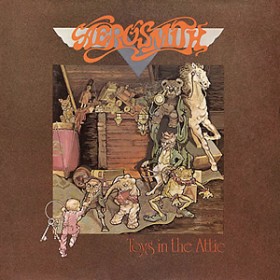
  • Aerosmith- Toys in the Attic- Steven Tyler, Brad Whitford, Joey Kramer, Tom Hamilton, Joe Perry

    Aerosmith- Toys in the Attic- Steven Tyler, Brad Whitford, Joey Kramer, Tom Hamilton, Joe Perry

    We dust off Toys in the Attic,  the breakthrough third album for Aerosmith in  April 1975. Toys in the Attic  was the foothold  for Aerosmith to climbing the sales charts on their way to becoming America’s most popular and influential hard rock band. Containing perennial favorites “Walk This Way”,”Sweet Emotion”, the first anti-child abuse song “Uncle Salty”, the circular contagion of “No More, No More”, a swingin’ cover of Bullmoose Jackson’s bawdy “Big Ten Inch”, and the riff rock title song, Toys in the Attic  showed that my guests Steven Tyler, Brad Whitford, and Joey Kramer, along with bassist Tom Hamilton and lead guitarist Joe Perry, were not toying around.

    Contrary to what you might assume, through their first two albums Aerosmith struggled to get noticed. In this classic rock interview, Aerosmith drummer Joey Kramer reminded me that “Dream On” from their debut by then had been released as a single three times,  and flopped twice. Sure, a few of us intrepid radio deejays played it  plus by several songs  on Get Your Wings (my efforts were confirmed years later in the band’s autobiography Walk This Way  when Aerosmith noted that, outside of the Boston base, their next biggest crowds & sales circa 1973-74 were in Marion, Ohio), but Toys in the Attic changed all that in Spring 1975, eventually racking up over eight million copies sold and a ranking of #229 on Rolling Stone magazine’s Top 500 Albums of All Time list. –Redbeard
    (
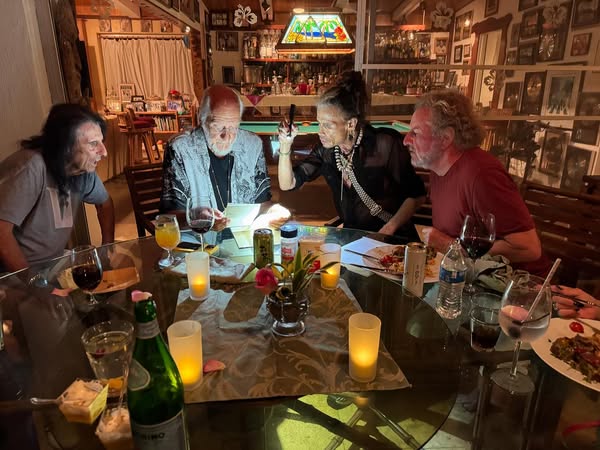
    Rock stars do homework, too: L-R Alice Cooper, Mick Fleetwood, Aerosmith’s Steven Tyler, and Sammy Hagar inspect Peter Green’s original hand-written lyrics for Fleetwood Mac’s “Rattlesnake Shake”)

  • Montrose- Ronnie Montrose, Sammy Hagar, Ricky Phillips

    Montrose- Ronnie Montrose, Sammy Hagar, Ricky Phillips

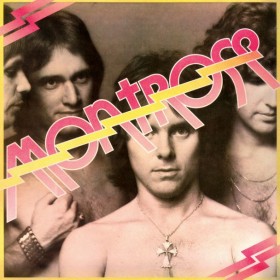
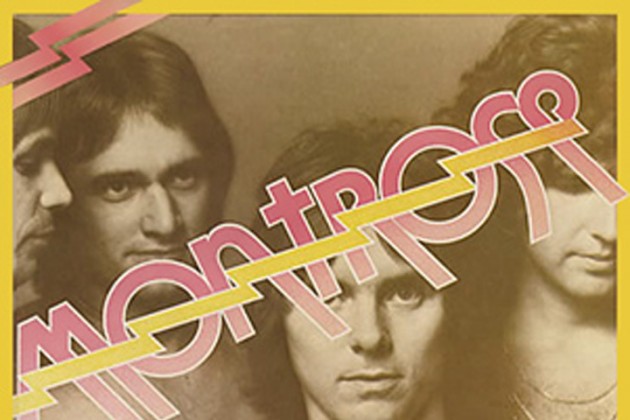
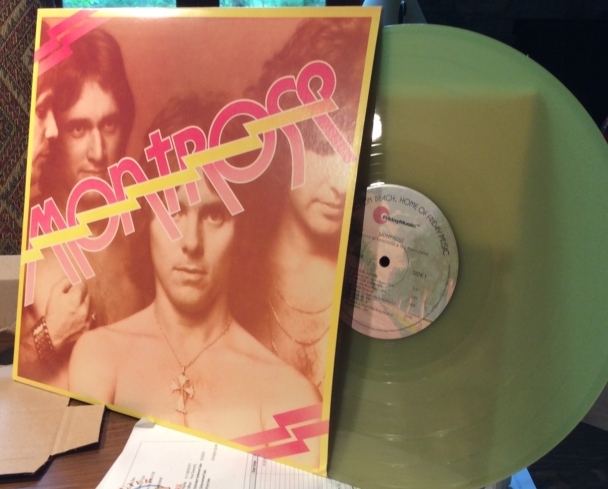
    This “Ronnie Montrose Tribute” features my classic rock interviews with the late guitarist Ronnie Montrose, plus original Montrose band singer/songwriter Sammy Hagar. Sammy  takes a personal look back at the first Montrose album released in October 1973, widely cited by members of Van Halen to Def Leppard as the all-important missing link in the evolution of hard rock.

    That album and the follow-up, Paper Money, have been remastered  and now frame the,  sadly, final  Ronnie Montrose swan song album 10×10  featuring a galaxy of stars. Cameos include Gregg Rolie of Santana and Journey, Tommy Shaw and Lawrence Gowan of Styx, Sammy Hagar, Steve Lukather, Edgar Winter, Rick Derringer, Joe Bonamassa, Phil Collen of Def Leppard, Brad Whitford of Aerosmith, Mark Farner, Glenn Hughes, drummer Eric Singer, and veteran Styx bass player/tribute producer Ricky Phillips, who joins us here In the Studio as well.
    Guitarist namesake Ronnie Montrose’s credentials as a sideman were impressive, versatile enough to play tasty acoustic guitar on Van Morrison’s seminal Tupelo Honey and then turn around to power chord Edgar Winter Group’s “Frankenstein” into rock history as the only #1 rock instrumental ever. We would later hear echoes of that first 1973 Montrose  album in the 1978 Van Halen debut. Even though commercial success eluded them, their influence was indelible, and that first RonMon album would be the linchpin for much of the modern hard rock sound that would follow. Ronnie Montrose, who passed in 2013, shared with In The Studio   host Redbeard Ronnie’s  theory on why his early work is still cited almost fifty years later, while Ricky Phillps details the fifteen year odyssey of this 2017   10×10   project. –Redbeard Photo Credit: DJ Photography

  • Aerosmith- Get a Grip- Steven Tyler, Joe Perry,Tom Hamilton, Brad Whitford, Joey Kramer

    Aerosmith- Get a Grip- Steven Tyler, Joe Perry,Tom Hamilton, Brad Whitford, Joey Kramer

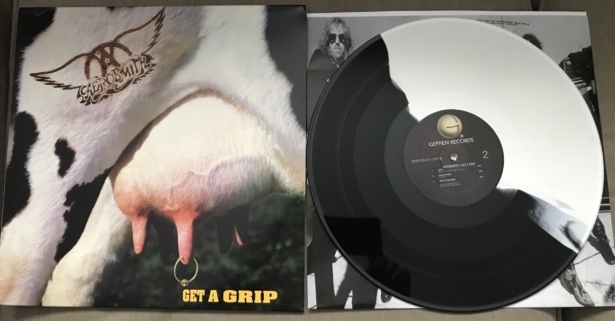
    “Livin’ on the Edge”, “Cryin’”,”Eat the Rich”, “Fever”,”Line Up”,”Amazing” …any wonder that Get a Grip is Aerosmith’s biggest-selling album worldwide at over twenty…that’s twenty… million copies? The entire band sat down with me In the Studio to milk all the details behind Get a Grip  in a revealing classic rock interview with Aerosmith, an American treasure.

    Even after the 1989 record-setting success of Aerosmith Pump barely four years earlier, the song sources from which to choose for Get a Grip  were so plentiful and so strong for Aerosmith that even the 75 minute capacity of the compact disc could not hold them all. “Deuces Are Wild” ended up on The Beavis and Butthead Experience  soundtrack, while my personal favorite, “Head First”, has the highly significant distinction of being the first song by a major band to be distributed over the internet. “Head First” by Aerosmith was the first major band internet music download on June 27, 1994 to about ten thousand CompuServe subscribers, including Q102 Dallas/Ft. Worth, where it took us almost 24 hours to download less than four minutes of WAV file music back then! –Redbeard

  • Aerosmith- Steven Tyler, Joe Perry, Tom Hamilton

    Aerosmith- Steven Tyler, Joe Perry, Tom Hamilton

    This classic rock interview is a real treat because you will hear Aerosmith lifers Steven Tyler, Joe Perry, and Tom Hamilton reminiscing about pre-Aerosmith hopes and dreams  on the eve of their debut release; not fitting in and “feeling like an outcast”; playing in rival bands, digging on British Invasion bands like the Yardbirds, and playing in nightclubs for beer because nobody showed  up. You see nobody, not even America’s hard rock GOAT, Aerosmith, starts at the top.

    Redbeard:  Joe Perry, before forming Aerosmith there was one song  that was on the set list for both Steven Tyler’s New York City high school band, which played the Lake Sunapee NH resort clubs in the summer,  and  the garage band that you and New Hampshire bass player Tom Hamilton had.

    Joe Perry:  I think it was “Train Kept a Rollin’ “, that Yardbirds song.  But the blues in the English form of the word, ya know, the blues that had been already taken and redefined by the English bands.  I mean I knew people that were these blues players.  In fact, in our band, Tom Hamilton and I had a guy named John McGuire, and he really wanted to play blues.  He really wanted to wear baggy jeans and be barefoot and  just play Howlin’ Wolf songs and Muddy Waters songs, just the way that they did it.  Ya know?  We basically made a decision.  We said, ‘”No, we want to wear white Capezios  and play through big amps and wear tight pants.  Ya know, we want to rock.”  And at  that point he left and stayed up in the woods, up in New Hampshire, and Tom and I went down to Boston to seek our fortunes.  So we weren’t really like blues fanatics, I mean we knew where it came from and we were inspired by it.  But we liked the energy and the excitement of the rock.  So the song that we had in common (with Steven Tyler) was this song called “Train Kept A’Rollin’ “.  And you’re right, it is a blues song, and as we kinda learned who did it,  and then we listened back and it was actually not even a blues song in the form that basically the Yardbirds took.  If you listen to the Tiny Bradshaw version with all the answer backs and the callin’, it was all like kinda swingy and big band-y, and the blues was definitely this kind of thing beneath it all.  And I don’t think we realized it, at that point,  how important it was to us.

     RB:   By listening to Yardbird songs from England, even though the song was written by African-Americans,  blues was then and is now a common language between musical strangers.

    JP:   That was kind of traditional in the way bands got together.  If it was somebody that you were basically looking for a guitar player or a drummer, you’d first start talking to them and kind of see where they’re at, if you got along and you had some common interests, then obviously you talk about music.  And then when you got down to it, the more songs that you knew in common defined what kind of taste you had,  and kind of put you in the running to join the band or form a band with these other guys.  So for us it was just that one song. ‘Cause Steven’s band was a little more vocal heavy.  They had two or three guys that could sing and sing really strong harmony,  so they were able to cover Beatles songs and Steve Miller songs and Byrds songs.  So they were able to sing more of that kind of pop harmony- driven kind of thing.  Whereas Tom and I were more into the crunchy guitar stuff, and to us singing was just something to take up space between guitar solos ! There are a lot of people that make a living at reproducing, or trying to reproduce, the old classics.  And we don’t consider ourselves in Aerosmith blues players, so to speak.  And I just wanted to make that clear, that we  didn’t and don’t feel like we would put ourselves in that driver’s seat.  I mean we’re a rock band and we have been influenced by the blues.  I mean all of our pop music that we listen to now comes from the blues.  Everything has its roots there.  So we just wanted to kind of honor that and then put our own stamp on those kind of tunes.  There are a lot of people that hear blues and they think BB King, Eric Clapton and Buddy Guy and that’s it.  And then the new guys are, ya know, Johnny Lang and medium new guy is Robert Cray.  And that’s it.  That’s what they think of as blues.  I mean they are only exposed to so much. I think the music does the talking.  Once you hear it, you don’t have to talk about it anymore. RB:  To prove that blues is the musical ground that Aerosmith sprang from, and is rooted in to this day, recall the very first song you ever wrote with Aerosmith lead singer Steven Tyler over fifty years ago.

    JP:   Yeah, that’s easy.  That’s like (plays guitar).  That was” Movin’ Out”.  That was the first song that we wrote.  And the lyric was very descriptive of our life, what was going on for us.  Which again, is very bluesy.  (Sings “We all live on the edge of town, where we all live ain’t no one around…” ).  That’s why we got a really good singer! We figured if there was somebody going to be taking up time between guitar solos, you got to be as good as you can be.

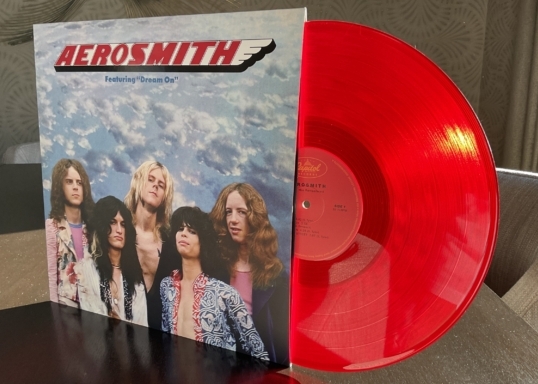
    RB:   “Movin’ Out” on the January 1973  debut Aerosmith  was unadulterated blues no matter how you slice it.  But self-appointed blues purists can be very territorial,  and unfortunately that’s nothing new.  I reminded Joe Perry of Aerosmith how Texas blues rocker Johnny Winter had used his celebrity in the mid-seventies at the peak of his career to do a series of Muddy Waters albums on Winter’s Blue Sky label.  The attacks that the critics launched against Winter were alarming.  But the series was certainly one of Muddy’s biggest paydays ever,  and exposed Muddy Waters’ music to a whole new mainstream audience.

    JP:   Yeah, it did.  And at that point in Muddy’s career, he was kind of resting on his laurels at that point.  And I don’t think he was playing with the best people, but Johnny made it a point to try and get people that really gave a sh*t.  And surround him with some great players and just injected a vibe of ” Let’s do this “ ,‘cause he loves Muddy so much. And just as a tribute to give something back.  It was like when Keith Richards did (the movie) Hail Hail Rock and Roll with Chuck Berry to kinda say at the end of his career,” Berry’s always playing with these sh*tty pick-up bands.  I want to put him with a real band at least for once, ya know, have him do his songs, ya know, doing the honor of doing that.”  So I think that with Johnny Winter playing it really inspired Muddy, ya know.  Because I think Johnny was one of the guys that Muddy really had a lot of respect for.  And didn’t mind him lurking around, ya know.  What about the Electric Mud album? I mean obviously Muddy wanted to try something, ya know.  But at least he did something that was really true to  what he did.  I mean that recording of “Mannish Boy” is like unstoppable.  I mean that is a force of nature. –Redbeard