 When she played a memorable acoustic set on Memorial Day weekend at Austin’s Auditorium Shores back in 1987, Bonnie Raitt obliged the appreciative Texas audience with her now-standards “Angel from Montgomery” by the late great John Prine and Sippie Wallace’s “Women Be Wise” as well.But what really turned it up a notch was when Bonnie called out hometown harp honker Kim Wilson, then of the Fabulous Thunderbirds, to join her on Chris Smithers’ “Love Me Like a Man”.-Redbeard
Tag: John Prine
-

Bonnie Raitt- Love Me Like a Man- Austin- Memorial Day 1987
-
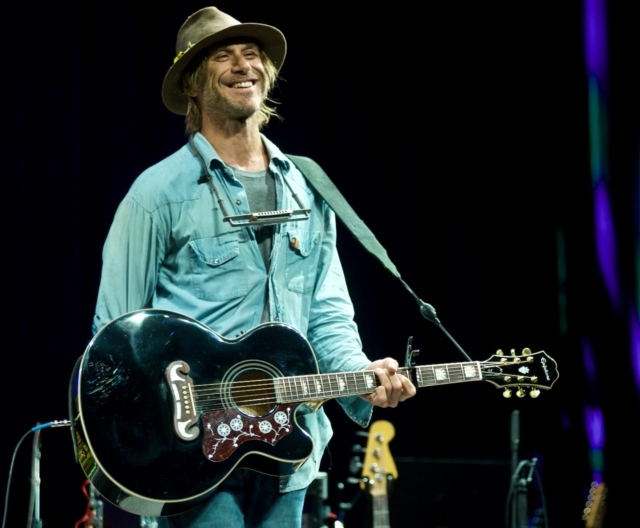
Todd Snider, Prolific Songwriter, Gone at 59
“I’ve only been good at this one particular grift. I can go into a Folk Music house and play those three chords…Anytime I’ve tried to deviate from my one little shtick that Keith Sykes taught me I’ve always ended up with the car in a tree.” – Todd Snider, July 2007
It has been shocking to read reports of prolific singer/songwriter Todd Snider’s death, and it has been painful to read the the loss to so many in the Americana music world. So many of my personal friends and music business professionals who I love and respect clearly loved Todd Snider.To them and to all of Todd Snider’s fans, I offer my 2007 conversation with him where Todd is very much alive. May God welcome him home. Can’t wait to here what Todd comes up with next. -Redbeard

-
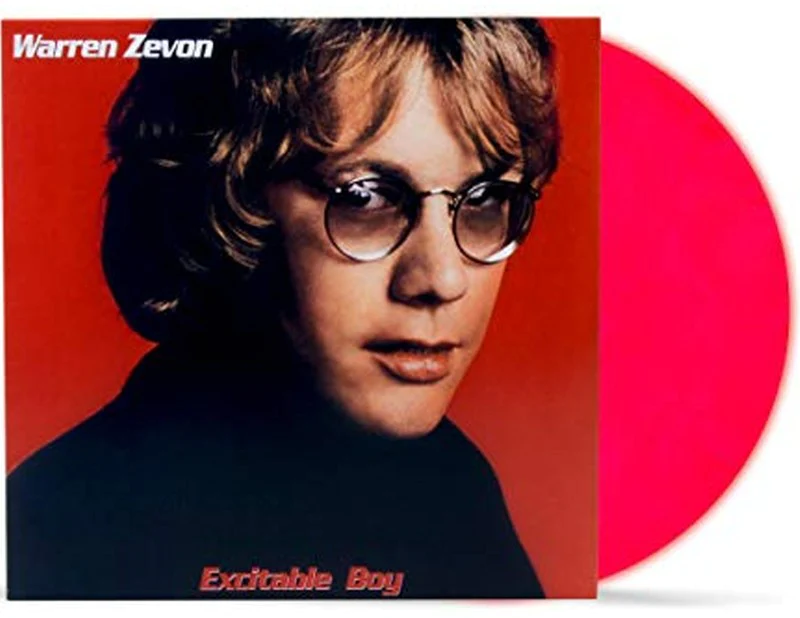
Warren Zevon- Excitable Boy
Even before he planted his flag in the awareness of mainstream rock fans with his third album, Excitable Boy in January 1978, it turns out that I had been an admirer of Warren Zevon’s songwriting talent almost ten years earlier without realizing it. “I wrote a couple of songs that The Turtles did that paid the rent for awhile. One was called ‘Like the Seasons’ and was the B-side to ‘Happy Together’, and the other was ‘Outside Chance’.” By the time Warren Zevon’s third album, Excitable Boy, was released in January 1978, he already had hits, albeit recorded by Linda Ronstadt at her career peak with Zevon’s “Poor Poor Pitiful Me”, “Carmelita”, and “Hasten Down the Wind”. But because the hit “Werewolves of London” was most people’s first impression of Warren as a performer, he was tagged unfairly with the “novelty song singer” label. When it was first released, I remember having to reconcile several things about Excitable Boy, not the least of which being that several of the songs, at least for the times, seemed downright subversive!
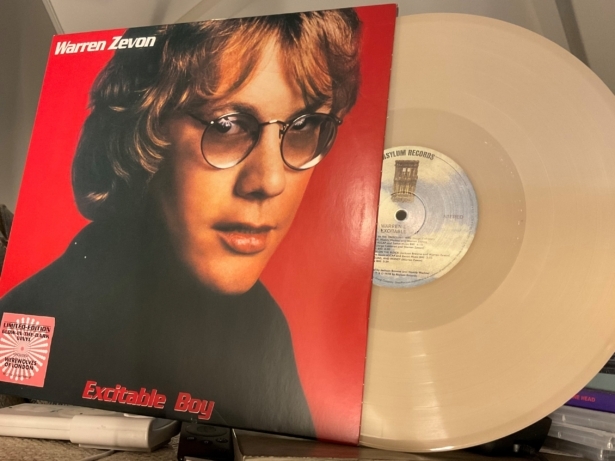 (And this copy actually glows in the dark. Ah-OOOOO!)
There was “Roland the Headless Thompson Gunner”, an unblinking yet tongue-in-cheek look at the shadowy world of mercenaries and gunrunners in third-world hotspots. The title song was a lighthearted romp through the anatomy of a psychotic serial killer, complete with girl group backup singers, while the raucous rocker “Lawyers, Guns, and Money” was highly autobiographical, as we find out in my classic rock interview.
 Yet on the same tune stack was Zevon’s “Tenderness on the Block”, a touching look at the loneliness of senior citizens. Not since John Prine’s “Hello in There” (somehow written when Prine was a mere 19) has a young songwriter such as Zevon, not yet old enough to have experienced a teenage daughter of his own coming of age, written so convincingly of an emotion about which he could not yet had any first-hand personal knowledge.
 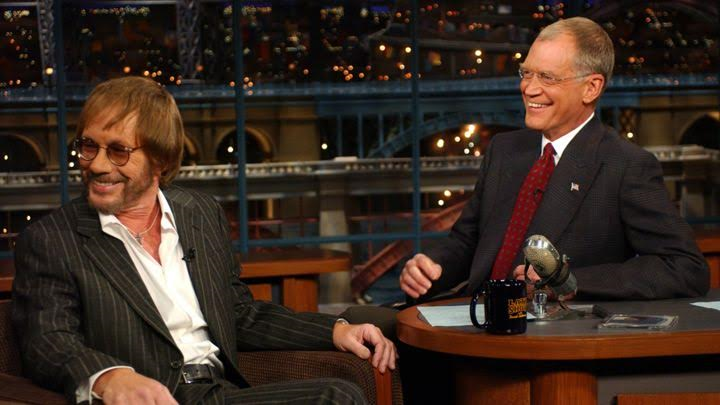 ( Warren Zevon guesting with one of his biggest fans, David Letterman, on Late Night )
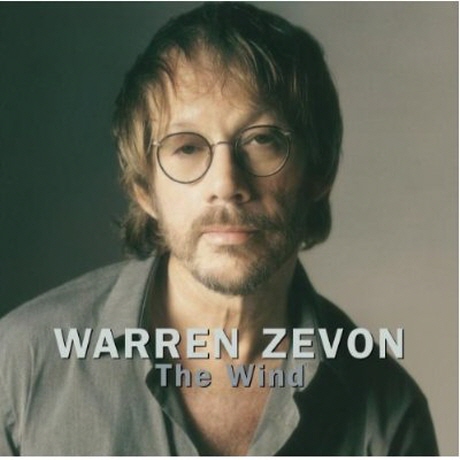
 Both Warren Zevon’s final Grammy-grabbing album The Wind, as well as his premature death from inoperable lung cancer, occurred in 2003. Included here are three songs from The Wind, including “Disorder in the House”, the new Republican congressional theme song, with Bruce Springsteen joining Warren on backing vocals; “Prison Grove”, an atmospheric, cinematic tone poem of despair; and the tender lump-in-the-throat “Keep Me in Your Heart”.
The paradox of the wind is that we feel its presence but can never touch it. The wind only touches us. Two weeks after The Wind was released, Warren Zevon passed away on the wind. -Redbeard
-
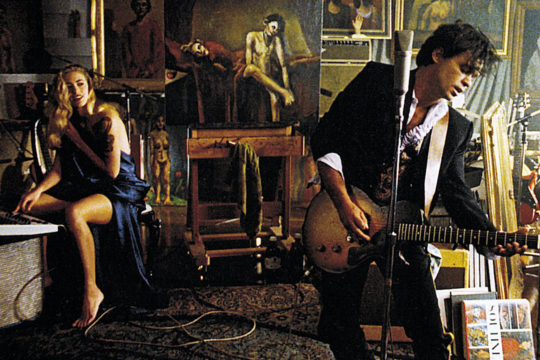
John Mellencamp- Whenever We Wanted
By the time John Mellencamp released October 1991’s Whenever We Wanted, containing the hits “Get a Leg Up” and “Again Tonight”, his record-making not only made him one of the Eighties’ most popular singer/songwriters, he had already influenced the sound of his peers in Rock and modern Country music…twice.In 1982 John Mellencamp and producer Don Gehman broke through with a “drums upfront” approach on hits like “Hurts So Good” and “Jack and Diane”, which influenced greatly the sound of Pop and Rock for the remainder of the decade. Then with the addition of fiddle and accordion prominently carrying the lead melody lines, Mellencamp did it again with 1987’s The Lonesome Jubilee on perennials “Paper in Fire” and “Check It Out”, and this time the evolving modern Nashville record makers were listening, as well.
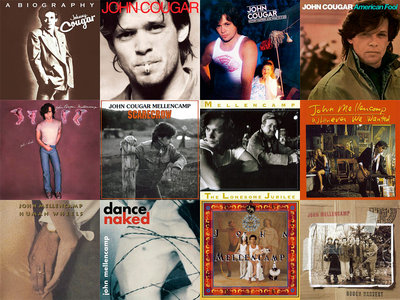 John Mellencamp’s farewell to the Reagan Eighties in 1989, Big Daddy was his male mid-life crisis exercise with “Pop Singer” and “Jackie Brown”. He then took an almost three year sabbatical, learning fine art painting and, surprisingly, directing and starring in a film with Mariel Hemingway and Kay Lenz, Falling from Grace. The hard-to-find soundtrack gem “Sweet Suzanne” is included here, a veritable Americana singer/songwriter summit meeting as “The Buzzin’ Cousins”, blending the voice of John Mellencamp with that of the late John Prine, dearly missed Joe Ely, James McMurtry (whose father Lonesome Dove legend Larry McMurtry wrote the screenplay for Falling from Grace), and batting cleanup, Dwight Yoakam.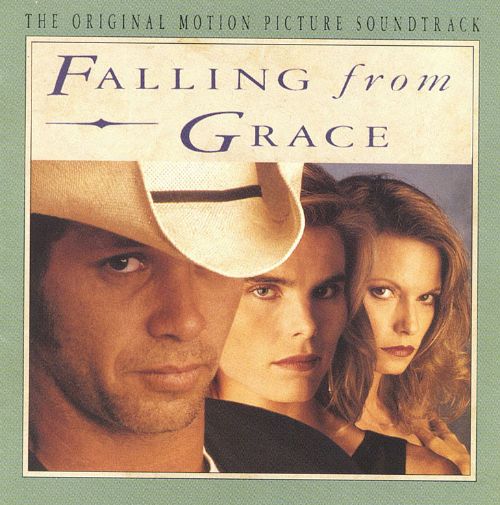
In Fall 1991 John Mellencamp’s human wheels once again found the blacktop highway of his mainstream music career with a new wife, a new life, and a looser, lighter attitude on Whenever We Wanted, including “Get a Leg Up” and the imminently boot-scootin’ dance-abilly “Again Tonight”. In my classic rock interviews, John Mellencamp, interestingly, raises just as many questions as answers. –Redbeard -
Bonnie Raitt- Luck of the Draw 35th Anniversary
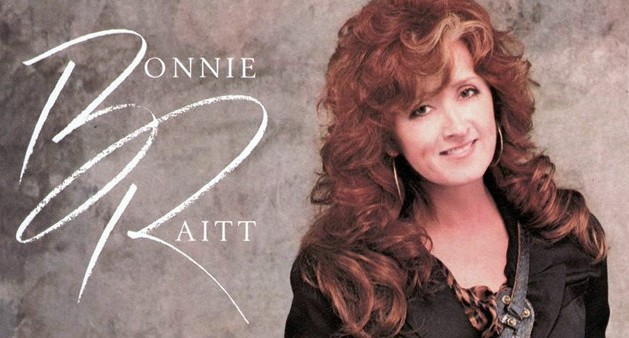 Prior to release of her tenth album (!) Nick of Time in early 1989, and the equally sublime Luck of the Draw two years later, Bonnie Raitt was a bit of a puzzle. For two decades she had been a critic’s darling, starting with her 1971 debut (four stars); Give It Up in 1972 (four and a half stars); 1973’s Takin’ My Time, and Streetlights the following year (again, four out of five stars). Bonnie Raitt did everything musically, and every American style, well except write prolifically, but her superb ear for finding excellent songs and players meant that she didn’t have to. Yet it is probably fair to say that prior to Nick of Time, after almost twenty years of recording and constant touring, Raitt’s best-known recording was her 1977 cover of Del Shannon’s 1961 hit “Runaway”.
Nine albums’ worth of modest sales and little songwriting royalties required Raitt to tour long and hard throughout the Seventies and deep into the Eighties just to keep new strings on her National steel guitar, so the well-known rigors of the road understandably took their toll. Not coincidentally, however, Bonnie’s first post-recovery album Nick of Time, released in March 1989, sold five times more than all previous nine albums combined, thanks to such songs as John Hiatt’s “Thing Called Love”, Jerry Lynn Williams’ “Real Man” and the deadly “I Will Not Be Denied”, the gorgeous shimmering “Cry on My Shoulder”, and two terrific Bonnie Hayes compositions,”Love Letter” and reggae-inflected “Have a Heart”.
When Nick of Time rose steadily, eventually becoming the #1-selling album in the US a year after release, no one was more surprised than Bonnie Raitt. When it also won three Grammy Awards including the coveted Album of the Year Grammy in 1990, no one was more appreciative. Nick of Time rests at #492 on Rolling Stone magazine’s most recent Top 500 Albums of All Time list. She thanked everyone in the best possible way by following it up in May 1991 with the even more successful Luck of the Draw (over nine million sold, her biggest ever) containing the huge hit “Something to Talk About”, the groove thang duet with veteran Texan Delbert McClinton on another Grammy winner,”Good Man, Good Woman”, and the sublime “I Can’t Make You Love Me”, racking up another three Grammys. And Bonnie Raitt’s impeccable sense of picking just the right songs has continued twice in the last few years, including on 2012’s solid Slipstream around the time of her Rock Hall induction, and 2016’s excellent Dig in Deep, both highly recommended. As you will hear in my 1990 interview, Bonnie name-checks two Texas collaborators sadly now passed, Stephen Bruton and Jerry Lynn Williams. -Redbeard
-

Bonnie Raitt- Nick of Time
Before the release of her tenth album Nick of Time in 1989, Bonnie Raitt was a bit of a puzzle. For two decades she had been a critic’s darling starting with her 1971 debut (four stars), Give It Up in 1972 (four and a half stars), 1973’s Takin’ My Time, and Streetlights the following year (again, four out of five stars). Musically, Bonnie Raitt did every thing and every American style well except write prolifically, but her superb ear for finding excellent songs meant that she didn’t have to. Yet it is probably fair to say that, after almost twenty years of recording and constant touring, Raitt’s best-known song was her 1977 cover of Del Shannon’s 1961 hit “Runaway”.Nine albums’ worth of modest sales and little songwriting royalties required Raitt to tour long and hard throughout the Seventies and deep into the Eighties just to keep new strings on her National steel guitar, and the well-known rigors of the road understandably took their toll. Not coincidentally, however, Bonnie’s first post-recovery album Nick of Time , released in March 1989, sold five times more than all previous nine albums combined, thanks to such songs as John Hiatt‘s “Thing Called Love”, Jerry Williams’ “Real Man” and the deadly “I Will Not Be Denied”, the gorgeous shimmering “Cry on My Shoulder”, and two terrific Bonnie Hayes compositions,”Love Letter” and reggae-inflected “Have a Heart”.
When Nick of Time rose steadily, eventually becoming the #1-selling album in the US a year after release, no one was more surprised than Bonnie Raitt. When it also won three Grammy Awards, including the coveted Album of the Year Grammy, no one was more appreciative, as you will hear in my 1990 classic rock interview. -Redbeard