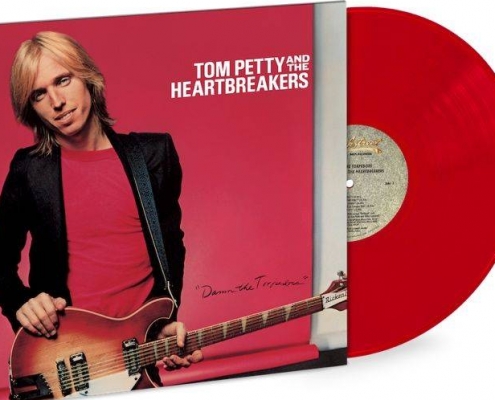
“We did over two hundred takes on ‘Refugee’. We never thought that we had ‘Refugee’ as well as it should be. I hope I never have to go through that again!” exclaimed the late Tom Petty to me in my classic rock interview documenting Tom Petty and the Heartbreakers’ breakthrough third album in October 1979, Damn the Torpedoes. “The Heartbreakers were always arrogant enough to write albums in the studio. They never were a very cost-conscious bunch.”
“Damn the Torpedoes was an important album for me in a lot of (songwriting) ways, because it opened up what I was doing,” Tom Petty revealed. “I’m very proud of the Heartbreakers. They haven’t gotten too honky over the years. They’re a real rock’n’roll group, and they don’t do beer ads. They just wanna play rock’n’roll music. We don’t have our eyes on The Movies or anything,” Tom laughs heartily. “We just want to make rock records and play rock’n’roll shows. It’s just such a simple thing. We’ve always been a simple unit. We’re not simple people, necessarily,” Petty cautioned. “Maybe simple-minded,” he chuckled, “but we’re just a band. We write songs and try to play ’em. It’s harder than it sounds.”
The backstory behind Damn the Torpedoes is a modern day pulp fiction thriller complete with intrigue, heroes, villains, intimidation, brawling, and courtroom drama. The Gainsville Gator revealed the personal battles that Tom Petty & the Heartbreakers had to fight just so that we could enjoy one of the most important rock albums of the last half century. -Redbeard
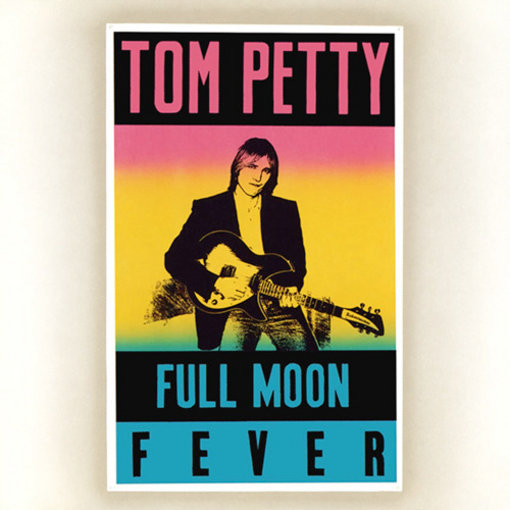
Revisiting the numbers and accolades generated by Tom Petty’s first solo album Full Moon Fever, released in April 1989, it would be easy to assume Petty’s long career just prior to Full Moon Fever to be similarly spectacular: two Top Ten hits “I Won’t Back Down” and “Free Fallin’ “; #3 seller on Billboard‘s album sales chart (UK #8); over five million copies sold just domestically; and now ranked on Rolling Stone magazines Top 500 Albums All Time list at #298. But that assumption would be dead wrong.
I had interviewed Tom Petty in Dallas in the Fall 1987 when he and the Heartbreakers had toured supporting Bob Dylan. Petty had his first wife and daughters with him on the tour because they were quite literally homeless after an arsonist had set fire to their home while Tom and family ate breakfast, barely escaping with their lives but losing everything but the clothes on their backs. Now in May 1988, almost a year to the day later, the Pettys were real-life “Refugees”, staying in the Beverly Hills home of Maria del Rosario Mercedes Pilar Martinez Molina Baeza, “Charo” for short. The life-sized gold lion statue in the foyer was a dead giveaway. “Cuchi cuchi, y’all”. You just can’t make this stuff up. We sat down in the dark workout room that Charo used apparently to…well…defy gravity, I suppose you’d say. Shortly after starting the interview about the making of Tom Petty and the Heartbreakers breakthrough third album Damn the Torpedoes , a modern day thriller complete with intrigue, heroes, villains, intimidation, brawling, and courtroom drama, Tom casually mentioned that he had been working on his first solo material, and would I like to have a listen to what he’d done so far in Heartbreaker Mike Campbell’s garage? We retired from the dark, cave-like exercise room with the chocolate brown shag carpet and heavily draped windows, to a bright sunlit modern home office. From behind the small desk Tom Petty popped a cassette into a small stereo system sitting on a wall-mounted shelf and proceeded to play five unreleased songs, including“Free Fallin’ “,”I Won’t Back Down”,”Love is a Long Road”, “A Face in the Crowd”, and “Running Down a Dream”. As the golden May mid-morning Southern California sun bathed the room in light, I distinctly recall scribbling furiously my initial impressions on my notepad. When we returned to the workout room where the interview recording equipment was waiting, apparently I must have effused so enthusiastically about the unreleased solo recordings which Tom had just shared that the encouragement was noted by Petty when he thanked me in the liner notes when Full Moon Fever finally came out a year later.
Dan Baird, ex-lead singer/songwriter of the Georgia Satellites and The Bluefields, said it best in October 2017 when Tom Petty died: “This one feels like family.” Certainly other classic rockers had been passing away somewhat predictably, in some cases alarmingly so, but Tom Petty’s passing was devastating to a lot of us who had the pleasure to work with him over his exemplary career. When we met in 1978, we were both in our mid-twenties, but I realized even then that Tom had a very old soul, wise and true, and that sense only increased over the next four decades. So now here I sit, howling at the full moon rising on the eastern horizon, delirious from the only fever which I never wanted to break. –Redbeard
In August 1996 Tom Petty & the Heartbreakers released She’s the One , original soundtrack music to director Ed Burns’ film, and I had the honor of co-hosting the world premiere radio broadcast of the album along with Tom thirty years ago.
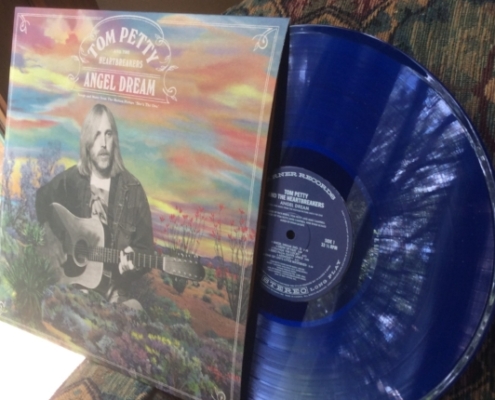
Until now the She’s the One project had always been an outlier in the otherwise very consistent Tom Petty canon, a one-off coming at a very emotional point in his private life. On the thirtieth anniversary of the original comes Angel Dream , these same film soundtrack recordings remixed and remastered, which are integrated here into my original broadcast classic rock interview where the late Petty explains unequivocally his reasons for doing them. –Redbeard
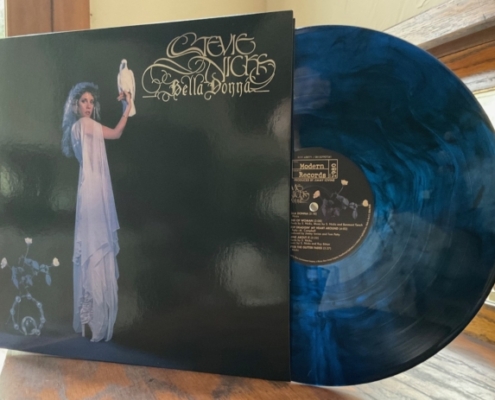
In July 1981, Stevie Nicks already was, to many, already in America’s most popular band, Fleetwood Mac, but her first solo album then, Bella Donna, took her career to another level entirely, a fact that was by no means guaranteed and which came at some cost. The album was the #1 seller on Billboard‘s Album Sales chart by September and sold its first million copies by October 1981. Stevie spells it all out quite candidly in my classic rock interview, while revealing the stories and characters behind “Edge of Seventeen”, “Leather and Lace” with Don Henley, and the timeless duet with Tom Petty on his “Stop Draggin’ My Heart Around”. Join double Hall of Fame inductee Stevie Nicks with me here In the Studio for the Bella Donna “dish” details.
Rock and Roll Hall of Fame induction is coveted, and serves as validation of a life of artistic expression. But until Stevie Nicks walked out on the stage in March 2019 to accept her induction for her solo career, no woman had the honor bestowed upon them twice. Long before Stevie Nicks became a star as a solo performer; before she and her musical partner ( then lover) Lindsey Buckingham helped to transform the British blues rock band Fleetwood Mac into one of the top-selling groups of all time; even before her professional recording debut in 1973 on the album Buckingham Nicks, Stephanie Lynn Nicks was living a real- life version of the Glass Menagerie, as you can hear in my classic rock interview.
Stevie Nicks: “I remember exactly what it was like to be 20. I mean, I was a cleaning lady, I was a waitress. I had problems… I mean, Lindsey (Buckingham) and me together trying to figure out how we’re going to make it in the music business. And this is the only thing that either of us wanted to do. And what if we didn’t we make it ? I had to go to school. And he didn’t so… that, ya know, he had all this time. I didn’t have much time. I mean I was I was an emotional wreck at 20. Oh, yeah. I was an emotional wreck at 18 because that’s when I started singing in a band with Lindsey and we played three and ½ solid years up and down the San Francisco peninsula and opened for all the big huge bands in that special moment in time that was Haight-Ashbury and San Francisco. Where everybody came. And so I got to stand and watch from the side of the stage. Everybody. You name ‘em, we opened the show for ‘em. So I got like first hand experience, it’s the only reason I was able to walk into Fleetwood Mac without having a nervous breakdown. And walk out center front stage to the center mic and not just, ya know, collapse and faint, because I had already played in front of 75,000 people. Standing in the middle of the stage as lead singer. It was a big adjustment and a lot to take. I was very young. Well, I wasn’t very young, I was 27, but I felt very young and it was like it was overnight, overnight, hugely successful. And it was hard for my little brain to accept that kind of fame that fast. And to go from being that poor and having all these little jobs that I had because Lindsey didn’t know how to do anything else except play music, and I could do anything. And did, to keep us going so that we could do it. Because at that time I had realized that we were going to make it if it killed me. And ya know working solidly to getting the Buckingham-Nicks deal and doing that record and having that record dropped and being just crushed. Because it’s one thing to be working towards it, and another to go into a big studio with a big producer and do a big record with all the 24 track board and everything and having the taste of the big time. And then be just be dropped like a hot potato, and go back to wondering if I should go back to school or if I should just work and let Lindsey pursue the music career. And I should just step out. Because by that time I was to the point where… ya know I’m very loyal and I certainly was Lindsey’s biggest fan and I thought he was the greatest guitar player in the world and had the most beautiful voice. He was one of those people that… I walked into a room once and he sat there and played a song and it was “rooms on fire”! He’s one of those. He was one of those men. And… whatever I had to do to keep him going was OK because it was more important for Lindsey than it was that I make it. Because I knew I could do a hundred other things and nobody could ever take my music away from me. I could still write songs and play. And, I could take my music in anything I did. I could go back to school. I only had a year to go to finish to get a masters. I could go back to school for three years and get a PhD. I would be fine. I knew that. I worried about him. I didn’t know what he would do. And because I was so in love with him there wasn’t any question in my mind that I would stick in there until if we didn’t both make it, at least I got him up there. . And when you love somebody and you see the pain in their face, when they even consider the fact that you might not make it… it’s like, “Don’t even think that we’re not going to make it. We are.” And in my heart I’m saying to myself,”If I have to comb this town, I will find somebody to listen to us that will understand how good we are, or that God willing, at least know how good he is.” RB: What about expectations of you without the safety net of a band ?
Stevie Nicks: “I learned a long time ago never to expect. Because I think that was something that was instilled in me when I was really small. ‘Don’t expect anything’. Not that you can’t be confident about it. But just don’t expect the greatest things and then you won’t be disappointed. And then if great things do happen, you’ll be much more excited and happy about it. Then if you just said,” I know it’s hit record”, and then what if it isn’t? Then you’re devastated. And I don’t particular love being devastated, so I just thought a long time ago that I would take in my stride whatever happened, especially with my solo records. Being that they were solo records that means that yes, of course they’re more personal. Of course I’m giving away a whole lot more of myself, as my mother says to me, “too honest for the world sometimes”. So I never know exactly how people are going to take them. But every time I do a solo record I get more… convinced that the more honest I am with everybody, with what happens in my life and what has happened and what has gone on, and how I’ve managed to get to this point and still have my sanity, … the better. And the more people understand it, that this is real and these aren’t made up songs… and that I’m really trying to do a whole lot more than sing songs to people. That I’m trying to give out a little experience to people, I think. Maybe run by them, in a fantasy sort of way, experiences that I’ve been through that may save them a little bit of time. A little bit of hard time. Just help a little bit. I have to really feel that the song itself is important because I feel long after the singer is gone, and the songwriter is gone, that the song will remain. “ –Redbeard
“It’s very hard living your life as we have, in tour buses and airplanes, for all of this time.“
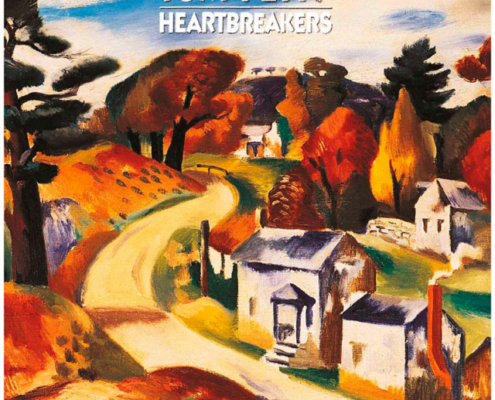
With his sudden and way-too-early passing in Fall 2017, my special times with Tom Petty have become increasingly precious to me. Such is my interview at his newly-rebuilt house after an arsonist torched it with Tom’s family all inside, to reveal Into the Great Wide Open by Tom Petty and the Heartbreakersin1991.
So here In the Studio we are honored to share it for the stories behind “Learning to Fly”,”The Dark of the Sun”,”All or Nothin’ “,”Out in the Cold”, the knee knocking “Makin’ Some Noise”, and “Into the Great Wide Open”.
The topics Tom Petty broached in my classic rock interview were indeed “wide open”: war as a foreign policy; security in an uncertain world; gun violence; greed, both individually and that of multi-national corporations; and his sincere concern for rock ‘n’roll, that dominant Twentieth Century invention, now and in the near future. As you will hear from the late Tom Petty, two significant events informed the songwriting on 1991’sInto the Great Wide Open , Tom Petty and the Heartbreakers’ first post-Traveling Wilburys/Full Moon Fever effort with his own band. First,Tom Petty turned forty. “I’ll probably look back at this as some kind of mid-life crisis album,” Petty chuckles ,”and go ‘God, I should’ve just lightened up ! Should’ve had a drink and forgot about it!’ But I suppose I’m just working a lot of things out. It’s very hard living your life as we have, in tour buses and airplanes, for all of this time. I think when I turned forty I kind of did , as most people do, get a little reflective about ‘Where have we been? And where are we going?’ And you do kind of realize that, ‘Gee, twenty more and I’m outta here !’ So you do take stock of that, you do.”
The second significant factor was that the songs for Into the Great Wide Open were written with a pre-9/11 perspective during Desert Storm Gulf War 1, which disturbed long-dormant feelings in Tom Petty as well as many others who came of age during the nation’s lengthy, deadly, ill-advised Viet Nam War. “As I wrote this album we went to war, and there were a few anxious moments there when you feel very vulnerable to people who are running the planet. Can those people just blow me up? Yes they can! And it was a very hard, painful thing to go through, the war was. I had extremely mixed emotions, I never felt good about it. And of course I support the troops, but I felt terrible about the fact that, in this day and age, that we’re still barbaric enough to roll out and kill thousands of people…’Dark of the Sun’ was one written during that period of the (Gulf) war. When I watched the oil fires in Kuwait, I had the image of the dark of the sun…imagining if it had been Indianapolis where the oil fires were burning. Or Cincinnati. Or Los Angeles instead of Kuwait, on CNN.”-Redbeard
Here is a rare recorded concert performance of Tom Petty and the Heartbreakers doing the one-off “Mary Jane’s Last Dance” which did not quite make the 1991 album Into the Great Wide Openand instead was a surprise hit on their Greatest Hits package. Hyperbole warning: in my humble opinion, along with the E Street Band, this collective could be the best live working band on the planet on any given night, and was consistently over a forty year run. Exhibit “A” here is Tom Petty and the Heartbreakers’ multi-night residency at the Fillmore in San Francisco in February, 1997. Turn this up as loud as your gear will go. – Redbeard