Tag: Texas blues

  • Steve Miller- The Joker

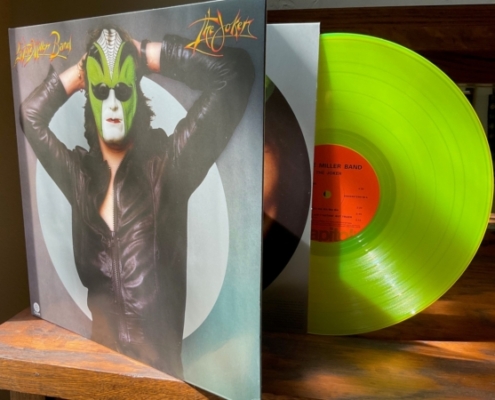
    Steve Miller- The Joker

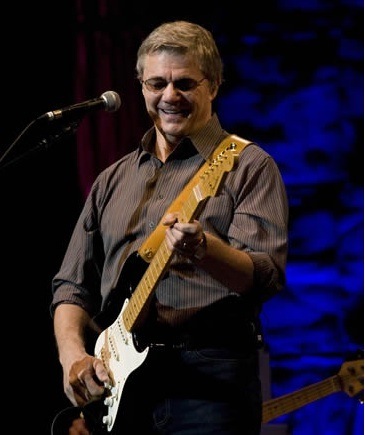
    Steve Miller: “Well at this point, I’ve always loved to play music, and from the time I was five years old to now it’s always been exciting to me to  play.  And to entertain people and to have a band, and I was just yesterday afternoon I was thinking about oooh, it won’t be long now, just another few weeks and we’ll be back out on the road and I’ll be all excited and I’ll be walking from the bus to the stage to play my music.  And for me, it’s been the blessing of my life.  It’s something that I’ve wanted to do all my life.  I’ve done it all my life and I’ve been able to entertain people and maintain a really good band and continue to be creative, and continue to enjoy what I do. And to me that’s about as successful of a life as I can have, to be able to do all these things that I do.”

    RB: “To what do you attribute that ability after more than five decades of entertaining us?”

    SM: “Well, I really love to play.  And I think all musicians do, really.  I mean it’s a spontaneous thing that happens. Ya know, it’s like playing basketball or playing a game, or doing something that’s really fun.  It never feels like work even when you’re spending months and months grinding away and wood-shedding and practicing and trying to get better.  Ya know there’s always this payoff where you get into a room with an audience and you start playing STEVE MILLER music and people start getting joyous and very happy, and this wonderful thing happens and then all this spontaneity starts up. That’s what the excitement is and I never get tired of it.  I mean I’ve never been on stage where I’ve been going “Boy, ya know, I’ve had enough of this.  Or this isn’t any fun.”  Or, I’ve never felt like I’m sick of playing a tune.  Or tired of being on the road.  Ya know, I’ve just always enjoyed it.”

    RB: “What is is it about rhythm and blues music that keeps you vital and actively engaged  at a point where most people are using their AARP cards for the Early Bird special down at Denny’s?”

    SM: “Well, ya know, I don’t know,  it’s just something great about picking up a guitar and playing something that really moves you. Ya know that makes you feel good.  It changes your attitude.  You pick up an instrument, you start playing, it’s like an attitude adjustment. Ya know, things just feel better and I have all my life been really moved by rhythm and blues and country music too, and I mean  I’m a big fan of the Marty Stewart show on RFD and I tune up the Wilburn Brothers and tune up Porter Waggoner and… I just love all kinds of music, it has always made me feel good.  And I really don’t have the answer why, but music tends to be ethereal and it sorta takes people back and forth between the past and the future, you’re sort of like remembering stuff and you’re thinking about the future and you’re feeling good and it’s pretty amazing art , and to be involved in it or to be drawn to it as I was just naturally, just immediately as soon as I was on the planet, music was just the most interesting thing to me.  There was never any question about it.  When I was two years old I was making Mother play Bob Crosby and the Bobcats version of “Big Noise from Winetka” !  Over and over and over, ya know?  So some people are just wide open and susceptible to music and I was definitely one of ‘em, I guess.”

    RB: That’s  cool.  Your history  with producer/engineer  Andy Johns ? (Editor’s note: Andy Johns passed away about two years after this interview was conducted)

    SM: Now Glynn Johns was Andy’s older brother, and I made my first four albums with Glynn in London.  And I met Andy, who is Glynn’s little brother, Andy would come down to the studio when he was just 17 years old and was just a rosy-cheeked little English kid, ya know.  And he and I became friends and he would be in the studio and, and I would see him oh, every four or five years somewhere, something.  But then Andy went to follow in Glynn’s footsteps and then got in to much heavier music than Glynn did.  When Glynn was recording me and the Eagles, Andy was recording Led Zeppelin and the Rolling Stones.  And he developed into a phenomenal recording engineer.  mixing, and this is the first one we really recorded together.

    people and enjoying other players, and ya know really working on my playing all the time which is what I do.  But then when I started working with Andy, Andy is an engineer who loves guitars.  He loves that part.  And a lot of engineers when it comes time to do the guitar overdubs, you see this sorta resigned like “ok, it’s going to be like 16 weeks of hell while so and so plays this over an over. “ Because all guitar players want to play better than they can.  So it’s “ let me do it again.  Oh, no let me do it again.  I want to do it again.”  So this over-dub-itis  can be fairly numbing.  And a lot of engineers just aren’t any fun to record guitar parts with.  For example, you’re in the studio, and you’ve recorded all the basic tracks and now it’s time to put that blazing lead solo on and you come in and you set up your amp, you do all your stuff and you’re out in the room, you’ve got it all great and you’re playing it, and then Andy would come out and go,” That’s bloody awful !  Bloody hell, that’s awful ! “ And then you’d look at him you’d go,” what are you talking about, Andy? “ And he’d go ,”All right we’ll record it .” and he would record it and at that point where most engineers would go “ ok , if that’s what you want, that’s fine”.  Andy would say” no, no, no, let’s take everything apart,  let’s call up my friend whose got this giant Marshall stack and we’ll bring it…” I mean nothing was too hard for him. So, long answer to a short question, yeah Andy was really responsible for a lot of it.

    RB:  Sharing the spotlight is not something that happens frequently or graciously in the music business, but your generosity  is remarkable.  Where did that tradition come from ?

    SM: Well, ya know, Redbeard, that’s a Les Paul thing.  When I met Les Paul, I was five years old and I was at nightclub watching Les Paul play and, and Les Paul always had an audience full of other musicians , wherever he played.  If you were a good guitarist or a jazz musician and you were within 150 miles of Les Paul playing you wanted to be there to see him, because you were going to learn something and see this wonderful performer and also that’s just the way he operated.  If you were Tony Bennett and you were sitting in the crowd, he’d go “Tony, get off your big butt and come up here and sing a song.”  He would always share his spotlight and invite other musicians to come and play.  And there was always a lot of fun and a lot of joking around and ya know they were kind of cutting contests that they were great guitarists involved and I one time saw  Tal Farlow ,who is this phenomenal jazz guitarist , walk into the club while Les was in the middle of a solo and everybody in the club went “ooh, Tal Farlow is here. “ And it’s kind of like gun slingers, right?  The best guitar players.  And Les was probably 35 years old at the time so he was really had all of his power.  And Farlow walked in, Les saw him walk in, the audience saw Les see Farlow. Les reached into his pocket while he was playing a blazing solo, pulled out a handkerchief and put it over his left hand and continued to play the solo with the handkerchief over his left hand so Farlow  couldn’t steal his licks !

    RB: No. way.smb-dvd-659_21

    SM::    Yeah.

    RB: That’s a great story.

    SM::    And very hard to do.  I’m sure it took a lot of practice.  Think about that.  Ya know stuffing a handkerchief in your left hand and still playing lead !  It was the funniest thing in the world.  Everybody cracked up and that was Les Paul.  So, it was always like,” the cats are here, we’re going to have a jam session, come on up and sing a song”. And there was never any viciousness or any stinginess that is pretty normal in show business.  It’s funny, some people don’t even know how to respond if you invite them to come out on your stage and play.  They couldn’t be that spontaneous, they didn’t have their make-up, their lights, their roadie, their stuff, their drinks, but from Les Paul I learned it’s very smart to share your spotlight with talent .  And you make a lot of friends that way, and  the audience likes nothing better than to see musicians get together and spontaneously play.  And that’s why people love jazz, that’s why they love blues, that’s why the love rock and roll.  I remember one time going to see Pink Floyd and saying to David “ yeah, man, I’ll bring my guitar over and we’ll jam.”  And he said, “well, really Steve, I don’t think so.  When you see the show you’ll understand .”  And I went and saw the show and I kinda went “yeah I get it, it weighs ten million pounds.  Ya know, it’s just too heavy. “ So, for my world, I learned from Les Paul, I’ve always enjoyed having other musicians come out and I can always get off the stage by playing “The Joker,” or “Jet Airliner”, or “Abracadabra”.  I mean I got plenty of hits in my pocket if it comes to a throw down.  Ya know, I’m ready to…

    RB: You got some bullets.

    SM: Yeah, I got some stuff.  I can say the words “Space Cowboy” and everybody will cheer.  I’ve got my tricks up my sleeve.  But it’s really not about that, it’s about sharing the stage, sharing the spotlight, and I learned it from Les Paul as a child.  And I thought everybody did that.  I thought that’s one of the coolest things about music was that people did that and it wasn’t until later that I realized nah, they don’t do that very much.  But we do.  And we always have and anybody that opens for us we always invite them to come out and play with us and, and come do a song.  Ya know, it’s just more fun that way.

    RB: You’ve never shared with me your sentiment of Stevie Ray Vaughn, his place in the world of modern blues and the impact of his legacy .SRV 9-89-redder days

    SM: Well, ya know the Vaughan Brothers are two of the greatest guitar players of the last 50 years, I think.  And Stevie was the spark that saved the blues just in time when corporate America wanted to just kill it, ya know.  “There won’t be any more of this around.” Ya know?  And all of a sudden Stevie showed up and he was such a powerful player.  And he played   so well and, and when he did the tracks of David Bowie , and then he really came into his own, that was great.  Well while all that was happening, I was watching Jimmie Vaughan.  And I actually like Jimmie even more than Stevie.

    JimmieVaughanRB: All lot of people, a lot of musicians say that.

    SM: Well, this  is like a tribute to Jimmie Vaughan. Jimmie, to me , says more with less than almost anybody I know.  Whereas, Stevie said a lot with a lot.  I mean if you sit down and you started playing the way Stevie played, and try to keep up with him, you realize that it’s going at 127 miles per hour just when it starts up, and then it speeds up to 190 at the curves.  It’s amazing.  Whereas Jimmie is deep, deep, deep, deep; he’s my favorite blues guitarist.  So, I love both Vaughan brothers. I love Stevie for stickin’ up for the blues and bringing it back and taking it to a new level and really opening up the door to thousands of guitar players that probably never would have listened to Freddie King, or any of the people that Stevie loved so much ,  and then celebrate it.  So when Stevie died it, it was one of those horrible things.  It was unnecessary, the helicopter flights from East Troy, Wisconsin to Chicago was a 90 minute drive.  It was totally unnecessary.  It was a tragedy beyond belief caused by nonsense, in my opinion.  There was no need  for anyone to be flying in helicopters in the fog to Chicago, ya know.  They could have been there in 90 minutes they could have been at the doorway to the hotel.  So, it was horrible and it was kinda like even more tragic  than Jimi Hendrix’ death.  Because when Jimi Hendrix died he was basically a junkie and he was a mess and his life was falling apart.  When Stevie Ray died he had gotten himself together.  He was focused and he was ready to become the statesman.  The guy.  And he just got cut off way too early and there hasn’t been anyone since to come along with that kind of energy and that kind of reality in their playing, so it’s greatly, greatly missed. But we’re lucky that we have Jimmie who I actually love. I love Jimmie’s songs, I love to listen to him play.  I love to play with him . I’ve had a few opportunities to play together and I just can’t tell you what a great, great, great guitarist he is and what a great musician I think he is.

    RB: Did you see the movie Cadillac Records?

    SM: Yeah I did.STEVEMILLER106224-steve_miller_617

    RB: How accurate was the portrayal of Howling Wolf in that movie?

    SM: Ya know, it’s interesting.  It’s a movie.  It’s a cartoon. Imagine what it would be like if somebody tried to write who you were.  And so, the few times that I’ve actually seen movies like that made about people I actually know, it’s always an” ah-ha moment “ when you go, yeah, right, when the do the movie on my life I’d like someone that looks really good who can dance, ya know.

    RB:(laughing) I think Tom Cruise has been cast as you in “The Steve Miller Story” , right ?

    SM: That’s it.  There ya go.  And, you see it and you kinda go,” nope… kind of… and ok, they loved Chicago” .  Yeah, they changed the story a little bit and everything.  I mean Howling Wolf was this amazing, amazing character.  And, he came up to Chicago… and you have to understand these guys run in these blues bands, I mean you’re working in night clubs.   Most of the musicians are alcoholic or on drugs.  The night clubs were very rough and very tough, and there was a lot of nonsense going on in the nightclubs .  And Howling Wolf was this extremely ethical, sober, straight guy.  And he was like a school teacher or a football coach or something.  He was a wonderful, wonderful, man.  He had a wonderful family.  His daughters, today, are just brilliant people , you just meet them and they’re smart, they’re attractive, they’re wonderful folks,.  And at the same time Howling Wolf was the biggest rascal that ever got on the stage.  And he could scare people half  to death and he was huge and he was so funny and he was so much fun.  I knew him both on the stage, in the club, and then when he started comin’ out to California to play the Fillmore West (in San Francisco) I’d go out to the airport and pick him up in my Volkswagen bus and help him load his gear and take him to his hotel and I would be his roadie because I loved him so much he was such a good friend.  And off the stage and out of the nightclub you would have thought he was like the linebacker coach for the Chicago Bears or something.  He was an amazing man!  He’s really a wonderful, wonderful guy.

    STEVEnorton_buffalo_steve_miller09


    RB: You introduced us music fans to Norton Buffalo on Steve Miller Band Book of Dreams.

    SM: Yeah, in 1976 I guess.

    RB: “Don’t Ya Know?”

    SM: Yeah, “Don’t Ya Know” is one of those great Jimmie Vaughan tunes.  And uh, ya know, Jimmy’s albums, are just ya know, they’re phenomenal.  And he had um, uh, like, it must be ten years now that, since, since he recorded that.  And it’s always been one of my favorite songs.  And, and in fact I always wanted to record his whole album!… And”Don’t Ya Know”  is one of my favorite songs.  And Jimmie and I both grew up in Dallas.  We both grew up listening to T-Bone Walker, Hank Ballard and The Midnighters, Lightning Hopkins.  A lot of people  in our neighborhood influenced us, so, the things that influenced him really influenced me too, so when I listen to Jimmie, I hear things where I know where they came from and what has moved him and it moves me as well.  So I really find him to be kind of a filter that when I listen to a lot of blues through Jimmie it really turns me on and makes me want to play a lot too.    jimmie_vaughan

    stevemiller

    SM: I own all my masters outside the United States, Japan, and Canada.  So, most of the world I own.  They own those and in this sort of gray area where nothing has ever been resolved.  And ya know most of these Steve Miller hits were cut before 1978 when the masters law, which is coming up, where people are trying to get their master recordings back.  And there will be a lot of lawsuits and a lot of people will be fighting very hard about all that.  But, truthfully I don’t know that I will be able to get my masters back for my own country, which is one of the things that kinda bugs me.  Because they don’t even think about that any more.  That’s just an automatic paycheck that they get, they just take orders for our records and they don’t spend any money advertising them or helping us with our tour or supporting us in any way.  So, it’s a difficult situation.

    RB: Apparently there are things important to you Steve Miller besides music.   You seem to believe in the motto” think globally, act locally “., you’ve already talked to me about Animal Welfare, tell me about the environment, tell me about the volunteer efforts

    STeve Miller: Well, I’ll tell you the truth.  I spent a lot of the ‘90s supporting Earth Day.  Financially supporting the concerts that were held in Boston along with Kraft family who used to own Fox Stadium and they would let us use it for free.  I’ve spent a lot of time trying to deal with nuclear waste because I used to live in the area where there is a lot of it in Idaho.  And I have done all that and raised millions of dollars and done three Earth Day concerts in the Lost Cities Tour where we went all over the country to the little out -lying posts where they were logging the woods to bare ground,  and just trying to start a little spark around the country, I realized that none of that really was while, yes, it made you feel good, or made you feel like you were working on raising people’s consciousness about, about the environment , I realized that you really can’t do more than just look outside your own window and your own back door and your own front door, and try to take care of the ground around you.  And, I really think that we are at the point now that if our government doesn’t stop this game of stalling and this fight with the corporate world , which doesn’t want any laws or regulations on the environment that would affect their economic growth and power.  Until that’s dealt with, everything that we’re all trying to do, the taking the bag to the grocery store, the recycling, all these things are just such a small part of what needs to be done, we need to change our whole economic world.  The way, the model.  The way we operate.  Because all we’re doing is creating more demand, more growth ,if we’re more environmentally conscious over here, we’re still buying stuff from China where they want their turn at the trough.  Ya know they want to use the gas and the carbon fuels until the whole world finally stops, there’s about 25 countries that are really and truly are the western powers and there’s India and there’s China and Japan. I mean, until these major countries come together and really stop fooling around nothing’s really going to happen.  Because our basic model that runs our government,  that runs are congress and president and all of these people that really could make the real difference, their  motto  is” no, no, no, no, we want the economy, we want to keep expanding , we want to consume more, we want to sell more things , we want to manufacture more stuff, that’s the way the world works”. We’ve wasted 20 years, and we’ve allowed our press, our newspapers, our magazines, our television coverage has given credence to this tiny little minority of pretenders that represent corporate interests, who pretend to be scientists. (The press) give them as much attention as they will give the 6,000 real scientists who do real science who talk about global warming.  We’re just living in a time where there’s a lot of money and a lot of effort being spent to make the air unclear, to make everyone wonder if there really is global warming or there isn’t, or if we really need to take care of the environment or we don’t.  Where it’s so obvious and we’ve wasted 20 years or so now, we really are going to be up against it much quicker than people understand or believe, and this is going to happen really fast.  It’s going to happen in our life time.  And it doesn’t do much good to say I told you so. I wish I could change it, but until the people of the United States get up and go grab Congress by the throat and pull them out of that house and put them back on the street, and put new people in, nothing’s going to happen.

    RB: Bob Dylan said it best, he said “Money doesn’t talk , it swears.”

    SM: (laughs. ) Yeah, and people don’t want to hear that,  they don’t want to deal with it.  Life is tough.  It’s going to be a lot tougher soon.
    STEVEMILLERworld_tour-2012a


    Copyright 2010 Barbarosa Ltd. Productions , all rights reserved . Cannot be reproduced in whole or in part without express written consent . Transcription by Jane Carpenter Brunat , thanks Jane!

  • Delbert McClinton- Lone Star Legend

    Delbert McClinton- Lone Star Legend

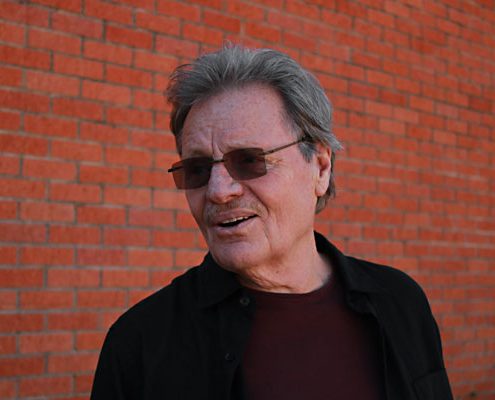
    Take a musical blues cruise through just some of the half century of hits from Texas treasure Delbert McClinton with me here In the Studio from two conversations fifteen years apart, 1992 and 2007. For starters you’ll hear Delbert recalling the time when touring Hamburg Germany playing harmonica with Bruce Channel ( shah NELL ) on the hit in 1962 “Hey Baby”, posing backstage for a photo with four unknown Liverpool lads. Afterwards one of the boys, John Lennon, asked Delbert to show him a few licks on the  harmonica and, low and behold the following year the unknown band has a hit called “Love Me Do” with a three note harmonica hook! And the rest is, as they say, QuickBooks… Then there is Delbert’s mainstream breakthrough in 1980, “Givin’ It Up for Your Love” from the album The Jealous Kind; seven Grammy nominations including three wins for 1992’s duet with Bonnie Raitt on “Good Man, Good Woman”; 2002 album Nothing Personal ; and again a winner for Cost of Living  album in 2006. And Delbert continued to defy time with Prick of the Litter  in 2017. –Redbeard 

  • Ian Moore- Just a Little Bit- Dallas 1993
    Ian Moore- Just a Little Bit- Dallas 1993

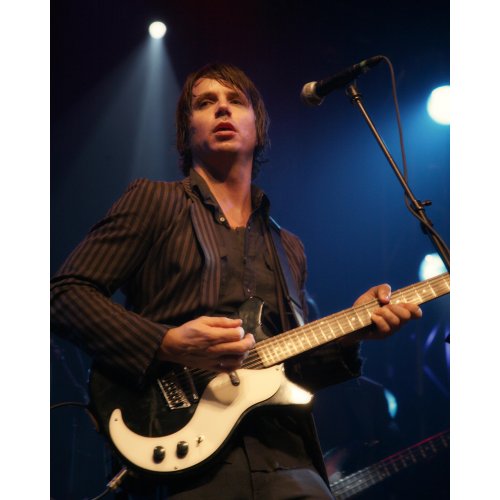
    Sitting in the East Texas barbecue roadhouse Stanley’s in Tyler recently with a couple of veteran radio buddies, I noticed their upcoming schedule of musical guests, including the talented Ian Moore. But the brief description of the rhythm and bluesy singer/songwriter/guitarist claimed that he was”from Seattle”. It was everything I could do to resist hurling a stuffed jalapeño at the sign! Former Texas governor Rick Perry would have threatened to secede from the Union for less. Just as his 1993 eponymous debut was being released, then a very young Austin newbie with an old soul, Ian Moore visited Q102 Dallas and serenaded us one morning after an all-nighter with Austin’s finest. Here’s Ian with absolutely no studio embellishments, singing and playing directly into the radio console, performing the King Curtis R&B classic “Just a Little Bit”. –Redbeard [jwplayer pconfig=”Audio Player” file=”https://its-live.s3.amazonaws.com/IAN MOORE LIVE DALLAS ’93/LIVE-ian-moore-just-little-bit.mp3″ image=”https://www.inthestudio.net/wp-content/uploads/2015/12/IAN-MOORE-Screen-shot-2012-04-05-at-20.31.52.png” html5_file=”https://its-live.s3.amazonaws.com/IAN MOORE LIVE DALLAS ’93/LIVE-ian-moore-just-little-bit.mp3″]

  • Omar and the Howlers- Border Girl- 6-6-87 Dallas
    Omar and the Howlers- Border Girl- 6-6-87 Dallas

    “Born in Mississippi in the dust of a cotton patch
    Raised up by a rattlesnake and that’s a natural fact…
    They all talk about me, they don’t understand
    They don’t know the power of a Mississippi hoodoo man…”-Kent Dykes, “Mississippi Hoodoo Man”

    While every biography I’ve read of the band Omar and the Howlers rightly locates the veteran rhythm’n’blues outfit as based in Austin, TX since the mid-Eighties, there is a decidedly non-Texas element in the songwriting of bandleader Kent “Omar” Dykes that always tapped that same musical gumbo made famous almost two decades earlier by John Fogerty’s Creedence Clearwater Revival. But while Fogerty admitted to me that, miraculously, he developed his “Swamp Rock” sound second-hand  through the novels of Mark Twain, William Faulkner, and Harper Lee plus the plays of Tennessee Williams and John Ford movies without Fogerty ever having set foot in the American South, Kent Dykes spent his adolescent early music career in McComb MS “gun and knife clubs”. Why that term?

    “Because there was a sign at the entrance which read, ‘Check your weapons’ at the door!” grinned Kent during our first interview to introduce his first major label release Hard Times in the Land of Plenty.  ”You know that scene in The Blues Brothers movie where they are in a s__tkicker bar on a little stage playing behind chickenwire? Before I learned to drive that’s how I spent every Friday and Saturday night.” These were notorious roadhouses in the southernmost parts of Mississippi just outside the McComb city limits, where a local boy like an honest-to-God Johnny B. Goode could cut his teeth playing his guitar five sets a night, or loose several teeth if he didn’t learn to duck incoming flying beer bottles.
    “It was pitch black in those nightclubs. The only light on stage came from the little red pilot lights on our amplifiers and one neon beer sign behind the bar,” Kent recalled.

    The roots rock revival of the early Eighties which included the Stray Cats, The Blasters, Nick Lowe and Dave Edmunds’ Rockpile, and Austin-based Fabulous Thunderbirds plus Stevie Ray Vaughan and Double Trouble, all convinced Kent Dykes to pack up his white Stratocaster and head west to the Texas capital’s burgeoning Sixth Street music scene.

    “When I pulled into Austin I stopped for gas at a full-service filling station,” Dykes remembers. “The guy pumping gas spotted my guitar case in the back seat and the Mississippi plates on my car, and inquired why I was in Austin. I replied that I was moving there to start a band. When the pump attendant asked to see my guitar, I pulled it out of the back seat, opened the case, & handed it to him. This guy put his foot up on my bumper, sat my guitar on his knee, and proceeded to burn up that fretboard like nobody’s business. If I hadn’t run out of money I would have got back in my car with my tail between my legs and gone home to McComb right then and there!”

    Welcome to Austin, y’all.

    It wouldn’t be long before Kent Dykes made good on his intention, starting Omar and the Howlers and writing and recording an independent single “Border Girl”, with Dykes wisely letting his distinctive husky growl and pop songwriting sensibilities become his calling card, not just his guitar chops. The combination of all three, plus a smartly rehearsed band of journeyman players in the Howlers, took Kent’s first-hand South Mississippi tales of dancing in the clearings among ten-foot forests of sugarcane fields to a worldwide audience over the next three decades.

    Don’t let that gruff voice fool you. Kent “Omar” Dykes is a big bear of a man, but he is a sweet man with a big Southern grin. This performance at Dallas’ Redux club in June 1987 was to celebrate his first national release Hard Times in the Land of Plenty  with the swamp rocker “Border Girl”. Mixed live to air, no overdubs, by Doug Hall in the Crossroads mobile, produced and remastered by Redbeard.

  • Steve Miller In the Studio 2011

    Steve Miller In the Studio 2011

    Steve Miller: Well, at this point, I’ve always loved to play music, and from the time I was five years old to now it’s always been exciting to me to  play.  And to entertain people and to have a band and I was just yesterday afternoon I was thinking about oooh, it won’t be long now just another few weeks and we’ll be back out on the road and I’ll be all excited and I’ll be walking from the bus to the stage  to play my music.  And for me, it’s been the blessing of my life.  It’s something that I’ve wanted to do all my life.  I’ve done it all my life and I’ve been able to entertain people and maintain a really good band and continue to be creative, and continue to enjoy what I do. And to me that’s about as successful of a life as I can have, to be able to do all these things that I do.

    RedBeard: To what do you attribute that ability after four (now five+) decades of entertaining us?

    SM: Well, I really love to play.  And I think all musicians do, really.  I mean it’s a spontaneous  thing that happens.  Ya know, it’s like playing basketball or playing a game, or, or doing something that’s really fun.  It never feels like work even when you’re spending months and months grinding away and wood-shedding and practicing and trying to get better.  Ya know there’s always this payoff where you get into a room with an audience and you start playing music and people start getting joyous and very happy and this wonderful thing happens and then all this spontaneity starts up that’s what the excitement is and I never get tired of it.  I mean I’ve never been on stage where I’ve been going “Boy, ya know, I’ve had enough of this.”  Or, “This isn’t any fun.” I’ve never felt like I’m sick of playing a tune.  Or tired of being on the road.  Ya know, I’ve just always enjoyed it.

    RB: What is is it about rhythm and blues music that keeps you vital and actively engaged  at a point where most people are using their AARP cards for the early bird specials down at Denny’s ?

    SM: Well, ya know, I don’t know, it’s, it’s just something great about picking up a guitar and, and playing something that really moves you.  Ya know that makes you feel good.  It changes your attitude.  Ya know you pick up an instrument, you start playing, it’s like an attitude adjustment.  Ya know, things just feel better and I have all my life been really moved by rhythm and blues and country music too, and I mean ya know I’m a big fan of the Marty Stewart show on RFD and I tune up the Wilburn Brothers and tune up Porter Wagoner and… I just love all kinds of music, it has always made me feel good.  And I really don’t have the answer why, but music tends to be ethereal and it sorta takes people back and forth between the past and the future, you’re sort of like remembering stuff and you’re thinking about the future and you’re feeling good and it’s pretty amazing art. And to be involved in it or to be drawn to it as I was just naturally, just immediately as soon as I was on the planet, music was just the most interesting thing to me.  There was never any question about it.  When I was two years old I was making mother play Bob Crosby and the Bobcats version of “Big Noise from Winetka”! Over and over and over, ya know?  So some people are just wide open and susceptible to music and I was definitely one of ‘em I guess. -Redbeard