Robbie Robertson of The Band, the most North American of Rock’n’Roll Hall of Fame musicians, passed away at age eighty in August 2023 after battling prostate cancer. Robbie Robertson truly deserved the designation Recording Artist. Immensely talented as a writer, for the last sixty-five of those years Robertson collaborated successfully with a Who’s Who of American auteurs in popular music and film, from Ronnie Hawkins & the Hawks, Bob Dylan, The Band, to filmmaker Martin Scorsese. A very young, dapper Robbie Robertson, center in white shirt, with The Band.
Robbie Robertson was a big supporter of In the Studio even before it’s inception in 1988 (our very first meeting was in 1987 to discuss his first solo album, Robbie Robertson, a personal fave to this day) and was always generous with his time, participating multiple times in thoughtful, intelligent conversations. By appearing in one of In the Studio‘s first ten rockumentaries, Robbie Robertson gave our fledgling effort instant credibility in the competitive field of rock music journalism. As an elder statesman of twentieth century rock, as well as 21st century film soundtracks, we were blessed by his stories, wit, and wisdom multiple times here In the Studio.
Robbie Robertson was a wonderful guy, and it is hard to say goodbye. As Bob Dylan wrote and The Band sang, “Any day now, I shall be released.” -Redbeard
One of the all-time Southern Rock staples, Pronouncedleh-nerd skin-nerd by Lynyrd Skynyrd turned fifty in 2023, which meant we got to share one of the most-requested interviews from the In the Studio vast classic rock archive. My in-depth conversations with Lynyrd Skynyrd guitarists/songwriters Gary Rossington and Ed King plus bass player Leon Wilkeson, all gone now, will tell the origin story framed against the days leading up to, and the making of, the first album Pronounced and “I Ain’t the One”,”Gimme Three Steps”, “Simple Man” (which they had to fight to get it on the album), and “Free Bird”.
There is a remarkable story to be told even before any of us first heard Pronounced leh-nerd skin-nerd a half century ago. Gazing on the cover of Jacksonville FL young bucks Lynyrd Skynyrd’s Pronounced album, lots of little things come to mind which, taken individually, might appear insignificant. The digitally enhanced cover photo and graphics pictured here were not so richly hued on the original, which arrived without fanfare in the mail at my Findlay Ohio radio station. When I first removed the record to audition it, the pale yellow label at the center had a logo which proclaimed “Sounds of the South”, looking a bit hand-drawn, almost amateurish. As the first Lynyrd Skynyrd songs played, including “I Ain’t the One”, “Tuesday’s Gone”, “Gimme Three Steps”, and “Simple Man” on side one, the songwriting appeared strong and the band tightly rehearsed, but honestly the sound from the shallow grooves seemed a little thin, not as muscular and full bodied as we can now hear on hi-rez remastering. Taken as a whole, these small items gave Pronounced an indie “otherness” feel to the entire package. Lynyrd Skynyrd could not yet be touted as the “Three Guitar Army” because original bass player Leon Wilkeson (pictured far left seated on the cover with sunglasses & trademark cap) had split before recording commenced because he didn’t trust New York producer and Sounds of the South label owner Al Kooper, which forced the only non-Jacksonville member, Ed King, to fill the bass slot. And the epic-length song “Free Bird”, which would one day define this album, this band, and (to many people) the sound of Southern Rock itself, was buried as the last song on side two and, at over nine minutes in length, doomed forever never to be a single for Top 40 consideration.
Over time the perception seems to have become that Lynyrd Skynyrd had a date with destiny, an almost Shakespearean drama of dreams, aspirations, triumph, and tragedy to which all of us were immediately and keenly aware from the moment of Pronounced‘s release,which is no more true than imagining Will Shakespeare did not toil, struggle, and starve in relative obscurity in his time. Ronnie Van Zant, Gary Rossington, Allen Collins, Billy Powell, Bob Burns, and Ed King of Lynyrd Skynyrd had a collective vision even then, but it would be several more years before millions would share it. And that debut album has actually grown in esteem relatively over the decades, with the latest edition of Rolling Stone magazine’s Top 500 Albums of All Time bumping Pronounced leh-nerd skin-nerd up to #381.Standing outside their Dallas hotel in September 1987 beside the giant gleaming Lynyrd Skynyrd Tribute Tour bus, even the drone of the idling diesel engine could not drown out the echoes in my mind of the final notes of the final show which had occurred barely 12 hours earlier. Watching Lynyrd Skynyrd original guitarist Ed King bear hug each departing member of the band and crew as they boarded the bus was a touching moment which I will never forget. Later, Ed King sat down with me In the Studio with those powerful emotions still raw in his voice to do this interview, and Gary Rossington (died March 5, 2023) and the late Leon Wilkeson were all here, too in these classic rock interviews. – Redbeard
In the sweltering Summer of 1978, the band Boston, poised to release their second album Don’t Look Back, was a major player in a drama playing out in Memphis TN. The band’s debut Boston two years earlier had by August 1978 sold seven million copies on its way to becoming the top selling debut ever (now over 17 million ), and the follow-up Don’t Look Back was being rush released to North American rock radio stations. Boston, led by my guest here guitarist/composer Tom Scholz, was barely two years from playing Beantown roller rinks and armories, but now their third date on the headline Don’t Look Back tour was set for August 15 in Memphis’ 10,000 seat Mid South Coliseum in the birthplace of rock and roll.
A week earlier I had moved to the sweltering city in wilting 100 degree heat and 90% humidity to join the newbie radio upstart ROCK 103, just as tens of thousands were arriving there from all over the world to mark the first anniversary of the death of Elvis Presley. Meanwhile in a wage and benefit dispute with the city, the Memphis Police had gone on strike, and the day of the scheduled Boston concert, 1400 city firefighters walked off the job in solidarity. Welcome to Memphis, y’all, try not make any sudden moves, need an ambulance, or play with matches.
City leaders immediately imposed a curfew making it illegal to be out after 8pm until 6 am, but there was just one little sticking point: local concert promoter the late Bob Kelley had sold out ten thousand Boston tickets in advance for an 8 pm start. A compromise was hastily brokered so that, on a weekday no less, the concert would start at 4 pm, allowing everybody to get off the Memphis streets before National Guard troops enforced the curfew.
As I walked home through the deserted Memphis streets to the Orange Mound neighborhood just before midnight, I was listening to the late night ROCK 103 deejay over a little portable radio when his voice suddenly cut out at the same precise moment as every street light first dimmed to a dirty yellow glow, then a second later went pitch black. Without any headlights from the banned cars nor any light coming from the buildings and homes, I suddenly realized that I was in an unfamiliar city of 3/4 million population, without police or emergency fire/rescue services, at midnight in the hot inky blackness of a massive blackout. A decade before cell phones were available, it probably made no difference because I could not make out where I was, nor did I know anybody to call. Over the next 24 hours, 166 houses and buildings would burn, but I am proud to say that the Boston concert August 15, 1978 in Memphis went off without incident. – Redbeard
Remarkably evergreen over five decades after release, ZZ Top’s breakthrough third album Tres Hombres in July 1973 is still a fan favorite because of undated sound and a saddlebag full of timeless tunes. ZZ Top leads off with the funky “Waitin’ for the Bus”, the Texas blues “Jesus Just Left Chicago”, the party perennial “Beer Drinkers and Hellraisers”, the dashboard pounder “Move Me on Down the Line”, and the surprise crossover hit of Summer 1973,”La Grange”.
The late legendary ZZ Top manager and producer Bill Ham was an old-school former independent record promoter from Houston that could smell a hit from a thousand miles away. But initially he didn’t “hear” the band’s first (and certainly most important) hit back in 1973 on Tres Hombres, and almost missed the breakthrough of what had become America’s longest running original rock band in history until the sudden death of Dusty Hill in 2021. You see, Ham knew that radio station airplay was the key to success in those days, so band managers like himself worked very closely with record label promotion executives to “front load” the sequence of songs on an album to put the perceived hit songs first.
So when ZZ Top’s critical third album Tres Hombres came out in July 1973, if the savvy manager had identified “Lagrange”, the heavily John Lee Hooker-inspired rave up about a redlight roadhouse outside Houston, as truly crossover Top 40 material, why would he have buried it as track #9 on the album?
This classic rock interview which includes the all-important transitional second ZZ Top album, Rio Grande Mud, focuses on the improvements in recording quality and songwriting reflected in such perennials as “Francine”, “Just Got Paid”, “Sure Got Cold After the Rain Fell”, and the introduction of “the squank” to guitar vernacular on “KoKo Blue”. Squankmaster Billy Gibbons, drummer Frank Beard, and the dearly missed Dusty Hill tell the colorful tales of the earliest days of ZZ Top here In the Studio for Tres Hombres’ five decade pit stop.
In this classic rock interview about their first four unique albums, guitarist/singer Billy Gibbons, bass player/singer Dusty Hill, and drummer Frank Beard cover the topics of “Vampire Travel”; a three-legged beaver; blowing the roof off a New Orleans nightclub ; beer drinkers and hellraisers; “T” for Texas ,”T” for Tennessee ; wearing 60 pound Nudie suits while performing in summer at 3 in the afternoon in an Ohio cornfield… you know, all the rock ‘n’roll basics.
ZZ TOP covers pre-Viagra goat gland operations in Mexico; Southern Select beer ; the Mexican food feast photo in the original album cover fold-out; border radio XERF; and the “squank” ….just the usual rock cliches.
In the conclusion to our In The Studio rockumentary of the July 1973 ZZ TOP album Tres Hombres, the boys discuss the infamous Chicken Ranch outside of Houston, the inspiration for their breakout hit”La Grange” and years later the Broadway musical Best Little Whorehouse in Texas; redneck road surfing from the back of a pickup truck in an iron cage in”Master of Sparks”; Queen Bee barbecue; and why legendary University of Texas football coach Darrell Royal was not a ZZ TOP fan. – Redbeard
In July 1978, amidst the rock press infatuation with Punk Rock and New Wave, a throwback rip-snortin’, bare knuckled rhythm and blues album called Move It on Over by Delaware-based club band George Thorogood and the Destroyers came out on little indie label Rounder Records. Named after a Hank Williams country and western shuffle, Move It on Over was a musical right cross to the chin of a rock establishment which had grown increasingly self-absorbed and precious. The net effect, unintentional or not, was much in the way that Punk Rock was flipping off the same musical malaise. George Thorogood marks the occasion here In the Studio with his unlikely journey, featuring all of his biggest hits including “One Bourbon, One Scotch, and One Beer”,”Move It On Over”, Bo Diddley’s “Who Do You Love”, “I Drink Alone”, Chuck Berry’s “It Wasn’t Me”, and of course “Bad to the Bone”.
As you will hear in my very entertaining classic rock interview, George Thorogood never ceases to surprise in casual conversation, with an unguarded frankness that is refreshing in today’s spin doctor apologists. For instance, I have interviewed literally hundreds of the greatest rock musicians, but George Thorogood is the only one who told me that, as an adolescent, he was planning to be a professional comedian, not a musician. And at the time of that 1978 second release Move It on Over , George actually delayed his tour because he was playing professional baseball, albeit an abbreviated season. But when he finally took his three-piece outfit on the road that year, Thorogood played rock’n’roll the way Pete Rose ran the bases. Nobody tore it up live on stage better than this guy, a real Charlie Hustle, and Thorogood proved it time and again, most successfully in the studio with 1982’s Bad to the Bone.
When we received word that Chuck Berry had passed away at age 90, immediately my thoughts went to George Thorogood who most certainly was saddened. But George doesn’t need me to explain why, because it was he and his Delaware Destroyers who reminded us that Summer of 1978 just how vital, seminal, and timeless Chuck Berry’s music was, as well as Elmore James, Bo Diddley, and even Hank Williams, all of whom were covered on Thorogood’s undiluted bare knuckle style on the second album, Move It on Over . “But the baddest was Bo,” George states emphatically.
Bo Diddley’s infectious signature sound was five choppy guitar chords played in answer to every vocal line, and four and a half of them were the same chord! And who needs to change the key for the chorus? What chorus? Once infected with the Bo Diddley beat, the fever spread rapidly and you just couldn’t shake it. Buddy Holly caught it in “Not Fade Away”, Johnny Otis got it too in “Willie and the Hand Jive”, The Who spread it while riding the “Magic Bus”, Bruce Springsteen got a bad case on “She’s the One”, and U2 proved not immune on the fabulous “Desire”.
Thorogood went from wannabe comedian to the baseball dugout, to the bleachers, and finally to the top of the album charts with Bad to the Bone, his fifth time up to the plate, winning rock’s home run derby in 1982. The song has appeared in countless Hollywood movies, television shows, and commercials by combining two of George Thorogood’s favorite things, humor and rock’n’roll. He came full circle with his 2017 earthy roots-and-branches Party of One which featured only his unvarnished voice, slide guitar, a stomp box, and fifteen of the best blues songs ever written. –Redbeard
Continuing our celebration of the first Queen album releases, I just realized that I have been causing “brown-outs” and frying tweeters from Hartford to Memphis to Dallas/ Ft. Worth by playing Queen’s “Tie Your Mother Down” on the radio from A Day at the Races …and without the foggiest first notion of what the blasted song is about! Crotch rock wasn’t invented by Queen frontman Freddie Mercury, to be sure, but nobody incorporated the best aspects of Glam Rock with Hard Rock better than Queen.
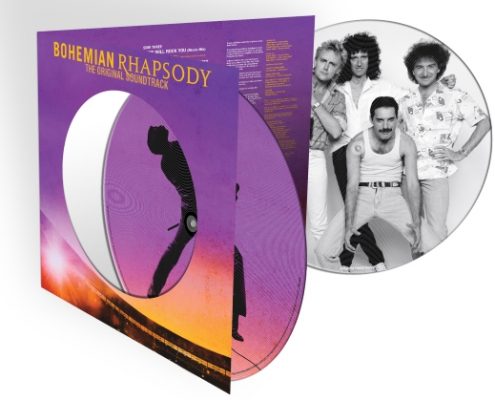
By the time the credits roll concluding the four-time Oscar winning Queen biopic Bohemian Rhapsody, a casual music fan might assume that the royal rockers’ career must have peaked with that July 1985 Live Aid London benefit concert performance which climaxes the film. In fact, the story portrayed in Bohemian Rhapsody is only the first volume of the five decade Queen saga, whose final chapter is being writ large in real time even today with Queen + Adam Lambert. Queen’s A Day at the Races came barely a year after their crowning achievement fourth album,”…an unapologetic sequel to A Night at the Opera , the 1975 breakthrough which established Queen as rock royalty. The band never attempts to hide that…” notes Stephen Thomas Erlewine on AllMusic.com. And why would they? Both albums had titles borrowed from classic Marx Brothers comedy films. However, A Day at the Races found the members of Queen bowing to no man, and that included sovereign rule in the studio without star producer Roy Thomas Baker for the first time, resulting in the raging rocker “Tie Your Mother Down” and the timeless singalong “Somebody to Love”.With the October 1977 release of News of the World, London-based Queen moved into the upper echelons of international rock bands with arena-filling (soon to be stadium-sized) anthems “We Will Rock You” and “We Are the Champions”. But my guest, Queen guitarist/composer Brian May, reminds us that News of the World also contains “Spread Your Wings”,”Get Down, Make Love”, and the under-appreciated mini-opera “It’s Late” as well. With News of theWorld, Queen had succeeded as four real “mates” on an international scale, which would continue only to increase for the next decade. With four writers and vocalists, the band had a surplus of strong songs, while Queen lead singer Freddie Mercury possessed such an operatic voice that it’s easy to forget that both Brian May and drummer Roger Taylor also sang lead on select songs.
Funny how “Bohemian Rhapsody” and its accompanying album, A Night at the Opera, stands so firmly in our collective memory, but in fact it was The Game five years later that crowned Queen #1 worldwide. It was precisely because of the balance of hits “Crazy Little Thing Called Love”, “Another One Bites the Dust”, and “Play the Game” with the blistering album track “Dragon Attack”, “Rock It”, and the sleeper “Save Me”. Redbeard interviewing Brian May in the early Nineties.
One of the biggest sub-plots completely absent from the multiple Academy Award-winning film Bohemian Rhapsody is how, in the Eighties, Queen became one of the most popular bands in the world in the mid-Eighties…everywhere, it seems, except America.
“Yeah, well, we were definitely frustrated about this country. It’s very hard,” guitarist Brian May admitted to me, “because America is the place where we felt that we grew up and became a band. And there was a point where we had it all there, and it gradually trickled away. So it was very frustrating for us here, yeah.”- Redbeard
We are celebrating an historic milestone in rock history: the fiftieth anniversary of the release of Queen’s A Night at the Opera album! To mark the occasion, Brian May and Roger Taylor of Queen join me here In the Studio to recall the early recordings and London club days with the embryonic quartet, on its way to rewriting the rock record books.
After two studio albums and a trial-by-fire legendary US tour supporting lovable Mott the Hoople, London-based Queen headlining the Rainbow Theatre for the first time in late March 1974 were so impressive in concert that when they booked the same venue in November later that same year to premiere their third studio album, Sheer Heart Attack, the young foursome had to add a second night.
Recording the performance on audio and film over fifty years ago was a daunting task, both technologically and financially. Live recording was much more art than science then, with no do-overs, no digital tricks, nowhere to hide. Not that this tightly rehearsed band, comprised of singing drummer Roger Taylor, gifted guitarist/singer Brian May, shy bass player/ singer John Deacon, and unforgettable frontman vocalist Freddie Mercury, needed any augmentation. Apparently in the mid-1970s you could go into a British cinema to watch a forgettable Burt Reynolds movie and also see the entire Queen concert before the main attraction, yet the audio tapes from none of the three nights at the Rainbow were ever released until four decades later. By including the entire March Live at the Rainbow ’74 show on disc one and the November performances on a second disc, you can actually witness Queen’s rapid ascent to the throne of rock royalty. Yet Roger Taylor reveals here In the Studio in this classic rock interview that all was not well with the rock royal family.The guys were flat broke without knowing where the money was going. And Brian May confesses that all was not well with his health, either. May contracted hepatitis while on tour in America, requiring hospitalization. But while recording Sheer Heart Attack containing “Now I’m Here”,”Stone Cold Crazy” and Queen’s first bonafide hit “Killer Queen” ( US #12 on Billboard album sales chart, #2 in the UK) in London over the Summer of 1974, May collapsed with an even more life-threatening chronic colon condition that nearly killed him. Find out in this In the Studio classic rock interview. Meanwhile Brian & Roger give us the backstory on such early Queen songs as “Keep Yourself Alive” and “Doing All Right” from the debut ;”Now I’m Here”, “Stone Cold Crazy”, and “Killer Queen” from Sheer Heart Attack; and some amazing early live performances from the London Hammersmith Odeon. Don’t miss Queen’s golden jubilee, part one, with Brian May and Roger Taylor. –Redbeard
As we discuss their blockbuster second album Double Vision, one of the most endearing things about Foreigner founder and guiding heart, Mick Jones, is that he has never been coy or clever in trying to hide his inspirations, or aspirations, for the band. Case in point is the song “Blue Morning, Blue Day” from the Summer 1978 second Foreigner album, Double Vision. “That was a little Procol Harum coming out in me, the period with the big orchestra and ‘Conquistador’,” Jones confessed.” It was that mood. I felt very strongly that it was an inspiration in that song. And I was starting to experiment, I was getting clever (composing) on the piano! (chuckles)”.
“In the case of ‘Double Vision’, my inspiration came from a hockey game”, writes original Foreigner lead singer/ lyricist Lou Gramm in his book, Juke Box Hero, who along with Foreigner founder/guitarist/composer Mick Jones are my guests In the Studio to explore that blockbuster seven million seller second album of the same name. “The New York Rangers were playing the Philadelphia Flyers in the Stanley Cup playoffs, and during a flurry in front of the net, one of the Flyers elbowed Rangers goalie John Davidson in the head. He was knocked woozy and had to be helped to the locker room. One of the announcers came on with an update…that the goalie had been experiencing some double vision.Voila!”
The song that ignited the immense popularity of the parent album Double Vision was “Hot Blooded”, which boiled over to reach #3 on Billboard and quickly became Foreigner’s first million selling single. In this classic rock interview, Mick Jones recalls that Foreigner was invited to kick off the massive California Jam 2 festival in March 1978, based purely on the popularity of their debut album, and the band interrupted the recording of Double Vision to appear. Foreigner ended up playing every song they knew, but were called back repeatedly for encores by the enormous crowd of an estimated 300,000.
“After a few anxious seconds, we decided to go out there and play ‘ Hot Blooded’ even though the song was far from finished.We only had the lyrics for one verse,” continues Lou Gramm in his book. “I wound up singing the first verse twice!” –Redbeard
The fifth, arguably the finest, yet the final studio recordings by the Anglo-American trio The Police, Synchronicity in 1983 slapped the cuffs on an arresting recorded legacy left by the band. Synchronicity went to #1 sales on both sides of the Atlantic, sold more than eight million in the US alone, was nominated for five Grammys, and won three. Rolling Stone magazine ranks Synchronicity by The Police at #159 on its list of 500 Greatest Albums of All Time.
With 1978’s formative Outlandos d’Amour, the UK breakthrough Regatta de Blanc, their 1980 worldwide hit Zenyatta Mondatta, and the more experimental Ghost in the Machine the following year, you could debate whether the first four albums by the Anglo-American band The Police were significant enough, creatively and commercially, to issue a warrant to book them into the Rock and Roll Hall of Fame. Yet this fact is certain: the 1983 Police album Synchronicity guaranteed it. Synchronicity was so massively appealing that millions purchased it, as well as the preceding four Police albums, in numbers great enough to place all five on the 1983 sales chart simultaneously at year’s end! Drummer Stewart Copeland, the sole American, figuratively was the Police commissioner in London in 1977, forming the band at the height of the Punk Rock scene, but like guitarist Andy Summers, the veteran of the force, and chief of Police singer/bass player/songwriter Sting, none of them were actually spawned by that minimalist scene. In the long tradition of white musicians copping authentic black music, the reggae influences so prominent on those first two Police albums had been homogenized by the time of Synchronicity‘s June 1983 release enough that the band was not handcuffed by the musical conventions of either punk or reggae on mega-hits “Every Breath You Take”,”King of Pain”,”Wrapped Around Your Finger”, and the title song. There are a few self-appointed online hacks implying that The Police were no more than two side musicians helping to realize the early songs of singer/songwriter Sting, but if you check their credentials, these clueless Justin-come-latelies never actually spoke to them or even saw the band. Cops of Rock Stewart Copeland and Sting open this Police inquiry with me In the Studio for the definitive classic rock interview regarding the making of Synchronicity. – Redbeard
The authentic sawdust-on-the-floor, rough and tumble rhythm and blues that I discovered on a little white promo cassette labeled “Stevie Ray Vaughan & Double Trouble Texas Flood” was in stark contrast to other new music in Spring 1983 by U2, Talking Heads, and David Bowie that we were programming on ROCK 103/Memphis . When I heard the joyful shuffle of “Pride and Joy” by this Lone Star trio, I knew immediately that Stevie Ray Vaughan mined a deep vein of music which ran under everything that had come from Tennessee, Arkansas, and Mississippi, down to the Delta and west across Louisiana to East Texas, for over a hundred years.
It takes a big cast to tell the origin story of Texas Flood from Stevie Ray Vaughan & Double Trouble, so join drummer Chris Whipper Layton, Double Trouble bass player Tommy Shannon, bluesmaster Buddy Guy, singer/songwriter the late Doyle Bramhall, biographer Joe Nick Patoski, and my archival interview with the late Stevie Vaughan for the headwaters of Texas Flood.
The songs featured include “Pride and Joy”,”Cold Shot”, the spectacular Hendrix cover”Voodoo Child”,”Look at Little Sister”,”Life Without You”, and two “Big” Doyle Bramhall songs, “Change It” and “Life By the Drop”. For additional insight I recommend Joe Nick Patoski and Bill Crawford’s definitive biography Stevie Ray Vaughan : Caught in the Crossfire. Then for a more “family style” perspective, be sure to watch director Kirby Warnock’s 2019 documentary film, now retitled Jimmie & Stevie Ray Vaughan: Brothers in Blues, streaming on Amazon Prime. -Redbeard