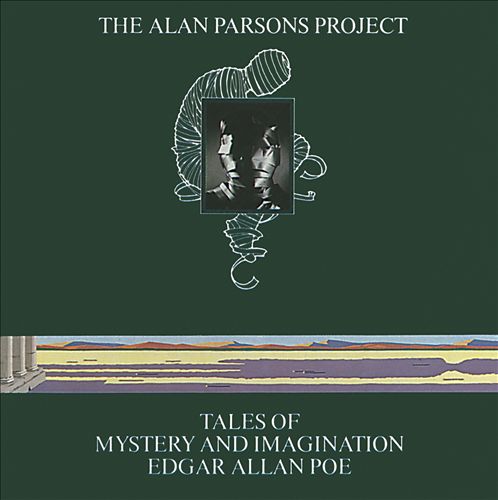
In Spring 1976 when Tales of Mystery and Imagination was released by the unknown Alan Parsons Project, just working behind the scenes as a recording engineer with such world-changers as the Beatles and progressive rock titans Pink Floyd could actually land you a recording contract yourself. “Basically he signed a blank tape,” Alan Parsons chuckles in my classic rock interview, recalling 20th Century Records President Russ Regan green-lighting a concept album based on the books of Edgar Alan Poe, composed by the young Abbey Road studio hound Parsons and songwriter the late Eric Woolfson as The Alan Parsons Project.
Alan Parsons is my honored guest In the Studio on the golden anniversary of his debut as a recording artist unto himself, Tales of Mystery and Imagination. -Redbeard
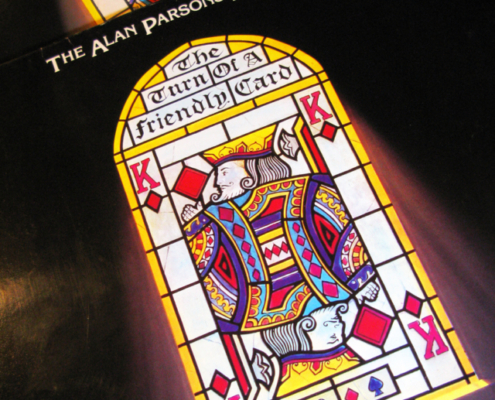
The real-life backstory inspiration for the Alan Parsons Project’s million-seller albums Turn of a Friendly Card (US #13) released in November 1980, and even more successful Eye in the Sky in June 1982, is pretty interesting. Due to the hit sales of their 1977 second albumI Robot, in order to escape a 93% income tax bracket (!), producer/engineer Alan Parsons and songwriter Eric Woolfson had found themselves tax exiles from their native England, emigrating to the Mediterranean country of Monaco with its world-famous Monte Carlo casinos.
“It started trying to be an album based on witchcraft,” Alan Parsons confessed to me about Pyramid, the highly anticipated third album by the Alan Parsons Project, released in June 1978. “All areas of it, black magic, and the occult. But somehow we focused on the pyramid energy cult which was very fashionable at that time. You know, people were buying plastic pyramids in stores and keeping milk under them,” Parsons chuckled. “So it was led by this ‘pyramid power’ fashion. I had always been fascinated by the pyramids and their history and their mystery, and why the Egyptian and Mayan cultures went to such feats to construct such structures.” By the Summer 1982, exactly five years after “the un-Dynamic Duo” of Parsons and Woolfson first broke through with I, Robot, you could just spin the FM radio dial to any album rock or Adult Contemporary radio station in America and hear various songs from the Alan Parsons Project’s sixth album, such as the hit title song “Eye in the Sky” or “Psychobabble”. Peaking on the album chart at #7, Eye in the Sky received a Grammy Award nomination upon its initial release only to win that Grammy for the 2017 “Best Immersive Audio Album” thirty-five years later. To date Eye in the Sky has sold more than five million copies since release. –Redbeard
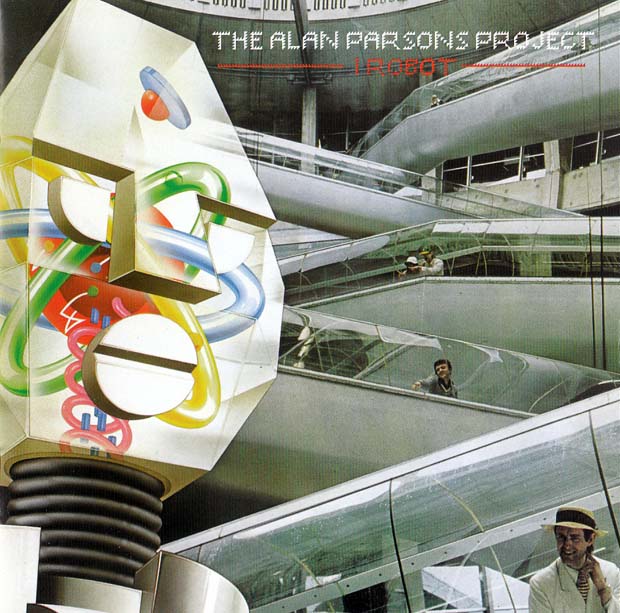
My Rare classic rock interview with the namesake British recording engineer/producer of the Alan Parsons Project, whose 1977 second album, in collaboration with composer the late Eric Woolfson, was once again based on a famous literary work (their debut Tales of Mystery and Imagination drew storylines from Edgar Alan Poe). This time it was the Isaac Asimov Artificial Intelligence science fiction classic I, Robot. But with a twist.
“It was basically to take the title of Isaac Asimov’s book, and then to totally reverse the philosophy,” chuckled Alan Parsons. “Asimov implied that robotic creatures would be designed totally safe and would never be able to harm human beings. Our philosophy was that is not at all what will happen… I believe that there’s a real danger that if we invent thinking machines, then they might ultimately destroy us.” The Alan Parsons Project I, Robot contained a rarity among progressive rock albums: a mas appeal Top 40 hit in “I Wouldn’t Want to Be Like You”, plus FM rock favorite “Breakdown” with the distinctive voice of Hollies lead singer Allan Clarke.
By the Summer 1982, exactly five years after “the un-Dynamic Duo” ofAlan Parsons and Eric Woolfson first broke through with I, Robot , you could just spin the FM radio dial to any album rock or Adult Contemporary radio station in America and hear various songs from the Alan Parsons Project’s sixth album, such as the hit title song “Eye in the Sky” or “Psychobabble”. Peaking on the album chart at #7, Eye in the Sky received a Grammy Award nomination upon its initial release only to win that Grammy for the 2017 “Best Immersive Audio Album” thirty-five years later. To date Eye in the Sky has sold more than five million copies since release. – Redbeard