Tag: best selling albums 1977

  • Kinks- Sleepwalker/Misfits- Ray Davies

    Kinks- Sleepwalker/Misfits- Ray Davies

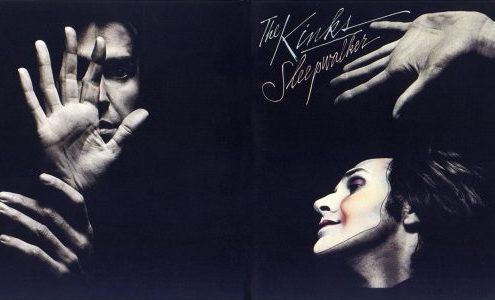
    The Kinks were probably a lock for Rock and Roll Hall of Fame induction for their British Invasion Sixties output alone. But then the first half of the Seventies was tough sledding for them until reclaiming their rock bona fides, starting with February 1977’s Sleepwalker, the Kinks’ sixteenth (!!) studio album, and much of what turned up on 1978’s Misfits. The Kinks’ leader and poet laureate of rock, Sir Raymond Douglas Davies, joins me In the Studio for the stories behind “Juke Box Music”,”Sleepwalker”,”Live Life”, “Rock and Roll Fantasy” (the best Ray Davies ballad since “Celluloid Heroes”),  and the title song on Misfits.

    Historically lumped into the mid-Sixties British Invasion bands with The Beatles, Rolling Stones, and The Who, London’s lovable Kinks nevertheless took a considerably different, albeit unintended, path into the Seventies, particularly in America. At the era-defining iconic rock events from 1967 to 1977…Monterey Pop Festival, Woodstock, Altamont, Isle of Wight Festivals, Watkins Glen, Day on the Green…where were The Kinks?

    Inexplicably, this band who had reeled off a string of Top Ten hits in both the UK and US with “You Really Got Me”,”All Day and All of the Night”,”Tired of Waiting for You”,”Sunny Afternoon”,”Victoria”,”Apeman”, and the timeless “Lola, all which had helped to define rock’n’roll on radio in the latter half of the Sixties, went MIA there, seemingly sleepwalking through much of the Seventies. But it certainly was not for lack of trying. The exquisite “Celluloid Heroes” appeared on The Kinks’ 1972 album Everybody’s in Showbiz,  yet still had disappointing US sales. Ray Davies then wrote a series of musical shows, including 1973’s Preservation Act 1 (a double album, no less); Preservation Act 2  followed a year later; and Soap Opera bubbled up in 1975. Not a one broke into the US Top Fifty sales.

    When the opportunity to record for veteran record man Clive Davis’ Arista label appeared in 1976, it came with a corporate caveat: no concept albums. Songs including “Sleepwalker” and “Juke Box Music”, with Ray Davies giving the good-natured nod to critics who felt that his preceding five year output had been too precious for rock’n’roll, helped to put The Kinks back on influential US rock radio in 1977, which in turn permitted them to headline major US arenas for the first time. The momentum continued into the legendary band’s  Misfits in early Summer 1978. –Redbeard

  • Lynyrd Skynyrd- Street Survivors- the late Gary Rossington

    Lynyrd Skynyrd- Street Survivors- the late Gary Rossington

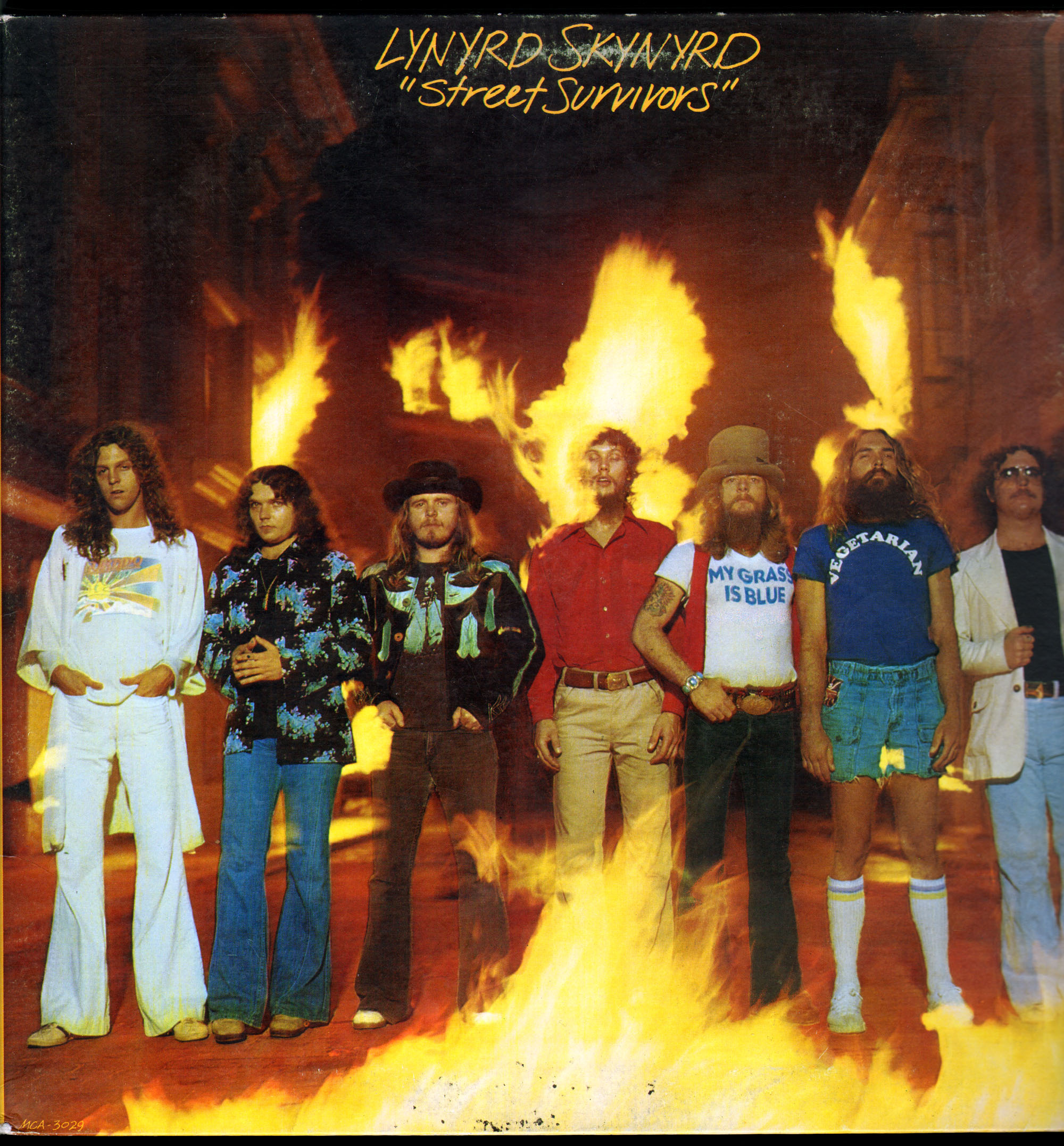
    The tale of Lynyrd Skynyrd and Street Survivors  would seem to have been hatched in the vivid imaginations of literary Southern giants Tennessee Williams, Harper Lee, or William Faulkner, but the real-life characters are so colorful, the childhood bonds so strong, the struggles so personal, the victories so inspiring, and the heartbreak so deep that there is simply no need for hyperbole in telling it. The modifiers “legendary” and “iconic” are thrown around far too loosely in rock journalism these days, but in the case of Lynyrd Skynyrd’s Street Survivors, these adjectives are completely warranted, simply because the album was so good, and what happened to the band, just days after its release, was so bad. Lynyrd Skynyrd guitarist/songwriter Gary Rossington, who died March 5, 2023 sets the table “One More Time” for the songs “What’s Your Name”,”That Smell”,”I Know a Little”,”You Got That Right”, and reveals what really happened on that fateful night flight in October 1977.

    The redemption story of Lynyrd Skynyrd’s most musically mature and popular album, Street Survivors, is sadly forever framed by gut-wrenching tragedy. Revisiting the time of of one of music history’s darkest days compels us to separate fact from fiction, myth from legend, about Lynyrd Skynyrd who waded from the swamps at Green Cove Springs outside Jacksonville Florida to the top of the charts. Their fifth studio album, Street Survivors remains unique in the long Lynyrd Skynyrd discography in several ways: it is the last recorded by original members guitarist Allen Collins and singer/ songwriter Ronnie Van Zant; it is the only studio appearance with songs and performances by Steve Gaines; and Street Survivors  is Lynyrd Skynyrd’s highest charting album at #5.

    The tragic airplane accident which decimated the original Lynyrd Skynyrd could focus you on the obvious fact that past prodigal & current member guitarist Rick Medlocke is the sole survivor of the Jacksonville kids who met on the baseball field, practiced in a carport, and wrote rock history. Yet if you over-analyze the meaning of this latest attrition, you risk missing the point of every Lynyrd Skynyrd release and tour (counting the Rossington-Collins Band) for the last 40 years. When I asked a visibly scarred and emotionally traumatized Gary Rossington in May 1980 why he chose to soldier on after the tragic 1977 Lynyrd Skynyrd plane crash killed three band members, Rossington replied, “Because I don’t know how to do anything else, except pick strawberries. And I’d rather play music.”

    ( Rick Medlocke (l), Johnny Van Zant (c) and Gary Rossington )

    The core of Lynyrd Skynyrd always was the ageless bond among boyhood friends from the wrong side of the tracks in Jacksonville. With the passing of co-founding guitarist Gary Rossington March 5, 2023, nature has imposed its own “stop loss policy” on the band. Lynyrd Skynyrd co-founder Gary Rossington, In the Studio along with a cameo from Southern Rock patriarch the late Charlie Daniels, saluted the band’s biggest-selling album Street Survivors. – Redbeard

  • Jackson Browne- Running On Empty

    Jackson Browne- Running On Empty

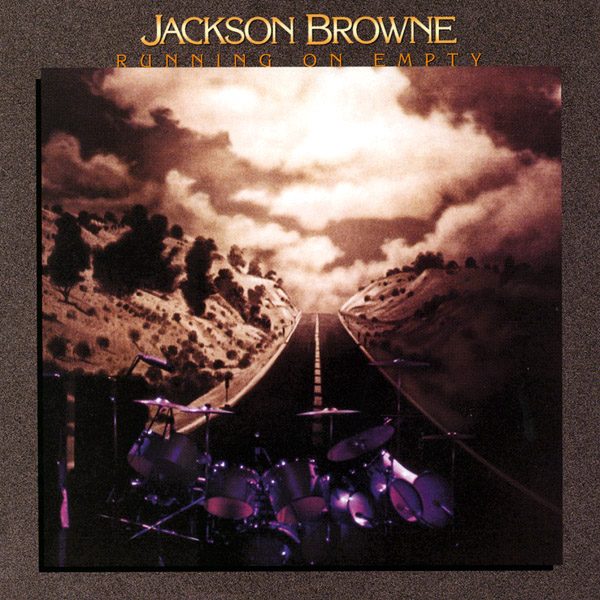
    About two-thirds of the way into my Jackson Browne interview recalling his December 1977 road tour chronicle album Running on Empty, the fabled singer/songwriter blurted out, “You’re making me want to do this again! It was really fun.” You know several of the songs by heart from Jackson Browne’s best-selling  album Running on Empty, including “The Load Out/Stay” medley, as well as the album’s title song, but did you know that it peaked at #3 on Billboard, sold over 7,000,000 copies just in the US, and wound up being a Top 25 seller of the entire Seventies?

    In 1977, highly-acclaimed Southern California singer/songwriter Jackson Browne found himself to be a new dad, a suddenly single parent, and a widower following the suicide of his wife. Conventional wisdom would assume that any one of those three challenges alone could require  an entertainer to put his or her career on hold indefinitely in order to provide parenting, get affairs in order, and to grieve. Yet Jackson Browne did exactly the opposite: he went on tour, finding the regimented structure and almost militaristic organization of a large touring band, with day-to-day and even hour-by-hour decisions managed by others, to be a sanctuary. And Browne found solace rather than solitude in the extended family of band members, lighting and sound technicians, riggers and roadies. From his 1972 debut, Jackson Browne had won praise as a superb song craftsman and a meticulous record maker, placing no less than three of his earlier studio albums onto Rolling Stone magazines Top 500 Albums of All Time list, but by far his loosest, least technically perfect album Running on Empty, released December 1977, outsold all three combined. Perennials “You Love Thunder” with call-and-response by Rosemary Butler; the lonesome sound of the late David Lindley’s fiddle on “The Road”; the clever backstage double entendre of “Rosie”; Browne’s mashup of his ode to road crews, “The Load Out”, with Maurice Williams’ “Stay”; and the rocking title song “Running on Empty” are all chronicled in detail by my guest Jackson Browne here In the Studio. – >Redbeard

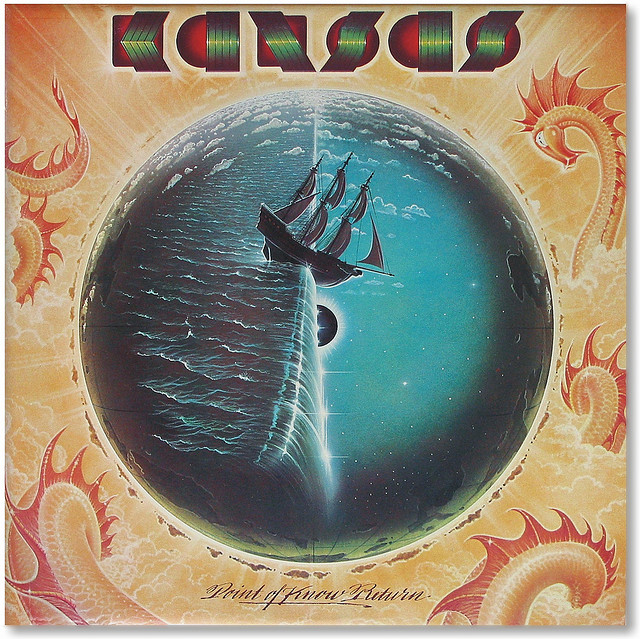
  • Kansas- Point of Know Return- Phil Ehart, Richard Williams, Kerry Livgren

    Kansas- Point of Know Return- Phil Ehart, Richard Williams, Kerry Livgren

    To give you an idea of how big an album the fifth one from Kansas, Point of Know Return, was: my first arena show after moving to Memphis in August 1978 saw the band playing to a sold-out audience on a non-stop tour, nearly a year after the album’s October 1977 release! And coming on the heels of the Kansas breakout effort Leftoverture only a year earlier, Point of Know Return was easily its equal, containing “Paradox”, “Portrait(He Knew)”, “Sparks of the Tempest”, the soaring epic “Closet Chronicles”, “Nobody’s Home”, “Point of Know Return”, and Kerry Livgren’s truly legendary “Dust in the Wind”.

    With back-to-back quadruple platinum albums Leftoverture  in 1976 and Point of Know Return  barely eighteen months later, the band Kansas was assured of permanent statehood in rock history. Formed organically as a” band of brothers” in Topeka, over the course of  almost five decades Kansas has proven to be bound together as much by shared struggle as by shared success. Having sold over thirty million albums since their 1974 debut, that’s impressive.

    Kansas original band members Kerry Livgren, Phil Ehart, Steve Walsh, Dave Hope, Richard Williams, and Robbie Steinhardt shared a dream and honed their tight sweeping sound 1500 miles away from the American music business hubs of New York, Los Angeles, and Nashville, but band co-founder and ex-guitarist/keyboard player/songwriter Kerry Livgren told me In the Studio that the members of Kansas studied the leading British progressive rock bands as if their lives depended on it.

    “Being from Topeka KS, just because it’s surrounded by wheat farmers in the Midwest, didn’t mean that we weren’t exposed to every kind of music,” Livgren reminds us. “You could live in Cody WY and go in a record store there and buy the same records as someone in New York City. People assumed that because we were from Kansas that we should be a fiddle band or something. We heard all kinds of British rock, from Cream to King Crimson.”Drummer Phil Ehart recalls those early pre-“Wayward Son” days. “We were all poor as church mice. Nobody had a nickel to their name. We all lived in a ‘band house’, and every dime we made went back into the band and keeping our bass player Dave in cigarettes!” Kerry Livgren concurs.” In 1970 for the year I made five bucks. That’s below any poverty level I know of.”

    It would take Kansas no less than four trips to the plate before they would touch all the bases with their 1976 Leftoverture  release, but even after selling four million copies, many rock critics continued to dismiss the band even though most couldn’t have found Topeka with a map. “The fact that we were an American band which emulated a lot of the progressive rock from England bugged a lot of American music critics,” Livgren explains in this classic rock interview. “They thought, ‘You shouldn’t sound like that if you come from Kansas’! Apparently real people didn’t seem to care, ’cause we sold millions of records anyway (with the next Kansas album in 1977, Point of Know Return).”

    This edition of In the Studio features a rare reunion of my guests Kerry Livgren and Steve Walsh with current Kansas members Phil Ehart and Richard Williams, and is dedicated to original violinist/singer Robbie Steinhardt who passed away in July 2021. –Redbeard

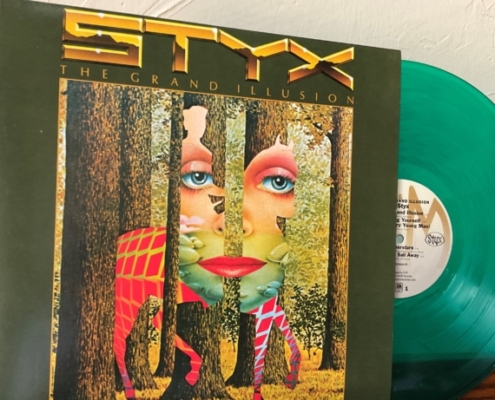
  • Styx- Grand Illusion- Tommy Shaw, James “JY” Young, Dennis DeYoung, Lawrence Gowan

    Styx- Grand Illusion- Tommy Shaw, James “JY” Young, Dennis DeYoung, Lawrence Gowan

    Released 7/7/77, rock and roll dreams, combined with Midwestern tenacity and the talents of a Southern man,  gave Chicago-based journeymen Styx their first nationwide multi-million seller, The Grand Illusion. Styx co-founder Dennis DeYoung, lifer James “JY” Young, and then-recently recruited Alabama boy Tommy Shaw all joined me here  In the Studio for the early days of being the perennial opening act. Saddled with the curse “big in the Flyover States”, all the while Styx wrote and recorded “Fooling Yourself”,”Come Sail Away”,”Miss America”, “Man in the Wilderness”, and “Grand Illusion”.

    The American music business has long had a bi-coastal bias toward the media centers of New York City and Los Angeles at the expense of the vast Midwest heartland in between. This myopic musical mentality is nothing new, but it has made the road to rock success particularly long for many Midwest musicians including Bob Seger, Joe Walsh, REO Speedwagon, Cheap Trick, John Mellencamp, even Canadian counterparts Rush. But no one knows the arduous journey from nowhere to national favorites better than Chicago band Styx, named after the river in Greek mythology that runs through Hell!It took seven albums in as many years to break down the barriers and shatter any perception of Midwestern mediocrity on the way eventually to over three million in sales for The Grand Illusion, arena headliner status, and a series of multi-platinum sellers in a row for Styx. –Redbeard

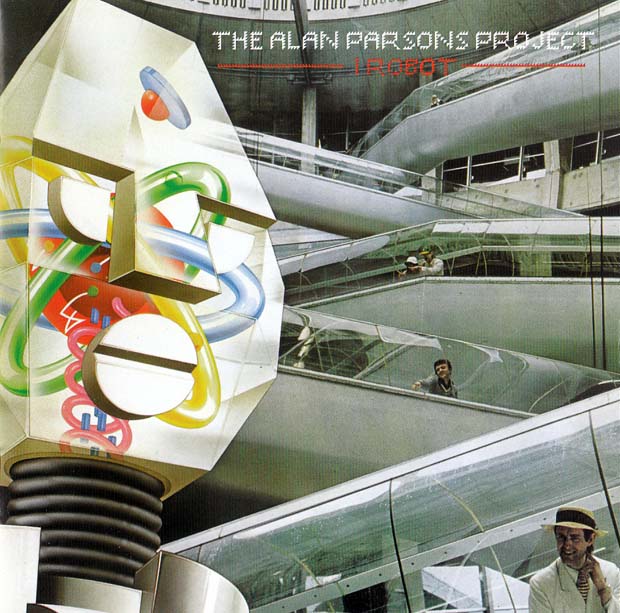
  • Alan Parsons Project- I, Robot

    Alan Parsons Project- I, Robot

    My Rare classic rock interview with the namesake British recording engineer/producer of the Alan Parsons Project, whose 1977 second album, in collaboration with composer the late Eric Woolfson, was once  again based on a famous literary work (their debut Tales of Mystery and Imagination drew storylines from Edgar Alan Poe). This time it was the Isaac Asimov Artificial Intelligence science fiction classic I, Robot. But with a twist.

    “It was basically to take the title of Isaac Asimov’s book, and then to totally reverse the philosophy,” chuckled Alan Parsons. “Asimov implied that robotic creatures would be designed totally safe and would never be able to harm human beings. Our philosophy was that is not at all what will happen… I believe that there’s a real danger that if we invent thinking machines, then they might ultimately destroy us.” The Alan Parsons Project I, Robot contained a rarity among progressive rock albums: a mas appeal Top 40 hit in “I Wouldn’t Want to Be Like You”, plus FM rock favorite “Breakdown” with the distinctive voice of Hollies  lead singer Allan Clarke.

    By the Summer 1982, exactly five years after “the un-Dynamic Duo” ofAlan Parsons and  Eric Woolfson first broke through with I, Robot , you could just spin the FM radio dial to any album rock or Adult Contemporary radio station in America and hear various songs from the Alan Parsons Project’s sixth album, such as the hit title song “Eye in the Sky” or “Psychobabble”. Peaking on the album chart at #7,  Eye in the Sky received a Grammy Award nomination upon its initial release only to win that Grammy for the 2017 “Best Immersive Audio Album” thirty-five years later. To date Eye in the Sky has sold more than five million copies  since release. – Redbeard

  • Steve Miller- Book of Dreams

    Steve Miller- Book of Dreams

    “Maurice” the Space Cowboy, better known as Steve Miller, authored two of his biggest albums, Fly Like an Eagle  and Book of Dreams, as bookends in one prolific writing period in the mid-1970s. Steve Miller’s “Book…”  review here In the Studio includes details on making “Jet Airliner”, the melancholy “Winter Time”, the infectious “Swingtown”, the playful “Jungle Love”, and two under-appreciated sleepers, the burning “Sacrifice” featuring guitar solos by Les Dudek, and the joy of “My Own Space”.

    As you will hear in my classic rock interview here In the Studio, Steve Miller is an active, engaged citizen in any community in which he lives. “I  moved to New York City and started a new chapter. I’m now on the board of directors of Jazz at Lincoln Center, working on a Blues Pedagogy for their twelve music education programs. Also I’m on the board of the Welcoming Committee of the musical instrument department at the Metropolitan Museum of Art, working there on exhibits and concerts for the Museum.” Activism has been a hallmark of Steve Miller’s life from his time living in Seattle, Sun Valley, and now New York City. “My main areas of concern these days are music education, Meals on Wheels, and animal shelters. It’s wonderfully creative here (in NYC), very inspirational, and a nice way to start the last ‘chapters’.” – Redbeard

  • Pink Floyd- Animals- Roger Waters, David Gilmour, Nick Mason

    Pink Floyd- Animals- Roger Waters, David Gilmour, Nick Mason

    How did Pink Floyd devolve from the sublime introspection of Dark Side of the Moon in 1973 to the madness and despair of The Wall six years later? It’s a real zoo In the Studio with Pink Floyd Animals wranglers David Gilmour, Nick Mason, & former member and big-concept composer Roger Waters. Gilmour,  Mason, and  Waters explore the dark, ominous, yet vitally important transitional musical missing link, January 1977’s Animals, an album that was highly anticipated, here in my classic rock interviews. After all, the two Pink Floyd predecessors, Dark Side of the Moon and Wish You Were Here,  were on their way to selling forty million copies, collectively, just in the U.S.

    The original sound of the Animals  disc was as dark and murky as Roger Waters’ vision of humanity, and I must confess that the combination of only three lengthy main songs,”Dogs”, “Pigs”, and “Sheep”, with that thick bass-heavy sonic presentation of the original, kept Animals  off of much of American rock radio then. With the close-mic’ing technique of the musical instruments so popular then, the resultant sound of Animals can be startling today with the latest 21st century remastering, like finding a pristine black pearl perfectly preserved in the muddy bottom of the stream of time.

    With hindsight, it is clear that Pink Floyd’s Animals   and its subsequent tour were the linchpin between the sublime Dark Side…, the melancholy Wish You Were Here,  and the creeping numbing isolation of The Wall   brought on by superstar success. Animals, though, was cynical, agitated, downright venal in places, Roger Waters’ vented emotions frozen in time then without the luxury of The Wall‘s explorations of Waters’ troubled childhood past for context, nor his future for resolution. Listening to Animals  upon its release was the musical equivalent of suddenly coming upon a car crash and being aware immediately that serious trauma had occurred. The listener desperately wants to call for help, but who are we to notify? –Redbeard

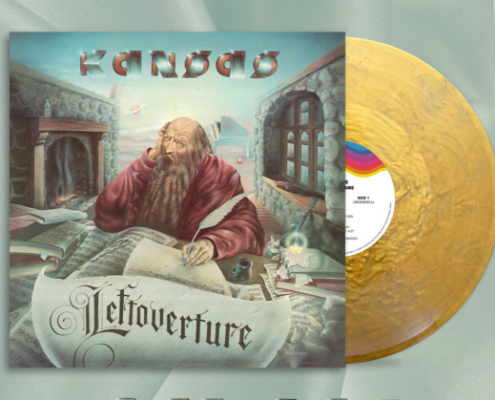
  • Kansas- Leftoverture 50th- Kerry Livgren, Phil Ehart, Steve Walsh, Richard Williams, the late Robbie Steinhardt
    Kansas- Leftoverture 50th- Kerry Livgren, Phil Ehart, Steve Walsh, Richard Williams, the late Robbie Steinhardt

    By 1976 and their fourth effort Leftoverture, it was go big or go home for this intrepid six-man band from Topeka, Kansas. Their first three albums had shown significant growth in all areas of songwriting, musicianship, and production. Yet as you will hear in my classic rock interview from ex-guitarist/keyboardist/main songwriter Kerry Livgren, guitarist Richard Williams, original singer/keyboardist Steve Walsh, original violinist/singer the late Robbie Steinhardt,  and legacy drummer Phil Ehart, Kansas fully realized that if the fourth album, Leftoverture, did not spawn a hit and sell significant quantities, the big New York City record deal would be toast. And the deal had run up a tab of over $175,000 in debt, in mid-Seventies dollars an almost insurmountable amount to recoup.

    For the story of the fourth Kansas album, Leftoverture, we assembled the majority of the original American progressive rock band to tell the back story of the album which bestowed Classic Rock statehood on this band of brothers. A tale of collective fate and colossal determination, my guests include guitarist/songwriter Kerry Livgren, drummer Phil Ehart, guitarist Richard Williams, and original lead singer/keyboard player Steve Walsh. The songs they discuss include Kansas klassics “What’s on My Mind”, the perennial “Miracles Out of Nowhere”, the epic “Cheyenne Anthem”, the spiritual longing of “The Wall”, and the last-minute game changer “Carry On Wayward Son”. Because of the hit “Carry On Wayward Son, submitted by the prolific Livgren even as the band was packing up to leave the rehearsal studio, Leftoverture  gave Kansas permanent status in Rock’s electoral college. When “Carry On Wayward Son” crossed over from FM rock airplay to Top 40 radio stations in early 1977, Leftoverture  entered the Top Five in Billboard album sales, eventually exceeding four million copies.

    A curious thing happens when a band such as Kansas gets popular without the rock critics first anointing them: the music writers, most of whom who had pretty much simply ignored the band’s first three albums, now had to pay attention. And it wasn’t flattering. Composer of most of Leftoverture, Kerry Livgren, thinks that it was because most rock critics then could not accept the fact of a world-class Progressive Rock band coming from Topeka, Kansas. “The fact that we were an American band who, in many ways, emulated the Progressive Rock from England was something that bugged a lot of American writers,” Livgren pointed out. “…But they thought,’You shouldn’t SOUND like that if you come from Kansas.’ Apparently (other) people didn’t seem to care. We sold millions of albums anyway.”

    Kansas had reunited most of the original band and they were eager to talk, plus key songwriter Kerry Livgren, who had retired from touring in order to become a Georgia farmer, had parked his John Deere and picked up his Les Paul to do some Contemporary Christian solo albums, so  suddenly he became available as well. This edition of In the Studio  is dedicated to Robbie Steinhardt, who passed away in July, 2021. –Redbeard

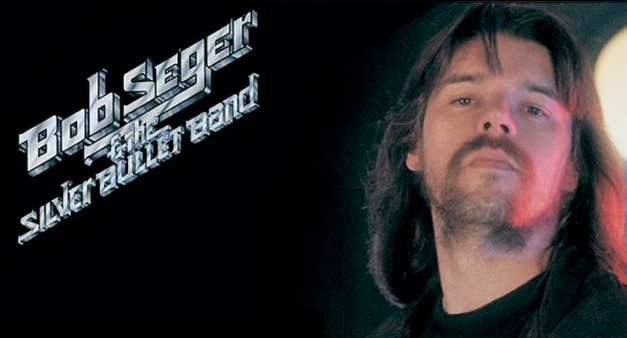
  • Bob Seger & the Silver Bullet Band- Night Moves 50th Anniversary
    Bob Seger & the Silver Bullet Band- Night Moves 50th Anniversary

    Bob Seger and the Silver Bullet Band’s Night Moves in October 1976 was such a major album, and not just for the “eight year overnight success” that the mainstream media discovered in the Detroit journeyman singer/songwriter, either. Along with Steve Miller’s Fly Like an Eagle, Hotel California late that year from the Eagles, and Frampton Comes Alive by Peter Frampton, Night Moves and its songs “Rock and Roll Never Forgets”,”Main Street”,”The Fire Down Below”, “Come to Poppa”, and the timeless “Night Moves” vaulted FM rock radio over the AM dial Top 40 colossus that had totally dominated American listenership for a generation. Everybody’s all-American Bob Seger is my guest here In the Studio  for the  all-important Night Moves.

    Bob told me during my classic rock interview that he did not write while on tour. “In order for me to write, I need huge chunks of time, I really do. I block it out. Really, to work up where I think I get the quality stuff, it takes about eight, nine, ten hours a day when you’re really at it. And then maybe, in a couple of weeks, I might get the first one that’s really special. I’m not as lucky as people like, say, Don Henley. I’m a good friend of his. I’ve seen Henley just scratching them out (lyrics) in the recording studio, ya know? And they’re great. John Lennon could write a song on the spot, with great lyrics.(producer) Jimmy Iovine would see him do it ! I’m not like that, it takes me a long time. My manager Punch (Andrews) will tell you that I write a ton of songs, probably a hundred a year.

    Redbeard: A hundred a year?

    Bob Seger: Yeah, and out of those I’ll probably finish about forty. And then out of those forty, there will be  about ten that are good. I like to finish everything I start, because I end up stealing from myself (laughs)! We did two hundred sixty-five shows that year 1975,” says Bob Seger with a mixture of pride and amazement, as explanation on why it was so hard to find the solitary time necessary to write well-crafted songs prior to Night Moves.  The double disc Live Bullet,  recorded in Fall 1975 and released six months later, provided that precious fallow period. Seger and his Silver Bullet Band delivered in a major way by October 1976 with Night Moves  containing “Rock and Roll Never Forgets”,”Main Street”,”The Fire Down Below”,”Come to Poppa”, and the title song which Bob calls “…a little novelette.”

    This edition of In the Studio  is dedicated to longtime Silver Bullet Band sax player and crowd-pleaser Alto Reed (born  Thomas Cartmell, 1948)  who passed away from colon cancer at the end of December 2020. He literally left me speechless in awe the first time I witnessed “Turn the Page” performed live in 1975. –Redbeard