Tag: Linda Ronstadt

  • Warren Zevon- Excitable Boy

    Warren Zevon- Excitable Boy

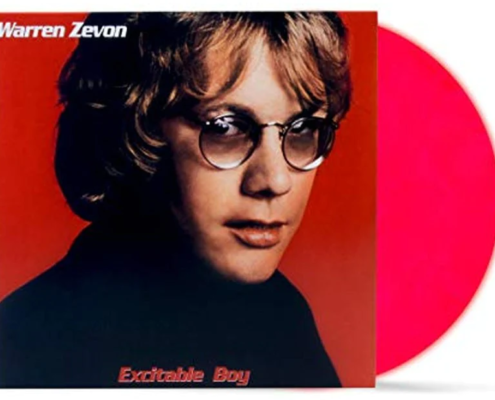
    Even before he planted his flag in the awareness of mainstream rock fans with his third album, Excitable Boy in January 1978, it turns out that I had been an admirer of Warren Zevon’s songwriting talent almost ten years earlier without realizing it. “I wrote a couple of songs that The Turtles did that paid the rent for awhile. One was called ‘Like the Seasons’ and was the B-side to ‘Happy Together’, and the other was ‘Outside Chance’.” 

    By the time Warren Zevon’s third album, Excitable Boy, was released in January 1978, he already had hits, albeit recorded by Linda Ronstadt at her career peak with Zevon’s “Poor Poor Pitiful Me”, “Carmelita”, and “Hasten Down the Wind”. But because the hit “Werewolves of London” was most people’s first impression of Warren as a performer, he was tagged unfairly with the “novelty song singer” label. When it was first released, I remember having to reconcile several things about Excitable Boy, not the least of which being that several of the songs, at least for the times, seemed downright subversive!(And this copy actually glows in the dark. Ah-OOOOO!)

    There was “Roland the Headless Thompson Gunner”, an unblinking yet tongue-in-cheek look at the shadowy world of mercenaries and gunrunners in third-world hotspots. The title song was a lighthearted romp through the anatomy of a psychotic serial killer, complete with girl group backup singers, while the raucous rocker “Lawyers, Guns, and Money” was highly autobiographical, as we find  out in my classic rock interview. Yet on the same tune stack was Zevon’s  “Tenderness on the Block”, a touching look at the loneliness of senior citizens. Not since John Prine’s “Hello in There” (somehow written when Prine was a mere 19) has a young songwriter such as Zevon, not yet old enough to have experienced a teenage daughter of his own coming of age, written so convincingly of an emotion about which he could not yet had any first-hand personal knowledge. ( Warren Zevon guesting with one of his biggest fans, David Letterman, on Late Night )

    Both Warren Zevon’s final Grammy-grabbing album The Wind, as well as his premature death from inoperable lung cancer, occurred in 2003. Included here are three songs from The Wind,  including “Disorder in the House”, the new Republican congressional theme song, with Bruce Springsteen joining Warren on backing vocals; “Prison Grove”, an atmospheric, cinematic tone poem of despair; and the tender lump-in-the-throat “Keep Me in Your Heart”.

    The paradox of the wind is that we feel its presence but can never touch it. The wind only touches us. Two weeks after The Wind was released, Warren Zevon passed away on the wind. -Redbeard

  • The Eagles- the late Glenn Frey & Randy Meisner
    The Eagles- the late Glenn Frey & Randy Meisner

    Down through the history of mankind, first flights such as The Eagles first sortie in 1972 are revered: the Montgolfier brothers in Paris in 1783 with their hot air balloon; the Wright brothers in 1903 with powered flight; Charles Lindbergh’s first transatlantic flight; Yuri Gagarin first into space in 1961, Alan Shepard first American to do so, and Apollo 11’s Neil Armstrong, Buzz Aldrin, first to land on the Moon and return with Michael Collins in July 1969; and on Earth, Dick Rutan and Jeana Yeager flew around the world in 1986 without ever landing!

    In June 1972, when the debut album by a Southern California-based band The Eagles was quietly released, it had none of the anticipated date-with-destiny public spectacle shared by all of the aforementioned events. But history proved that the original quartet’s first flight would quickly allow a career to take wing that would soon soar, resulting in The Eagles becoming the most popular American band ever. By June 1972 America’s musical continental drift had shifted dramatically westward, in part a reaction to the psychedelic sounds of the Summer of Love five years earlier. Bob Dylan had put upstate New York’s Woodstock into his rear view mirror, headed for Nashville’s skyline, while The Band likewise bailed for Malibu California a continent away. David Crosby, Stephen Stills, and Graham Nash had left their respective internationally established bands to convene in Los Angeles’ Topanga Canyon where The Byrds already had flocked around newcomer Gram Parsons. Dylan’s “Lay Lady Lay”,”Teach Your Children” by Crosby, Stills, Nash, and Neil Young, and John Sebastian’s Lovin’ Spoonful hit “Nashville Cats” all had snuck pedal steel guitar onto U.S. Top 40 radio, but these were anomalies rather than a trend, as AM pop stations were peppering in more rock singles in response to new competition from FM progressive rock stations in 1972. Despite those few exceptions, it is impossible to overstate just how rigidly segregated musically the pop and country music establishments were when the first Eagles album was released in June 1972. The Roy Acuff-era Nashville-centric radio format, officially known then as Country & Western, was so autocratic that they considered Buck Owens’ Bakersfield recordings almost heretical. And Willie and Waylon who? Thus in Summer 1972 the rock media viewed the “country rock” hybrid as an orphan, while Nashville’s all-powerful Music Row mafia rejected the bastard spawn as patently illegitimate. It was into this musical migration westward that rode two independent, unheralded, and very young musicians, Don Henley  (2nd from right) from Northeast Texas and Glenn Frey (far right) from Detroit Michigan, who would meet at country rock’s nexus in Southern California where they would recruit country rock pioneers Bernie Leadon(far left) from the Flying Burrito Brothers and Randy Meisner  ( 2nd from left) of Poco. Frey, who spoke to us before his shocking passing in January 2016,  and Meisner join me in this classic rock interview recalling the Eagles’ debut, impressively containing two Top 10 hits “Take It Easy” and “Peaceful Easy Feeling”, plus the Top 20 ” Witchy Woman”. – Redbeard

  • Neil Young- Harvest

    Neil Young- Harvest

    Long known for his prodigious recording output, his prolific songwriting, and his unquestionable musical integrity, in February 1972 Neil Young delivered his most popular*  and  perhaps most influential album, Harvest,  to an eager audience who embraced this organic countrified masterpiece. Only Bob Dylan’s groundbreaking Nashville Skyline  three years earlier equals Neil Young’s Harvest  as a touchstone for the whole Americana musical genre.

    *(until sequel Harvest Moon two decades later)

    Young’s first Top Forty hits “Heart of Gold” and “Old Man” pushed Harvest  to the #1-selling album of the entire year 1972, making Neil Young a star and, just as significantly, served as an all-access pass to mainstream success to follow by a long list of singer/songwriters as diverse as Willie Nelson, Waylon Jennings, Jackson Browne, the Nitty Gritty Dirt Band, Charlie Daniels, and the Marshall Tucker Band. And that was just for starters.

    Neil joins me from his tour bus with the late pedal steel guitarist Ben Keith, who met and recorded together in Nashville for these  sessions only to remain lifelong friends, for my classic rock interview about this essential Harvest album. – Redbeard

  • John Hiatt- Tennessee Plates- 3-93 Dallas

    John Hiatt- Tennessee Plates- 3-93 Dallas

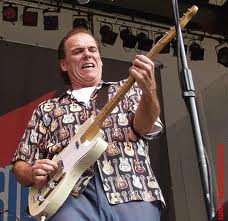
    Now that Randy Newman has been inducted, here’s my nomination for Rock and Roll Hall of Fame for the most deserving American songwriter working today: John Hiatt. Bonnie Raitt, Eric Clapton and B.B.King, Emmylou Harris, Linda Ronstadt, Joe Cocker, Iggy Pop, Dave Edmunds, Gregg Allman, Willie Nelson, Buddy Guy, Delbert McClinton, & the late Jeff Healey can’t all be wrong. But John Hiatt is also a terrific live entertainer as well, as is clear in this tale of two Elvis fans who just wanted to borrow one of the King’s pink Cadillacs. – Redbeard