Tag: best selling albums 1991

  • Scorpions- Crazy World 35th Anniversary- Klaus Meine, Rudolph Schenker

    Scorpions- Crazy World 35th Anniversary- Klaus Meine, Rudolph Schenker

    Sitting with my guests singer/songwriter Klaus Meine and Rudolph Schenker, Scorpions co-founding guitarist/songwriter,  it was fascinating to be reminded by members of Germany’s  beloved band just how much rock music indeed  had changed this Crazy World by the time of that album’s late 1990 release. And the Scorpions should know better than anyone: they were there, living it every day in just the six short years after the  March 1984 release of Love at First Sting leading up to Crazy World. “We were not proud of our country, and our parents were not proud of our country,” says Scorpions lead singer Klaus Meine. “They had just survived the (Second World) War. So rock music is the way we got out. And starting as young musicians playing English and American music, it was in a way something like an attempt to be part of the world community, to escape a place where you feel this burden.”

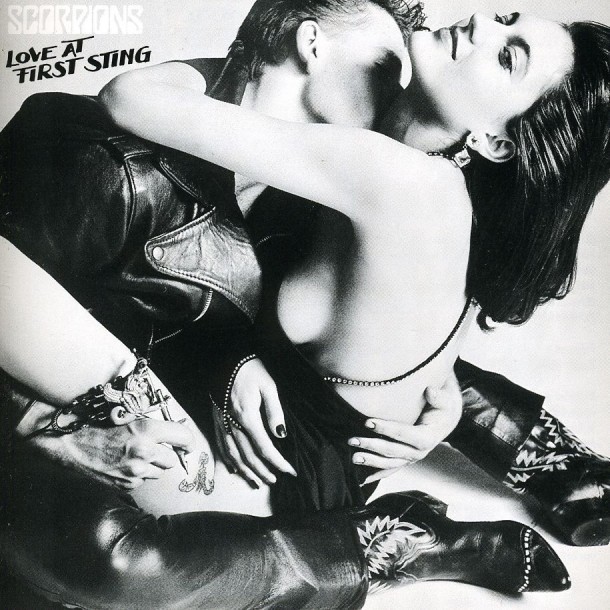
    The Scorpions from Hanover Germany had been the decade-long international long shot when their 1982 album Blackout  blew up Top 10 in the US, powered by the #1 Rock radio track “No One Like You”. The Scorpions’ follow-up album Love At First Sting  two years later soared to # 6 on the Billboard album chart with triple platinum sales, while delivering a blitzkreig of rock anthems including “Rock You Like A Hurricane”, “Big City Nights”, and the signature power ballad “Still Loving You”.

    Back in 2020 when I heard that Spotify was introducing podcasts by co-producing one based on the premise that the CIA wrote the Scorpions 1991 international hit “Wind of Change”, I literally giggled out loud. “What a hoot!” I thought. “They’ll have to get the song’s composer, Scorpions lead singer Klaus Meine, to tell The New Yorker reporter Patrick Raddan Keefe the same story Klaus told me over twenty years ago, about being invited to meet and dine with Soviet Premiere Mikhail Gorbachev in Summer 1990 when Scorpions played the Moscow Music and Peace Festival, which inspired Meine to write “Wind of Change” for the next Scorpions album, Crazy World.” But when I realized that podcast host Keefe was taking this CIA conspiracy premise seriously by expanding it to a series of eight episodes, and talking to everybody except  Meine or the Scorpions, my bemusement quickly turned to annoyance.

    “Sometimes I felt like a tinfoil hat-wearing conspiracy theorist,” (quote) Keefe told Rolling Stone magazine. Well, as the late poet/activist Maya Angelou once said, “When people tell you who they are, BELIEVE THEM.”Rudolph Schenker (L) with Klaus Meine

    But the real story is how the Scorpions overcame potentially insurmountable barriers of distance, language, lack of management, lead singer Klaus Meine’s desperate throat surgery, the notorious East German Stasi secret police, and the Berlin Wall to be key players with Soviet Premiere Mikhail Gorbachev’s dismantling of Communism in the Soviet Eastern Bloc. Lead singer/ songwriter Klaus Meine and guitarist/songwriter Rudolph Schenker share how rock’n’roll helped the Scorpions escape the uber guilt of Germany’s Nazi past and build a future.”We played Leningrad and the Moscow Music Peace Festival in 1988 and 1989, one hundred thousand Russians for each of two days in Lenin Stadium…When we were growing up in Germany, the Russians were the ‘bad guys’. But in 1989 there was such a feeling of hope…We told the Russians, ‘Our parents came with tanks. We come with guitars.” So were people from outside the Scorpions brought in to work on 1990’s Crazy World ? Absolutely, but the last I checked, veteran song doctor Jim Vallance and producer Keith Olsen were never with the CIA. The song “Wind of Change”, which went to #1 in Germany, Sweden, Austria, Switzerland, France, Norway, Holland, #2 in the UK and Belgium, and #4 US, was captured perfectly in the zeitgeist of the time by Scorpions lead singer Klaus Meine.

    The Moscow hotel near Gorky Park where the Scorpions stayed while playing the1989 Moscow Music Peace Festival, met with Soviet Premiere Mikhail Gorbachev, and inspired Klaus Meine to write “Wind of Change” was named, ironically, The Ukrainer. Something tells me that since current Russian President Vladimir Putin’s invasion, that hotel no longer has that name. –Redbeard

  • Ozzy Osbourne- No More Tears

    Ozzy Osbourne- No More Tears

    Ten years prior to the release of No More Tears in September 1991, Ozzy Osbourne couldn’t get arrested outside his native England. Particularly in America, the former singer for heavy metal godfathers Black Sabbath was perceived by US record label execs in 1980 as damaged goods. This was evidenced by the fact that Osbourne’s first solo album, The Blizzard of Ozz,  could not get released Stateside until six months after it emerged in the UK. Then for the whole of the Eighties, with sensational titles including Diary of a Madman, Bark at the Moon, Speak of the Devil, The Ultimate Sin, and No Rest for the Wicked, Ozzy was constantly in the press but rarely was it for his music, instead focusing on controversial lyrics, his questionable alcohol-fueled behavior, tragedy, and headline-inducing lawsuits.

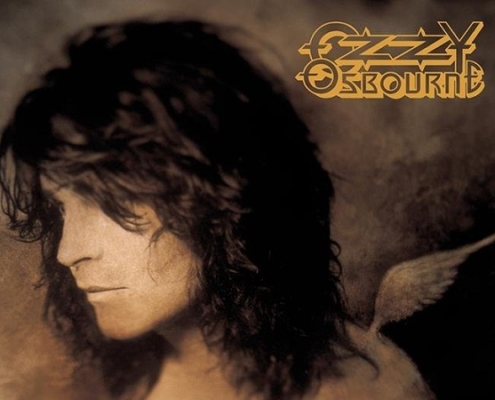
    Ozzy Osbourne admits in my classic rock interview that No More Tears, his sixth studio solo effort, was the first album he ever recorded sober, and the results were spectacular: #7 seller on Billboard  album chart, eventual sales quadruple platinum, his highest charting song ever with “Mama I’m Coming Home”, and a Grammy Award for “I Don’t Want to Change the World”.

    At the time sixty-two days clean and sober, Ozzy clarifies,”I’m not a bad person getting better. I’m a sick person getting well.” Join my guest from the  In the Studio archive, the dearly missed Ozzy Osbourne,  for this heartfelt very personal classic rock interview of transformation, restoration,  and rock salvation. –Redbeard

  • Genesis- We Can’t Dance- Mike Rutherford, Tony Banks, Phil Collins
    Genesis- We Can’t Dance- Mike Rutherford, Tony Banks, Phil Collins

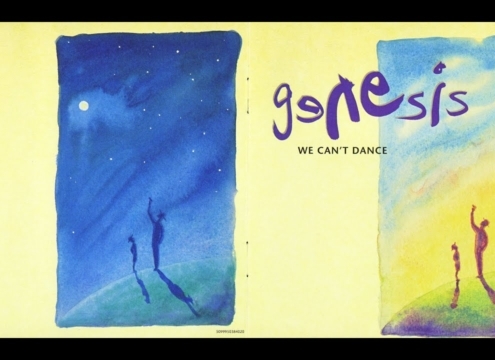
    On the eve of their “Last Domino?” tour (their first North American concert tour in more than a decade), Genesis triumvirate Mike Rutherford, Tony Banks, and Phil Collins  reconvened here In the Studio for my classic rock interview to reprise the world premiere broadcast which I hosted and produced with them in November 1991 for We Can’t Dance. An extremely deep opus, We Can’t Dance  contains “No Son of Mine”, “Jesus He Knows Me”, “I Can’t Dance”, the sleeper “Way of the World”, and two compelling Genesis Progressive Rock sagas, “Driving the Last Spike” and the tortured, guilt-ridden “Dreaming While You Sleep”.

    With the release of We Can’t Dance in late 1991, ostensibly a double album of very strong  songs at a single album price, a debate which had just begun with Invisible Touch a full five years earlier was now threatening to eclipse everything Genesis did, regardless of merit: had Phil Collins’  ten year parallel solo career diverted Genesis from their progressive rock path? During the same period, Genesis keyboard player Tony Banks was the first to release a total of two solo recordings; Mike Rutherford had considerable success with his Mike + the Mechanics, twice as well; and Collins became a superstar, sort of Tom Hanks Everyman, everywhere, every media.

    By the time of We Can’t Dance and the Genesis stadium tour in support of it, practically every music writer and reviewer seemed compelled to compare the album to Phil Collins’ solo releases as if their paychecks depended on it. But to me that seemed like a specious contrived debate requiring pretzel logic, and unfair to both, really. Peter Gabriel released Us less than a year after Genesis We Can’t Dance, yet not a single reviewer in any English speaking country I could find compared a single note of Gabriel’s Us  to anything in his time in Genesis, a band for which he co-wrote, sang, and fronted for  seven albums.

    So I contend that the responsibility to manage the banquet of output from the considerable talent residing in the Genesis roster, then as now, fell to the programmers of radio, MTV, VH-1, Sirius XM, plus newspaper, magazine, and online editors. If there’s a perception problem of over-saturation of PhilCo and Genesis, it’s because many of those powerful gatekeepers appropriated the music and audience popularity for their own self-interests of ratings, sales, and subscriptions similarly as they did to Elton John and Rod Stewart in the ’70s, Sting, Bon Jovi and Bryan Adams in the Eighties, and U2 in the Nineties. –Redbeard

  • Toad the Wet Sprocket- Hold Her Down 5-94

    Toad the Wet Sprocket- Hold Her Down 5-94

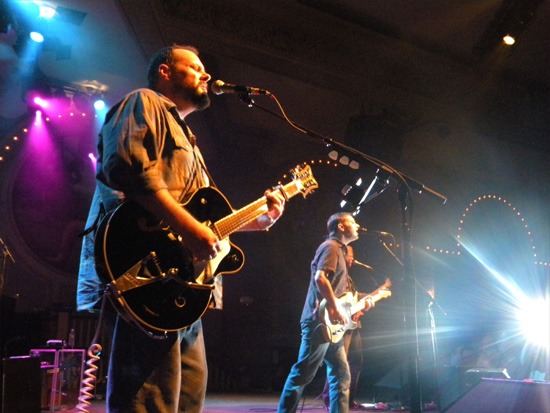
    Now more than ever I wonder whether Toad the Wet Sprocket, the  Santa Barbara CA band with the strong songs of singer/guitarist Glen Phillips, could have been twice as popular if they had taken a name other than an obscure Monty Python comedy bit. As it stands, they still managed to sell over a million copies of their third album in 1991, Fear , containing the gut-wrenching anti-date rape song “Hold Her Down”, performed here absolutely live with me In the Studio in May 1994. And Toad the Wet Sprocket have reformed and are still a great live band today. See them this year on the “Good Intentions 25” tour. – Redbeard