Category: Medium Rare

Rare musician interviews by Redbeard not part of the weekly radio series .

  • Echoes In the Studio 2025- In Memoriam

    Echoes In the Studio 2025- In Memoriam

    This Memorial Day weekend we present our annual tribute to classic rockers we have lost with Echoes In the Studio, a fond farewell to some of those musicians, memorialized in their own words and, in some cases, through personal memoirs by other musician peers.

    In this part one of four, we salute Tina Turner, Jeff Beck, Meat Loaf, Christine McVie of Fleetwood Mac, Procol Harum’s Gary Brooker and Keith Reid by Bryan Adams, Rod Stewart, and Stevie Nicks. –Redbeard

  • Echoes In the Studio- Voices of Fallen Rockers pt 2

    Echoes In the Studio- Voices of Fallen Rockers pt 2

    “Echoes In the Studio” is provided in memoriam to shooting stars and fallen rockers now including Neil Peart of Rush, Walter Becker of Steely Dan, Ric Ocasek of The Cars, Paul Barrere of Little Feat, Keith Emerson and Greg Lake, YES co-founder and mainstay Chris Squire and drummer Alan White, brilliant icon David Bowie, American musical hero Glenn Frey of The Eagles, and  the multi-talented Chris Cornell of Soundgarden/Audioslave. Part two of almost four hours filled with echoes of classic rock interviews from rockers now gone. Theme song to this part two is “Remember the Heroes” by Sammy Hagar. –Redbeard

  • Echoes In the Studio pt3- Eddie Van Halen, Tom Petty, Charlie Daniels, Stevie Ray Vaughan

    Echoes In the Studio pt3- Eddie Van Halen, Tom Petty, Charlie Daniels, Stevie Ray Vaughan

    Echoes In the Studio  is our Memorial Day Weekend special featuring the voices of fallen rockers and tributes in my classic rock interviews in honor of Jim Morrison and Ray Manzarek of The Doors, Keith Moon and John Entwistle of The Who, Randy Rhoads, Jerry Garcia, Stevie Ray Vaughan, Roy Orbison, George Harrison,  John Bonham, Tom Petty, Eddie Van Halen, and Charlie Daniels by Alice Cooper, Ozzy Osbourne, Bob Weir, and Eric Clapton too in this part three of four. (Theme song in this segment is “Voices” by Russ Ballard).- Redbeard

  • Bachman Turner Overdrive- Four Wheel Drive @50-Randy Bachman

    Bachman Turner Overdrive- Four Wheel Drive @50-Randy Bachman

    Original Guess Who songwriter/guitarist Randy Bachman sold Top Five for the final time in the US in 1975  as Bachman-Turner Overdrive with Four Wheel Drive, huge sounding warm-blooded draft horse rock from the Great White North of Canada. Between 1973 and 1977, BTO sold more than seven million albums containing “Gimme Your Money Please”,”Blue Collar”,”Takin’ Care of Business”,”Roll On Down the Highway”, the fluke “You Ain’t Seen Nothing Yet” which has an amazing back story, and “Hey You”. Randy Bachman joins me for a delightful classic rock interview covering the May 1973 debut, then  BTO II,  the #1-seller  Not Fragile,  and Four Wheel Drive all in barely two  years. –Redbeard

    bto

    BTO204228225042


  • Night Ranger- 7 Wishes @40- Jack Blades

    Night Ranger- 7 Wishes @40- Jack Blades

    “We made our first video for the song ‘Don’t Tell Me You Love Me’ for ten thousand dollars,” Night Ranger singer/songwriter/bass player Jack Blades confesses in this classic rock interview, which starts at the beginning for the California band’s Dawn Patrol  debut album in 1982 (Billboard #38 sales). Now to you and me, ten grand sounds like a lot of money, but in the MTV Eighties, entire albums were being recorded for less than $50K, while a single song video price tag easily could top twice that much.

    In 1982-83 Night Ranger was practically the first American band to break out simultaneously on rock radio as well as MTV. The new 24 hour music video channel in America meshed seamlessly with Blades, singing drummer Kelly Keagy, and lead guitar player Brad Gillis (all from the band Rubicon) alongside Montrose veteran keyboard player Alan Fitzgerald and guitarist Jeff Watson in the studio, on stage, and on screen. Songs “Sing Me Away” from Dawn Patrol; the anthem “You Can Still Rock in America”, “When You Close Your Eyes”, all from Midnight Madness (#15 Billboard Album Sales chart); and “Four in the Morning” plus the touching true story “Goodbye” are all chronicled here by Jack Blades, those last two from Seven Wishes  in May 1985.

    (Flanked backstage in Dallas Summer 2014 by two of the sweetest guys in rock, Night Ranger’s Kelly Keagy (l) and Jack Blades (r).)

    But it was the song “Sister Christian” (Billboard #5 on their Hot 100), written by Keagy about his sister Christie, which Night Ranger demo’d but decided to leave off of their Dawn Patrol  debut. “Sister Christian” could not be denied in 1984 on the follow up Midnight Madness, becoming the high school prom/graduation song that year for millions.  – Redbeard

  • Jethro Tull- Benefit @55- Ian Anderson

    Jethro Tull- Benefit @55- Ian Anderson

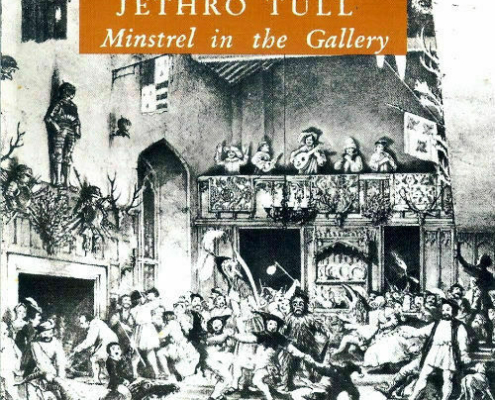
    April 1970’s third Jethro Tull album, Benefit, was my gateway drug into a lifelong relationship with the music and mind of Ian Anderson. Songs including “With You There to Help Me”, “Nothing to Say”, “To Cry You A Song”, and “Teacher” all benefited (sorry) from the addition of John Evan on piano and mellotron, and from a more assertive approach on lead guitar from Martin Barre. The approach resulted in Benefit just missing Top Ten sales in America and an even more impressive #3 in Jethro Tull’s native UK. Ian Anderson tells some great stories to celebrate the double-nickel anniversary here In the Studio  for our collective benefit.

    This is the most highly-detailed oral history of Jethro Tull’s first formative years from the “Inside” by Ian Anderson that exists to our knowledge, with some stories he’s never previously revealed, such as why Mick Abrahams exited Jethro Tull after the debut This Was; how the late Joe Cocker was a messenger in Tull’s #1 success with Stand Up in the UK;  that neighbor John Evan was studying to be a pharmacist before Anderson enticed him to play keyboards on Benefit, sidetracking the would-be chemist; and which member of the band YES  wore paper underpants on tour!

    Many Americans, such as my lifelong friend to this day, attorney Bob Lyon of the Dallas Texas area, first saw Jethro Tull with me in Fall 1971 because of their soon-to-be-classic album release earlier that year, Aqualung. But they were the changes  in musical direction and key personnel made on Jethro Tull’s critical preceding third album Benefit,  in April 1970, that provided the oxygen in “Aqualung” ‘s  tank a year later, as you will hear in this exclusive classic rock interview with Jethro Tull’s Ian Anderson. -Redbeard

  • Van Halen- Women and Children First- Eddie & Alex Van Halen, David Lee Roth

    Van Halen- Women and Children First- Eddie & Alex Van Halen, David Lee Roth

    It always seemed that the Van Halen 1980 third album Women and Children First suffered from “middle child syndrome”. The first and last albums of the original band, the twin pillars of the 1978 debut Van Halen  and then blockbuster 1984have always garnered so much attention, and deservedly so, that we have tended to ignore Women and Children First  and its successor, Fair Warning,  as career flyover states. And that muted album cover for Women and Children First probably didn’t help matters any, either. Six years later, Bon Jovi would do better for packaging Slippery When Wet  with a Hefty trash bag and a spray bottle of water.

    My guests in this classic rock interview are original band members singer David Lee Roth, bass player/harmony singer Michael Anthony, drummer Alex Van Halen, and fretmeister Eddie Van Halen reminding of us of a time at the dawn of the Eighties when Van Halen was establishing itself as America’s premiere hard rock band with songs “And the Cradle Will Rock” and “Everybody Wants Some!”. But the pace of almost constant touring, stopping only long enough to make another album, plus the band’s notorious hedonism, were starting to kill the buzz. –Redbeard

  • Lynyrd Skynyrd- Nuthin’ Fancy- the late Gary Rossington, Leon Wilkeson, Ed King

    Lynyrd Skynyrd- Nuthin’ Fancy- the late Gary Rossington, Leon Wilkeson, Ed King

    Gazing at the cover for the third Lynyrd Skynyrd album Nuthin’ Fancy from March 1975 elicits mixed emotions. Clearly I recall the anticipation for it after the success of its predecessor, Second Helping, which had broken Lynyrd Skynyrd a year earlier with a roadcase full of strong songs and improved sound as compared to the Pronounced   debut. Producer Al Kooper would continue that sonic evolution on Nuthin’ Fancy, which spawned the lead single “Saturday Night Special”, driving Lynyrd Skynyrd’s first Top Ten sales with one of the best records to ever explode out of a car dashboard (not to mention an unlikely source for an anti-handgun message). “Whiskey Rock’a’Roller” was a toast to the hard-drinking life they had embraced, and “On the Hunt” remained a concert staple into the 21st century.

    The paucity of other timeless songs on Nuthin’ Fancy, however, indicated a creative well running low for Lynyrd Skynyrd which would only continue soon on Gimme Back My Bullets. No doubt the non-stop pace of nearly constant touring partly was to blame, but there was something darker and even more sinister which no one outside the band knew, nor anyone in it would admit. This tour had casualties. “There was abuse in ‘the family’,” the late guitarist Ed King (above) confided to me. Turns out that lead singer/lyricist Ronnie Van Zant attempted to ramrod his large seven-member band of rowdies in the fashion of his trucker father, Lacey, a former Golden Gloves boxer. After a particularly violent beating, King abruptly quit the 1975 Nuthin’ Fancy  trek mid-tour, a notorious series of shows dubbed by the resolute road crew as the “Torture Tour”.  Original Lynyrd Skynyrd drummer Bob Burns had flamed out after the band’s first UK tour, replaced for Nuthin’ Fancy  by Artemus Pyle, who gave the Skynyrd full-size cruiser an even more powerful engine. But the noxious atmosphere of alcohol, drugs, and violence proved too toxic even for veteran producer Al Kooper, who bowed out after recording the album. Guitarist/songwriter Gary Rossington, who was the last man standing of the original Lynyrd Skynyrd until his death March 5, 2023, hosted here in my classic rock interview along with my archival interviews from the late bass player Leon Wilkeson and Ed King. –Redbeard

  • Def Leppard- High ‘n’ Dry- Joe Elliott, Rick Savage

    Def Leppard- High ‘n’ Dry- Joe Elliott, Rick Savage

    The memory certainly is etched in my mind to this day: an intrepid Mercury Records promotion man working out of their Chicago office, Cliff Burnstein, called me at Memphis radio ROCK 103 in March 1980 and said he was sending “…a one-listen easy add to your playlist” by a new British band, Def Leppard. When the song “Rock Brigade” arrived, it was the UK single, a 45 rpm vinyl record with the small hole for the spindle. Cliff was right, we started playing “Rock Brigade” immediately even before the Def Leppard debut full album, On Through the Night, was released Stateside.

    Up to the point when the second album High’n’Dry by Def Leppard arrived, I knew them as an eager puppy dog band of English teens from the tough industrial Northern city of Sheffield who had impressed with their debut single “Rock Brigade” a year earlier. But the first time that I heard High’n’Dry‘s “Bringin’ on the Heartbreak” by Def Leppard with that huge soaring vocal chorus hook, it grabbed me in the same way that The Outlaws’ “You Are the Show” had done. As it turns out there should be no surprise since both were produced by South African “Mutt” Lange, suddenly the hottest producer extant then because of blockbusters Highway to Hell and Back in Black  for AC/DC, and Foreigner 4, all padding Lange’s resume.

    (Can you believe these kids grew up to be MTV sex symbols? L-R Steve Clarke, Ric Savage, Pete Willis, Rick Allen, and  rear Joe Elliott)

    It had been a wonderful personal experience to watch the sweet, kind, grounded guys in the Sheffield England band Def Leppard grow up literally in public on their way to induction on the first ballot into the Rock and Roll Hall Fame. I had the great pleasure of meeting and interviewing several of the band members in Memphis on their first U.S. tour supporting their debut, On Through the Night, when not one of them was out of their teens (drummer Rick Allen, at the tender age 15, was working in the country completely illegally).

    Their delight in playing in America, being on the same bill as their heroes Thin Lizzy and Scorpions  back then, was positively  endearing. Yet three years later with their third album, February 1983 release Pyromania, suddenly the pecking order inverted almost overnight as the album went on to sell more than ten million in just the States, simultaneously setting the pop metal path that countless bands would follow throughout the 1980s. In this very personal classic rock interview Def Leppard’s Joe Elliott, Rick Savage, and Phil Collen go into great detail to sort through why band co-founder Pete Willis had to leave after High’n’Dry  (replaced on guitar by Collen), while lead guitarist/songwriter Steve Clarke was allowed to remain another eight long years, despite the fact that both Willis and Clarke both suffered from alcoholism.  –Redbeard

  • Badfinger- Straight Up- the late Joey Molland & Mike Gibbins

    Badfinger- Straight Up- the late Joey Molland & Mike Gibbins

    ( L-R Joey Molland, Tom Evans, Pete Ham, Mike Gibbins)

    It was during the same period, which millions have now witnessed in Peter Jackson’s documentary Get Back over fifty years ago, that US audiences were introduced through a Paul McCartney song,”Come and Get It”, to a little-known English band The Iveys. Soon they were rechristened Badfinger and became second only to The Beatles in sales on the Apple Records label, as “Come and Get It” by Badfinger reached #4 in the UK, #7 in the States. So with that kind of Top Ten start on both sides of the Atlantic, what could have possibly gone wrong? As you will hear, everything.

    If the Big Star story warrants box sets and  a documentary film, then the saga of Badfinger surely deserves a full-blown mini-series. Maybe the appearance of Badfinger’s hit “Baby Blue” in the finale of the hit cable series Breaking Bad, originally from the brilliant December 1971 Straight Up  album, generated enough buzz to get their tragicomic story into development. Certainly every element necessary is there in spades: working-class struggle; anointing by rock royalty the Beatles; hit songs “Come and Get It”( donated by Paul McCartney ), “No Matter What”,” Day After Day”,”Just a Chance”; intrigue, big money, even bigger crooks, pathos, and heartbreaking suicides. Yeah, plural. Guitarist/singer/songwriter Joey Molland, who was the last man standing until March 2025, and Badfinger drummer the late Mike Gibbins tell the dashed dreams of the ill-fated quartet in my rare classic rock interview to mark the anniversary of Straight Up, produced by Beatle George Harrison until he was called away by Ravi Shankar to organize a star-studded benefit concert for monsoon-ravaged Bangla Desh. Substituted for George Harrison as Badfinger Straight Up producer? Some American kid in his early twenties named Todd Rundgren. – Redbeard