One of the blessings that comes with maturity is the confidence to tell the unvarnished truth, and in my classic rock interview to mark her #1-selling third album Precious Time, Pat Benatar makes a series of eyebrow-raising revelations here In the Studio.
“It went platinum (1,000,000 sales) in thirteen days,” Pat Benatar states matter-of-factly about her explosive third album Precious Time, while she and hubby/musical director Neil Giraldo reminisce In the Studio. It headed rapidly to the top-selling perch in America by August 1981. There are some powerful perennials on her best-charting collection, including the timeless tortured love rockers “Promises in the Dark” and “Fire and Ice”. No doubt delivered with complete conviction, Pat was just attempting to rebound from a bad first marriage as she was falling in love with her new guitar player. But the real story wasn’t between the sheets.
“You gotta understand, I was twenty-seven years old. I came off a few years of a very bad relationship, was around a lot of girlfriends who went through hell with (abusive) men. You have to understand that I grew up with the Women’s Movement. I was ready to stretch and flex. I was happenin’ ! (chuckles) So I would inflict serious injury if a guy gave me a lot of crap.” When husband Neil Giraldo recoils in mock horror, Pat quickly adds,”But I’ve mellowed, you see. But I’ve learned to put the glove on the fist. Except I always think that I’m big!” she blurted out in laughter,”I always think that I’m big, I do! When you’re a little person, when you got pushed around on the playground, that makes you into something else that big people don’t have to deal with. And it wasn’t limited to men, it was people in general.”
It is important at this point to remind you of just how much the business of pop music has changed over the Precious Time of forty-five summers since Pat, identified by the Rolling Stone Encyclopedia of Rock’n’Roll as “the most popular female rocker in the Eighties”, earned that accolade. “That was when we were doing twelve, even fourteen months (touring). During In the Heat of the Night we did fourteen months in a row. It was nuts. But that was old way. That’s what you did. There was no MTV. You had to expose what you were doing to everybody and that’s how you did it. I look back on it nowadays and I think, ‘Oh man, that purple zebra leotard. What was I thinking ?!” According to Pat Benatar and Neil Giraldo, those who were supposedly on her management and record company team chose sexploitation as a business plan. “Redbeard, you gotta understand, in ’81 the record company was airbrushing ( her photos) ,” Neil says exasperatedly,”They were airbrushing…”
“My clothes off !” Benatar blurts out.
“You’re talking about management and the record company,” Giraldo continued,”that she really couldn’t do anything! We were trying to make records, and they were telling us what we can and can’t do, and would play both ends against the middle.”
“What happened was that I had a record company and a management group who refused to be open-minded,” Pat pointed out.”It was a constant battle with them. I was already gone (figuratively) by the time this record came out. By the time this came out, I was already moving to another place. Except that they weren’t letting me. And at that time they still had control, they had contractual control. I didn’t have a choice at that time. And that was when I said, ‘You can do anything you want, but you can’t make me make records. And if you don’t let me make the kinds of records that I want to make, I WON”T make them anymore.” –Redbeard
The fortieth anniversary of Genesis’ biggest album in their long fifty year+ career, Invisible Touch (worldwide sales estimated at 15,000,000) has arrived, so we convened Mike Rutherford, Tony Banks, and Phil Collins here In the Studio to discuss the blockbuster sales behind “Tonight, Tonight, Tonight”, “Land of Confusion”, “In Too Deep”, “Throwing It All Away”, and “Invisible Touch”.
Between 1980 and 1986, the British trio Genesis released a series of four consecutive hit albums, each more successful than its predecessor by as many as five times, which include 1981’s Abacab and 1986’s Invisible Touch. Because drummer/singer/songwriter Phil Collins had a parallel solo career take off during that time, revisiting the critical reviews from many respected music writers in that period reveals a prevailing assumption that Genesis guitarist Mike Rutherford and keyboardist Tony Banks unwittingly (if not unwillingly) were somehow led by Collins in a more mainstream pop direction. However, the simple facts just don’t bear out that inference, as all three members explain here.
The title song “Abacab” (named nonsensically after the three musical sections “a”, ‘b”, and “c” ) was nowhere near the pop mainstream. “Man on the Corner ” was indeed a hit, but in it Collins addresses the issue of homeless people and society’s reluctance to acknowledge them or, in many cases, feel any responsibility for finding solutions… not exactly your typical pop banality. “Land of Confusion” going Top Five as a single says a lot more about the changing mainstream tastes in 1986 rather than any musical agenda by the band, and the #3 hit “Tonight,Tonight,Tonight” from the astonishing 15 million-seller Invisible Touch effectively silenced any silly debate about pop vs. rock by running over nine minutes long!
Moreover , it wasn’t just Collins who was branching out. By the time his 1985 third solo albumNo Jacket Required made Phil deservedly a star in his own right, Rutherford and Banks had each done no less than two solo efforts apiece. Instead of siphoning off creativity and diluting Genesis of strong material, the respective solo albums clearly inspired the group to lift any self-imposed restrictions to the Genesis sound, as you will hear in my classic rock interview In The Studio. – Redbeard
Bryan Adams’ seventh studio album 18 ‘Til I Die was a #1 seller in the UK and Top Five sales in Australia, Austria, Belgium, Canada, Finland, Germany, Sweden, and Switzerland. The international popularity was driven by hits “The Only Thing That Looks Good on Me is You”, “Have You Ever Really Loved a Woman”, and the title song. This point thirty years ago, however, was also the first indication for Bryan Adams of a bizarre syndrome peculiar to American media whereby, in spite of over a decade of prior multi-million US album sales, 18 ‘Til I Die peaked on the Billboard sales chart at a perplexing #31.
This baffling reaction by US media gatekeepers, particularly latter twentieth century rock radio programmers, was first pointed out to me by The Edge of U2 while conversing about that band’s late Eighties road movie, Rattle and Hum. The Edge pointed out a long-standing mistrust by music writers of such early pop music idols as Frank Sinatra and Elvis Presley “…going off to Hollywood and never coming back.” So apparently, Bryan Adams’ original sin was to include, on his previous album Waking Up the Neighbours (packed with no less than a dozen flat-out rockers), a single ballad,”Everything I Do (I Do It for You)” that happened to run under the credits at the end of a hit chick flick that year. MTV played the video in saturation airplay because it had scenes from the blockbuster Kevin Costner film, Robin Hood: Prince of Thieves. Everyone benefited from this cross-marketing, by the way: North American rock radio played six great rockers from that album on the way to record high ratings, Bryan’s record company had a #1 seller worldwide, MTV had record ratings, & the movie company broke box office ticket sales records. So what p0ssibly could someone complain about?
But when the next Bryan Adams studio album 18 ‘Til I Die came out in June 1996, US rock radio programmers decided, in spite of the music actually on the album to the contrary, to brand Bryan strictly as a love song balladeer. Not rock enough, not alternative enough, not cool enough. “And don’t confuse me with the facts, all those millions of people in all of those other countries buying 18 ‘Til I Die are not in my town, so we are different here in the Greater Tri-State Area. See?” Yeah, whatever.
So then, as much to remind everyone what an enormous contributor his music had been to the preceding decade of popular music, Bryan Adams performed on MTV Unplugged, which we also discuss in detail here In the Studio in my classic rock interview. Included were brilliant new arrangements of “Summer of ’69”, “Cuts Like a Knife”, “Heaven”, a stunning reworking of “I’m Ready”, a medley “If You Want to Be Bad You Gotta Be Good/Let’s Make a Night to Remember”, and a song composed specifically for Unplugged, “Back to You”. –Redbeard
Metallica have reissued Load with a 2025 remastering, which really makes an audible improvement on songs “Ain’t My Bitch”, “Until It Sleeps”, “King Nothing”, “Hero of the Day”, “House That Jack Built”, and the biggest sonic upgrades on “Bleeding Me” and “Mama Said”. Check it out here while James Hetfield and Kirk Hammett discuss Metallica’s Load thirtieth anniversary with me In the Studio.
“He nicknamed me ‘Dr. No’ ,” chuckles Metallica lead singer/songwriter James Hetfield, regarding their early recording collaboration with producer Bob Rock. “Every suggestion he made I’d say ‘No’. Over time we learned to think about his suggestions…”.
“And then say ‘No’,” deadpans Metallica lead guitarist Kirk Hammett with a comedic rimshot. After the superstar-making 1991 “Black Album”, it took five long years for the members of Metallica to catch their collective breath sufficiently to venture a follow-up, Load, in June 1996. Even pre-internet widespread use, the response in popularity and the attendant responsibilities to be available to a voracious worldwide fanbase left precious little time for writing and recording new Metallica music.
After almost a decade of struggle, capturing Metallica’s heavy metal sonic fury in the studio had eluded them. The tragic death of original bass player Cliff Burton, and being rock’s maladjusted poster children had made Metallica insular, and for good reason. Of course, selling an unbelievable 16 million U.S. copies of their first attempt working with hard rock veteran producer Bob Rock on 1991’s phenomenal “Black Album” raised even the notoriously obstinate band’s confidence level to Def Con 4 for the follow up, Load in June 1996. Hear all about it here in a refreshingly honest interview with Hetfield and Hammett while you jam at lease-breaking levels. –Redbeard
“Who do we think we are?” Good question, and if we’re talking the importance of seminal British band Deep Purple, the rock history books consider the question asked and answered. The first time I heard Deep Purple, with their cover of Joe South’s “Hush” exploding out of a car dashboard speaker in Summer 1968, I had no way of knowing that I was hearing the primordial hard rock bellow of what soon would evolve into Heavy Metal.
Along with Led Zeppelin and Black Sabbath, Deep Purple widely has been credited as the third jewel in the British hard rock triple crown. Without Deep Purple’s 1970 proto-metal album Deep Purple In Rock or the benchmark Machine Head two years later, would Judas Priest, Iron Maiden, and Def Leppard have sold tens of millions of albums worldwide in the 1980s? Doubtful, and unlike Black Sabbath, Deep Purple made this impact musically, without the macabre death-obsessed lyrical themes that later mutated much of Heavy Metal into caricature.
My guests lead singer Ian Gillan and Roger Glover, along with drummer Ian Paice, still lead Deep Purple to this day, and along with lead guitarist Ritchie Blackmore and the late organist Jon Lord they comprised the Mark II lineup which placed such classics into the hard rock lexicon as “Speed King” and”Child in Time”from In Rock; “Strange Kind of Woman” from the under-appreciated transitional album Fireball in 1971; the international hit for the ages Machine Head yielding “Smoke on the Water”,”Highway Star”, and “Space Truckin’ “; the benchmark hard rock live album of its time, Made in Japan; plus “Woman from Tokyo” and the riff rocker “Rat Bat Blue” from Who Do We Think We Are? , the top-selling January 1973 followup to Machine Head and the final iteration of the classic Mark II lineup until the surprisingly popular in 1985 reunion Perfect Strangers eleven years later. Congratulations to the current and former members of Deep Purple for long-overdue recognition as inductees into the Rock and Roll Hall of Fame. And be sure to listen to Splat! the new Deep Purple album in stores and online now! –Redbeard
“If you would’ve told me in 1970 that I would have a #1 hit in America…well, all around the world, actually…I’d have said ‘Forget it!’ ” admits Rod Stewart dismissively about Every Picture Tells a Story, “especially since ‘Maggie May’ almost didn’t make the record!” Now that’s just one revelation in my charming classic rock interview commemorating Rod Stewart’s breakthrough Every Picture Tells a Story in May 1971, which also contained “Mandolin Wind”, impeccable choices of covers from Bob Dylan (“Tomorrow is a Long Time”), Motown (“I Know I’m Losing You”), Tim Hardin (“Reason to Believe”), and the slammin’ autobiographical “Every Picture Tells a Story”.
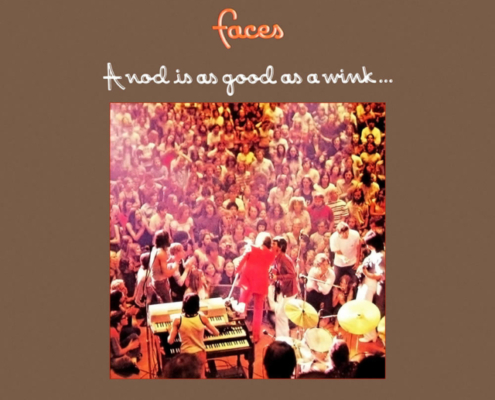
When the Jeff Beck Group made their American debut at New York City’s Fillmore East, no one in the audience trying to follow young lead singer Rod Stewart, hiding behind the backline amps due to major stage fright, could have imagined that the raspy-throated rooster-haired Englishman would become an international star just three years later with his third solo album, 1971’s Every Picture Tells a Story. There are so many wonderful tales behind the songs, the various musicians, and the recordings on Every Picture Tells a Story, and Rod Stewart does a marvelous job sharing them all here in one of my favorite classic rock interviews. Plus Rod intimates some colorful, often hilarious stories about the legendary band he also fronted at the time, The Faces.
In our critical first five episodes back in 1988, In the Studio scored something of a major “get” for an upstart fledgling rookie on the crowded national weekly syndicated radio sweepstakes: an hour-long visit with superstar singer Rod Stewart, to explore his breakthrough 1971 solo effort Every Picture Tells a Story, something that the Rodster was not known to do in the past. We agreed to meet at co-manager Randy Philip’s Beverly Hills house where, during the actual interview, we were interrupted by the delivery of a new shiny black Corvette convertible for Rod. He admitted that it was the first American-made car that he ever owned (after the interview concluded, I gave the car dealer a ride back to his Beverly Hills office, alas in my non-descript rental!). If you listen carefully, at times you can hear Rod’s then-twelve year old blonde-haired daughter Kimberly watching television in an adjacent room while her dad charmed me for hours at his storytelling best about this album, ranked at #171 on Rolling Stone magazine’s “Top 500 Albums of All Time”. And ladies & gentlemen, Rod Stewart was knighted by the late Queen Elizabeth. This despite the fact that at his first record company meeting, “They didn’t like me clothes, me nose, or me hair.” Upon the royal announcement, Sir Rod said: “I’ve led a wonderful life and have had a tremendous career thanks to the generous support of the great British public. This monumental honour has topped it off and I couldn’t ask for anything more. I thank Her Majesty and promise to ‘wear it well’.“ – Redbeard
So here we are four decades after So by Peter Gabriel was released, and I am no less enamored of every song sung, every note played, than I was the first time I heard it. Only more so. Very close to the perfect album for millions, So by Peter Gabriel has remained a “desert island disc” essential to so many of us ever since its May 1986 release. Long time fans knew Gabriel not only from his many eclectic solo albums and mesmerizing, quirky MTV videos, but even further back as the enigmatic original lead singer/lyricist with progressive rock pioneers Genesis. Peter Gabriel joins me In the Studio to discuss how the worldwide mainstream pop stardom which followed the release of So affected him in so many ways.
It was not until stumbling into the broadcast media/entertainment business that I got to witness, up close and personally, individual musicians who have been given enormous powers of influence through the modern phenomenon of celebrity, granted by the very people who they entertain. Case in point is my classic rock interview: ex-Genesis lead singer Peter Gabriel had a cult following after four studio solo albums, with his most influential creation being the ground-breaking “Shock the Monkey” video. But with the May 1986 release ofSo (#1 UK, #2 U.S., over 5 million sold; 4 Grammy nominations including Album and Record of the Year for the #1 hit “Sledgehammer”), Peter Gabriel was vaulted into international pop stardom with all of its attendant door-opening, barrier-eliminating amenities. Like certain other entertainers who had reached elite status in the fame game, Gabriel chose to use his newly-found powers for good through several international human rights organizations, including Amnesty International, Peter’s own World Music charity WOMAD, and a death row/capital punishment project (watch the film The Exonerated).
When the rock critics who parse such things as musical innovation, vision, and authenticity perfectly agree with mass popular taste, a remarkable thing happens, as Peter Gabriel found out with So everywhere at once in May 1986: you become the saving grace of progressive rock music while simultaneously occupying the mainstream pop high ground, a once-in-a-generation feat. Because of “Red Rain”, “Sledgehammer”,” In Your Eyes”, “Don’t Give Up” with Kate Bush, “Big Time”, and the meditative tone poem “Mercy Street”, you would have to reach all the way back to Dark Side of the Moon to find anything even remotely comparable. Peter Gabriel is my special guest for this big time fortieth anniversary. In one of the most personal, powerful, thought- provoking interviews ever in the history of the In The Studio rockumentary series, Peter Gabriel reveals candidly why he agrees with Jesus Christ in the Book of Luke that “to whom much is given, much is required.” –Redbeard
The day in 1976 that I discovered High Voltage by AC/DC on the top of a huge pile of discarded albums outside the WCCC Hartford program director’s office, heading for the dumpster, changed my life. But the saga about who and how it came to even be there spans three continents, more than twenty thousand miles, an immigrant family’s legacy, heroes and villains, fate and dumb luck, and countless dreams. AC/DC’s lead guitarist Angus Young is my guest, with priceless memories of original singer Bon Scott from the In the Studio archive by the late AC/DC rhythm guitarist/riffmaster Malcolm Young, while plugging into High Voltage on its golden anniversary.
The stories are as charming as the songs are intense and fun: “It’s a Long Way to the Top ( if You Want to Rock’n’Roll)”, “The Jack”,”Live Wire”, “T.N.T.”, and the title song are essential rockers to this day. This edition of In the Studio is dedicated to Bon Scott (d.1980) and to Malcolm Young, who died in 2017. They were the real deal. –Redbeard
During our interview, Rock and Roll Hall of Famer Steve Miller reminded me that when Fly Like an Eagle came out in May 1976, it contained such a wealth of great songs of varying styles, thoughtfully and seamlessly sequenced, that my FM radio deejay cohorts and I used to play entire sides of it on the air, uninterrupted (back when albums had sides). When I started my FM rock radio career at the dawn of the 1970s, 90% of all radio listening in North America was on the AM dial. By the time Fly Like an Eagle came out in 1976, that figure had changed to a 50/50 parity. A scant three years later, those FM/AM percentages of listening had flipped dramatically, and Fly Like an Eagle by Steve Miller was a big reason why.
The passage of time certainly can bring past innovation into focus. Fifty years ago, the new synthesized sounds and electronic washes of effects dazzled the ears, but now clearly we see that all of the music Steve Miller had ever known is represented on Fly Like an Eagle: the jazz, and country and western, which his father loved; the Texas and Chicago blues; the experimental sounds of Stockhausen; the West Coast pop. It was all hiding right there in plain sight.
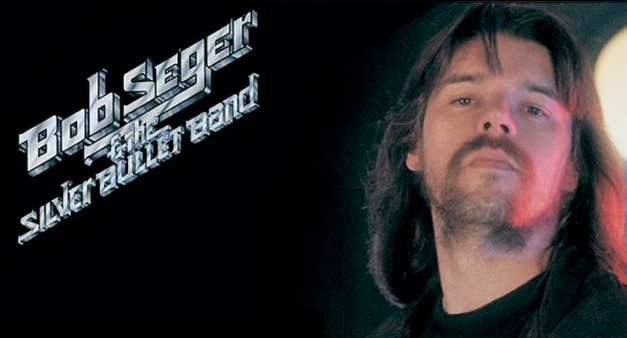
No doubt because of the timeless qualities of Fly Like an Eagle, which includes “Rock ‘n Me”, “Take the Money and Run”, “Wild Mountain Honey”, “Serenade”, “Mercury Blues”, and the title song, sales have exceeded five million copies of Rolling Stone magazine’s Album of the Year 1976, plus a berth on that mag’s 500 Greatest Albums All Time list. Likewise blockbusters that same year including Peter Frampton Comes Alive, Bob Seger’s Night Moves, Aerosmith Rocks, and the Eagles Hotel California spurred that migration to FM radio to a stampede, completely inverting that listenership figure by the close of the Seventies to 90% FM, a remarkable sea change in less than a decade.
For this particular classic rock interview it is impossible for me to forget the experience which allowed us, after merely a dozen national radio shows, to declare, “The ‘Eagle’ has landed In the Studio!” I had just returned a week earlier from a whirlwind Labor Day 1988 weekend trip attempting the nearly impossible: to fly Dallas to Seattle, first to interview Ann Wilson of Heart for lunch at her secluded vintage house on the hill; then spend the afternoon at Steve Miller’s place on Mercer Island for the Fly Like an Eagle interview you have here; before nailing the accelerator of the rental car to the floor and heading up the mountainous coastline to Vancouver for a late night session with Bryan Adams…all in one day. Sheer madness as I think back on it now, but we were desperately trying to succeed in network syndication and had yet to find the technology that would allow me to eliminate the costly, brutally time-consuming travel component of the equation. –Redbeard
Aerosmith Rocks was the two-word musical manifesto decreed in May 1976 by America’s pre-eminent hard rock band. With timeless rockers “Back in the Saddle”, “Sick as a Dog”, the musical answer to “Toys in the Attic” with the clever “Rats in the Cellar”, and the toe-tapper against type “Last Child” all on board, Aerosmith Rocks was both a statement of intent as well as a warning fifty years ago.
Without equivocation, Aerosmith Rocks in Spring 1976 was a declarative statement. If Toys in the Attic a year earlier had been the definitive mid-Seventies American hard rock statement, then Aerosmith Rocks made it musically imperative. The Boston-based quintet pummeled us with “Back in the Saddle”, “Sick as a Dog”, the clever sequel to “Toys…” with “Rats in the Cellar”, and another infectious Steven Tyler/Brad Whitford hit, “Last Child”. At the Hartford radio station I worked at then, we rushed the plain white test pressing of Aerosmith Rocks into the control room and onto the air so quickly that it had to be over a year before I ever saw what the actual cover art looked like. Joe Perry, Tom Hamilton, Brad Whitford, Joey Kramer, and the inimitable Steven Tyler weigh in on this diamond-hard classic, Rocks (#366 on Rolling Stone magazine’s Top 500 list as of 2020), on its golden anniversary.
This is not the first time in the band’s fifty+ years that Aerosmith has been on hiatus. Joe Perry took time for my classic rock interview to discuss the challenges of maintaining the same personnel over the long career arc of this seminal American band.
Redbeard: Joe, there was one song some fifty-plus years ago that was on the set list for both Steven Tyler’s New York City high school band, which played the Lake Sunapee NH resort clubs in the summer, and the garage band that you and New Hampshire bass player Tom Hamilton had.
Joe Perry: “I think it was ‘Train Kept a Rollin’ ‘. That Yardbirds song. But the blues in the English form of the word, ya know, the blues that had been already taken and redefined by the English bands. I mean, I knew people that were these blues players. In fact in our band, Tom Hamilton and I had a guy named John McGuire, and he really wanted to play blues. He really wanted to wear baggy jeans and be barefoot and just play Howlin’ Wolf songs and Muddy Waters songs , just the way that they did it. Ya know? We basically made a decision. We said, ‘”No, we want to wear white Capezios and play some big amps and wear tight pants. Ya know, we want to rock. And at that point he left and stayed up in the woods, up in New Hampshire, and Tom and I went down to Boston to seek our fortunes. So we weren’t really like blues fanatics, I mean we knew where it came from and we were inspired by it. But we liked the energy and the excitement of the rock. So the song that we had in common (with Steven Tyler) was this song called “Train Kept A’Rollin’ “. And you’re right, it is a blues song, and as we kinda learned who did it, and then we listened back and it was actually not even a blues song, in the form that basically the Yardbirds took. If you listen to the Tiny Bradshaw version with all the answer backs and the callin’ , it was all like kinda swingy and big band-y and the blues was definitely this kind of thing beneath it all. And I don’t think we realized it at that point, how important it was to us.”
RB: By listening to Yardbirds songs from England, even though the song was written by African-Americans, blues was then and is now a common language between musical strangers.
JP: “That was kind of traditional in the way bands (like Aerosmith ) got together. If it was somebody that you were basically looking for a guitar player or a drummer, you’d first start talking to them and kind of see where they’re at, if you got along, and you had some common interest, then obviously you talk about music. And then when you got down to it, the more songs that you knew in common defined what kind of taste you had , and kind of put you in the running to join the band or form a band with these other guys. So, for us it was just that one song. ‘Cause Steven’s band was a little more vocal heavy. They, they had two or three guys that could sing and sing really strong harmony. So they were able to cover Beatles songs and Steve Miller songs and Byrds songs. So they were able to sing more of that kind of pop harmony- driven kind of thing. Whereas Tom and I were more into the crunchy guitar stuff and to us singing was just something to take up space between guitar solos !There are a lot of people that make a living at reproducing ,or trying to reproduce, the old classics. And we don’t consider Aerosmith as blues players so to speak. And I just wanted to make that clear that we don’t and didn’t and don’t feel like we wouldn’t put ourselves in that driver’s seat. I mean we’re a rock band and we have been influenced by the blues. I mean all of our pop music that we listen to now comes from the blues. Everything has its roots there. Aerosmith just wanted to kind of honor that and then put our own stamp on those kind of tunes. There are a lot of people that hear blues and they think BB King, Eric Clapton and Buddy Guy and that’s it. And then the new guys are, ya know, Johnny Lang and somewhat new guy is Robert Cray. And that’s it. That’s what they think of as blues. I mean they are only exposed to so much. I think the music does the talking. Once you hear it, you don’t have to talk about it anymore.”
RB: To prove to you that blues is the musical ground that Aerosmith sprang from, and is rooted in to this day, recall the very first song you ever wrote with Aerosmith lead singer Steven Tyler 50 years ago.
JP: “Yeah, that’s easy. That’s like (plays guitar). That was” Movin’ Out”. That was the first Aerosmith song that we wrote. And the lyric was very descriptive of our life, what was going on for us. Which again, is very bluesy. (Sings “We all live on the edge of town, where we all live ain’t no one around…” ). That’s why we got a really good singer ! We figured if there was somebody going to be taking up time with two guitar solos, you got to be as good as you can be.”
RB: “Movin’ Out” on the first Aerosmith album was unadulterated blues no matter how you slice it. But self-appointed blues purists can be very territorial, and unfortunately that’s nothing new. I reminded Joe Perry of Aerosmith how Texas blues rocker Johnny Winter had used his celebrity in the mid-seventies at the peak of his career to do a series of Muddy Waters albums on Winter’s Blue Sky label. The attacks that the critics launched against Winter were alarming. But the series was certainly one of Muddy’s biggest paydays ever, and exposed Muddy Waters’ music to a whole new mainstream audience.
JP: “Yeah, it did. And at that point in Muddy’s career, he was kind of resting on his laurels at that point. And I don’t think he was playing with the best people, but Johnny made it a point to try and get people that really gave a sh*t. And surround him with some great players and just injected a vibe of ” Let’s do this “ ,‘cause he loves Muddy so much . And just as a tribute to give something back. It was like when Keith Richards did (the movie) Hail Hail Rock and Roll with Chuck Berry to kinda say at this end of his career, ‘Berry’s always playing with these sh*tty pick-up bands. I want to put him with a real band at least for once, ya know, have him do his songs, ya know, doing the honor of doing that.’ So I think that with Johnny Winter playing it really inspired Muddy, ya know. Because I think Johnny was one of the guys that Muddy really had a lot of respect for, and didn’t mind him lurking around, ya know. What about the Electric Mudalbum? I mean obviously Muddy wanted to try something, ya know. But at least he did something that was really true to what he does… what he did. I mean that recording of “Mannish Boy” is like unstoppable. I mean, that is a force of nature.” –Redbeard