Tag: On the Border

  • Eagles- On the Border- the late Glenn Frey & Randy Meisner

    Eagles- On the Border- the late Glenn Frey & Randy Meisner

    It’s odd, but until preparing this interview about The Eagles‘ second and third albums Desperado and On the Border, released in 1973 and 1974 respectively, I had not really noticed how little each Eagles album sounded like its predecessor. For a possible explanation as to how that might be the case, we tapped the In the Studio interview archive for the insights of two original Eagles bandmates, co-founding singer/songwriter/guitarist Glenn Frey and original bass player/singer/songwriter Randy Meisner, both now gone.

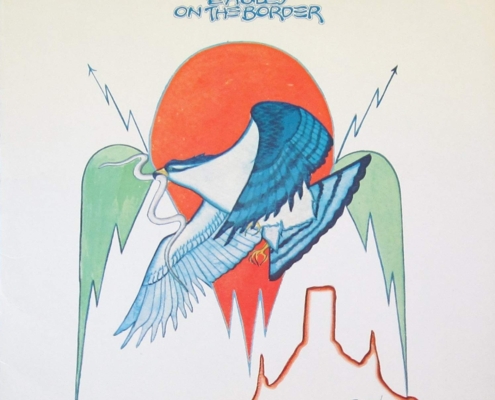
    Like the first two Eagles efforts, On the Border was begun in London England and supervised by veteran English producer Glynnis Johns. But those sessions only yielded two usable recordings. Glenn Frey was so at odds with producer Johns that one of the two salvaged songs, “Best of My Love”, was sequenced dead last when the album was released, buried on side two as if to hide the pain. Neverthelss, through a quirk of fate, Frey reveals how “Best of My Love” became The Eagles’ first #1 hit, eventually propelling the On the Border album to over two million sales.

    The dedication to songcraft on Desperado, which is evident from the first note of “Doolin Dalton”, on through “Tequila Sunrise”, “Certain Kind of Fool”, “Outlaw Man”, “Bitter Creek”, and the timeless “Desperado”, would later bear bountiful fruit for Frey, Meisner, Don Henley, and Bernie Leadon on the Eagles’ 1975 #1-selling One of These Nights. That effort was their first album to soar that high, a cosmopolitan country/ R&B hybrid that generated three Top 10 hits and effectively founded uptown Modern Country music as we now know it, fundamentally changing the course of contemporary music. Hotel California in 1976 and The Long Run  in 1979 closed out the Seventies in colossal fashion for the Eagles, whose popularity remained undiminished deep into the 21st Century.

    (Playing possum L-R: Bernie Leadon, Glenn Frey, Randy Meisner, Don Henley, J.D. Souther)

    But in this interview Glenn Frey waved off the initial success of the first Eagles album to the songs of Jackson Browne, Jack Tempchin, and beginner’s luck, and placed the later record-setting success of The Eagles hinging on his 1973 decision, along with band co-founder Don Henley and songwriters Browne and J.D. Souther, to write a cinematic “cowboy concept” album. Heavily researched and historically accurate, the Eagles’ second album Desperado was recorded, arranged, and orchestrated in London, topped off back in Hollywood with tintype photography and period clothing for the cover, and even a guns-blazing promotional video a decade before MTV that would have made Quentin Tarantino envious. So did their handlers like what The Eagles had hatched on Desperado ?
    “(Co-managers) David Geffen and Elliot Roberts were really kind of against it, in a lot of ways”, admitted original Eagles bass player/singer/songwriter Randy Meisner, “because they didn’t like it after we’d finished it. It wasn’t the kind of album you’d think we should have had for the second album. They thought it should be more down the line of the first album with more rock’n’roll songs, and it shouldn’t be a theme album. That it was chancey, that it was a big chance to take.”

    Until the day that he died in January 2016, Eagles co-founder Glenn Frey was exceedingly proud of  their second album, 1973’s Desperado. But Desperado did not have three Top 20 hits like the Eagles debut, nor did it contain the Eagles’ first #1,”Best of My Love”, that distinction belonging to 1974’s On the Border  album released fifty years ago in March 1974. Purely in popularity and chart stats, that sophomore record had the lowest glide path of any Eagles effort, yet in this exclusive In the Studio  interview, Frey and original Eagles bass player/singer/songwriter Randy Meisner make a detailed case  for why Desperado  may be their most formative one of all.

    On the Border is also notable for an eleventh hour personnel addition, Don Felder on lead guitar, and Randy Meisner is quick to note that Felder was, in fact, suggested by Eagles guitarist Bernie Leadon from their earlier Florida days. Songs include “James Dean”, “Already Gone”, the Tom Waits chestnut “Old ’55”, “Best of My Love”, and the title song, “On the Border” hosted by the sincerely missed Glenn Frey and the dearly departed Randy Meisner for the fiftieth anniversary of The Eagles’ On the Border. –Redbeard

  • Eagles- Hotel California 50th- Don Henley, Joe Walsh,the late Glenn Frey

    Eagles- Hotel California 50th- Don Henley, Joe Walsh,the late Glenn Frey

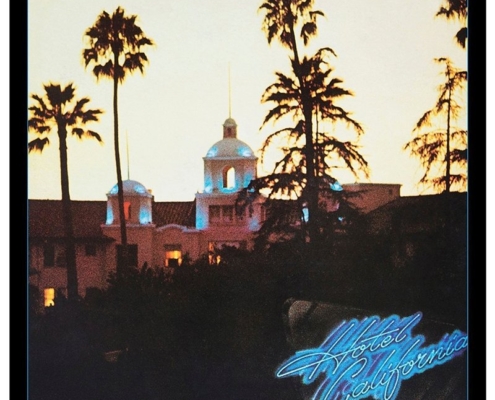
    We all know the perilous times we’re in nearly fifty years since The Eagles revealed the zeitgeist zip code of the Hotel California. Not on any Google map or travel brochure, it featured absolutely the best music: “New Kid in Town”,”Life in the Fast Lane”, the achingly honest loving and losing “Wasted Time”, the searing “Victim of Love”, and the epic “The Last Resort”. And then there was Don Felder’s “electric Mexican reggae” as Glenn Frey called it, on the “Hotel California” title song. Don Henley takes your reservation, Joe Walsh shows you to your room, and Eagles co-founder the late Glenn Frey is the night clerk with all the keys to unlock the stories, all on duty for the Eagles’ Hotel California stay here In the Studio .

    Even before Hotel California, driving halfway across America in March 1976 is when I first realized just how massively popular The Eagles truly had become with the release of One of These Nights. This was long before 21st century satellite radio, so driving 1400 miles from Lincoln NE to Hartford CT meant re-tuning the car radio about every seventy-five miles or so to a new local station. And every one, whether AM or FM, big city signal or small, was playing “One of These Nights“,”Lyin’ Eyes”, andTake It to the Limit” as if their FCC licenses depended on it. All three of those hits from the album One of These Nights  went Top 10, with the album topping the Billboard sales chart and eventually winning a Grammy.

    So for the Eagles next effort, did the band have anything prove? No way. Had their four platinum and multi-platinum albums in a row set the expectations bar exceedingly high? You bet, yet Don Henley, Glenn Frey, Randy Meisner, Don Felder, and newest guitar player Joe Walsh ( replacing Bernie Leadon) and the impressive combination of cinematic vision, songcraft, and high tech production seemed to be coming from a place in the near future to which the rest of rock would have to catch up. “Don (Henley) and I admired the nerve that (Donald) Fagen and (Walter) Becker had in their lyrics,” the late Glenn Frey admitted to me regarding Steely Dan when asked about the imagery in the song “Hotel California”. “They did bold things lyrically. With ‘Hotel California’ Henley and I started talking about writing a song where you didn’t have to explain what everything meant…And be a little weird for the sake of being weird, or not having to have every line in your song make absolute sense. And I guess what we achieved is perfect ambiguity, where people read things into that song that were beyond our wildest ideas about what that song meant.”

    It is indicative of the incalculable loss to music and pop culture that was the January 2016 death of Eagles co-founder and visionary Glenn Frey who, along with Henley & Walsh, have the last word here in this classic rock interview on Hotel California at check-out time. –Redbeard

  • Al Stewart- Year of the Cat 50th Anniversary
    Al Stewart- Year of the Cat 50th Anniversary

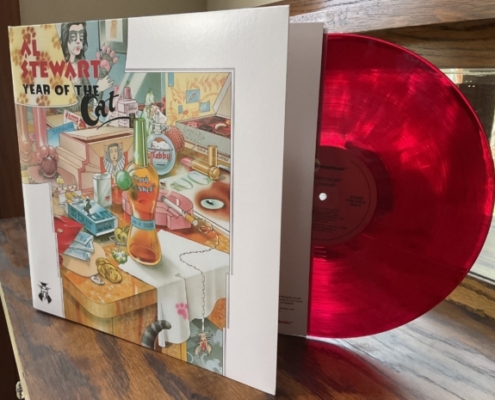
    On the eve of the July 1976 release of his seventh (!) album Year of the Cat,  Al Stewart’s career arc could have borrowed the title from the Academy Award-winning documentary Twenty Feet from Stardom.  From the beginning of my rare classic rock interview, Al Stewart might seem to be name-dropping big time. Except it’s all true: sneaking backstage during a 1963 Beatles concert and talking with John Lennon; rooming in London next to Paul Simon; befriended in the London coffee house scene by an unknown Cat Stevens; emcee-ing at a London nightclub when another unknown then, an American named Jimi Hendrix, decided to play his guitar with his teeth. Yet, being witness repeatedly to rock history apparently accounted for nothing when Al Stewart’s seventh album, Year of the Cat, was unceremoniously turned down  by every major UK record label.

    It was a sunny cloudless autumn morning in 1988 outside a modest house perched high on the Southern California hillside above Malibu Beach and the Pacific Ocean. The owner of the house answered my knock still dressed in his bathrobe, vertically striped like Joseph’s biblical coat of many colors. Clearly I had surprised my interview subject with an earlier than anticipated arrival, but Al Stewart grinned and graciously let me invade his Saturday morning tranquility. At that time it was only the tenth anniversary of the second of his back-to-back multimillion-selling albums, Time Passages,  which like its predecessor, 1976’s Year of the Cat,  was produced by Alan Parsons just as Parsons launched his own career as a recording artist.

    But these mainstream hits by Al Stewart were far from his first attempts, coming instead after making no less than six albums, the first  four of which were practically ignored. Not until 1973’s Past, Present, and Future  and the epic “Roads to Moscow”, with its eight minute historically-based first person World War II narrative through the eyes of a young Russian soldier who had repelled the Nazi German tank invasion, did Al Stewart gain U.S. airplay. “I actually failed history class, at the most basic level. I did,” confesses Al ironically.

    The song “Carol” from 1975’s Modern Times  mid-charted as well, but with the title song to Year of the Cat  and “On the Border” in 1976, followed by “Time Passages” and “Song on the Radio two years later, Al Stewart became an unlikely mainstream hitmaker about as far removed from his humble mid-‘60s London Soho coffeehouse roots as one could ever imagine. – Redbeard