Tag: rock music interview

  • Journey- Infinity- Gregg Rolie, Neal Schon, Steve Perry
    Journey- Infinity- Gregg Rolie, Neal Schon, Steve Perry

    With their 1978 breakthrough album Infinity, some rock writers  attempted to reduce the remarkable transformation by the San Francisco band Journey  to “talented, veteran, but commercially struggling group hires world-class singer, who anybody would recognize; shortens song arrangements; and instantly becomes the biggest band in America”.

    “Wrong,” laughs Journey lead guitarist/songwriter/co-founder Neal Schon .”Wrong!”

    Even though I had been playing Journey on the radio starting withOf a Lifetime” from their 1975 debut, 90% of  Journey fans first heard and saw the band because of the songs on their fourth effort Infinity , including “Lights”,”Feeling That Way”,”Anytime”, “Wheel in the Sky”, and “Patiently”. Yet two vital facts seem to elude the rock history revisionists: Journey had already tried, unsuccessfully, to be more commercial by shortening their songs on their third album, Next. And in band co-founder Gregg Rolie, “Journey already had a lead singer,” Steve Perry emphasizes in my classic rock interview, “I wasn’t brought in to replace anyone.” Truth be told, band manager Herbie Herbert had already tried to bring in an outside singer, Robert Fleischman (who even co-wrote “Anytime” and “Wheel in the Sky”) before Perry, so the odds of grafting any new singer onto this well-established quartet were slim and none.

    (From left: Gregg Rolie, Ross Valory, Neal Schon, Steve Smith, Steve Perry)journey

    The significant points that seem to be most under-appreciated in the turnaround of Journey is the strong, instantaneous collaborative songwriting that Steve Perry provided, particularly with Neal Schon on “Lights”,”Patiently”, and “Somethin’ to Hide”. Subsequent studio albums Evolution  and Departure  contained hits “Just the Same Way”,”Lovin’ Touchin’ Squeezin’ “, and “The Party’s Over (Hopelessly in Love)”. And as America would soon learn after Infinity‘s 1978 release, Perry was an excellent front man in concert, not anchored behind a bulky Hammond organ like Rolie, energetic and seemingly effortless in singing over 170 shows on the barnstorming Infinity tour.  – Redbeard

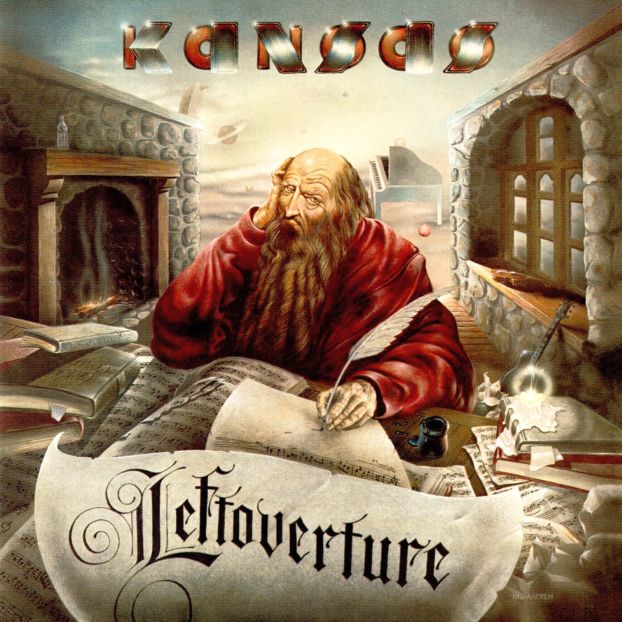
  • Kansas- Leftoverture 50th- Kerry Livgren, Phil Ehart, Steve Walsh, Richard Williams, the late Robbie Steinhardt
    Kansas- Leftoverture 50th- Kerry Livgren, Phil Ehart, Steve Walsh, Richard Williams, the late Robbie Steinhardt

    By 1976 and their fourth effort Leftoverture, it was go big or go home for this intrepid six-man band from Topeka, Kansas. Their first three albums had shown significant growth in all areas of songwriting, musicianship, and production. Yet as you will hear in my classic rock interview from ex-guitarist/keyboardist/main songwriter Kerry Livgren, guitarist Richard Williams, original singer/keyboardist Steve Walsh, original violinist/singer the late Robbie Steinhardt,  and legacy drummer Phil Ehart, Kansas fully realized that if the fourth album, Leftoverture, did not spawn a hit and sell significant quantities, the big New York City record deal would be toast. And the deal had run up a tab of over $175,000 in debt, in mid-Seventies dollars an almost insurmountable amount to recoup.

    For the story of the fourth Kansas album, Leftoverture, we assembled the majority of the original American progressive rock band to tell the back story of the album which bestowed Classic Rock statehood on this band of brothers. A tale of collective fate and colossal determination, my guests include guitarist/songwriter Kerry Livgren, drummer Phil Ehart, guitarist Richard Williams, and original lead singer/keyboard player Steve Walsh. The songs they discuss include Kansas klassics “What’s on My Mind”, the perennial “Miracles Out of Nowhere”, the epic “Cheyenne Anthem”, the spiritual longing of “The Wall”, and the last-minute game changer “Carry On Wayward Son”. Because of the hit “Carry On Wayward Son, submitted by the prolific Livgren even as the band was packing up to leave the rehearsal studio, Leftoverture  gave Kansas permanent status in Rock’s electoral college. When “Carry On Wayward Son” crossed over from FM rock airplay to Top 40 radio stations in early 1977, Leftoverture  entered the Top Five in Billboard album sales, eventually exceeding four million copies.

    A curious thing happens when a band such as Kansas gets popular without the rock critics first anointing them: the music writers, most of whom who had pretty much simply ignored the band’s first three albums, now had to pay attention. And it wasn’t flattering. Composer of most of Leftoverture, Kerry Livgren, thinks that it was because most rock critics then could not accept the fact of a world-class Progressive Rock band coming from Topeka, Kansas. “The fact that we were an American band who, in many ways, emulated the Progressive Rock from England was something that bugged a lot of American writers,” Livgren pointed out. “…But they thought,’You shouldn’t SOUND like that if you come from Kansas.’ Apparently (other) people didn’t seem to care. We sold millions of albums anyway.”

    Kansas had reunited most of the original band and they were eager to talk, plus key songwriter Kerry Livgren, who had retired from touring in order to become a Georgia farmer, had parked his John Deere and picked up his Les Paul to do some Contemporary Christian solo albums, so  suddenly he became available as well. This edition of In the Studio  is dedicated to Robbie Steinhardt, who passed away in July, 2021. –Redbeard

  • 20 More Rock Hall Snubs

    20 More Rock Hall Snubs

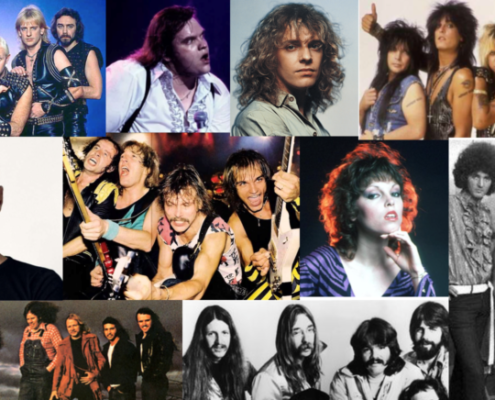
    More of your favorite classic rock interviews from stars  who have been omitted, prevented, blocked, denied, ignored, blacklisted, jilted, overlooked, underloved, and still not invited to the party at the Rock and Roll Hall of Fame. Time will tell if recent changes at the very top of the Rock Hall’s entrenched leadership will mitigate any of the induction controversies. Meanwhile, here are “20 More Rock Hall Snubs ”  from In the Studio. Redbeard

    ( Doobie Brothers happy not to be on this list anymore )

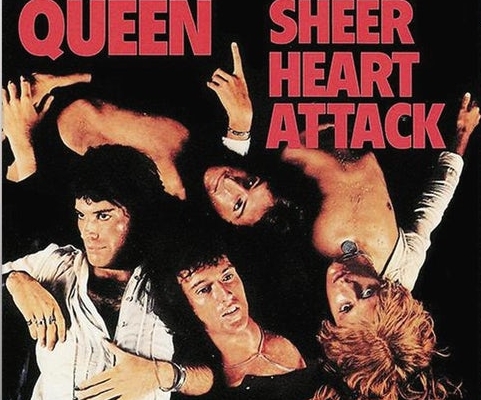
  • Queen- Sheer Heart Attack- Brian May, Roger Taylor
    Queen- Sheer Heart Attack- Brian May, Roger Taylor

    After two studio albums and a trial-by-fire legendary US tour supporting lovable Mott the Hoople, London-based Queen   headlining the Rainbow Theatre for the first time in late March 1974 were so impressive in concert that when they booked the same venue in November later that same year to premiere their third studio album, Sheer Heart Attack,  the young foursome had to add a second night.  ( L-R Freddie Mercury, John Deacon, Brian May, Roger Taylor )

    Recording the performance on audio and film forty-five years ago was a daunting task, both technologically and financially. Live recording was much more art than science then, with no do-overs, no digital tricks, nowhere to hide. Not that this tightly rehearsed band, comprised of singing drummer Roger Taylor, gifted guitarist/singer Brian May, shy bass player/ singer John Deacon, and unforgettable frontman vocalist Freddie  Mercury, needed any augmentation.

    Apparently in the mid-1970s you could go into a British cinema to watch a forgettable Burt Reynolds movie and also see the entire Queen concert before the main attraction, yet the audio tapes from none of the three nights at the Rainbow were ever released until  four decades later. By including the entire March Live at the Rainbow ’74   show on disc one and the November performances on a second disc, you can actually witness Queen’s rapid ascent to the throne of rock royalty. 

    Yet Roger Taylor reveals here In the Studio  in this classic rock interview that all was not well with the rock royal family.The guys were flat broke without knowing where the money was going. And Brian May confesses that all was not well with his health, either. May contracted hepatitis while on tour in America, requiring hospitalization. But while recording Sheer Heart Attack containing “Now I’m Here”,”Stone Cold Crazy” and Queen’s first bonafide hit “Killer Queen” ( US #12 on Billboard  album sales chart, #2 in the UK) in London over the Summer of 1974, May collapsed with an even more life-threatening  chronic colon condition that nearly killed him. Find out in this  In the Studio  interview. – Redbeard

    Brian May (r) with me in Dallas October 1993

  • Matthew Sweet- Girlfriend- Altered Beast- 100% Fun
    Matthew Sweet- Girlfriend- Altered Beast- 100% Fun

    The news that Intervention Records was staging one to rehab  past Matthew Sweet releases was cause for considerable buzz of a healthy kind in 2018. After all, we are talking about Girlfriend,  his 1991 third album which The Village Voice  bestowed #7 album of 1991 accolades back then, and  Paste ranks at #61 on its “90 Best Albums of the 1990s”.

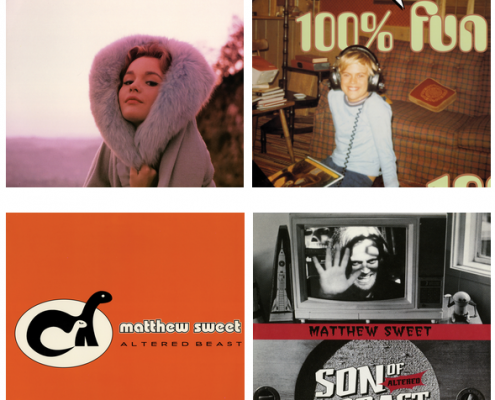
    Here’s my October 1995 rock music interview with Matthew Sweet discussing Japanese animation; making videos for MTV in a pre-YouTube world; alternative godfathers Tom Verlaine and Richard Lloyd’s band Television and Marquee Moon ( the most forgotten of the CBGB-era pioneers that finally got some recognition via the recent movie); guitarists Richard Hell and Robert Quine; car customizer George Barris; 1970 Dodge Challengers painted “Purple Passion”; 1960s teen actress Tuesday Weld; Matthew’s follow-ups Altered Beast   from July 1993, and 100% Fun…you know, all the basics. –Redbeard

  • Lynyrd Skynyrd- Best pt 2-Gary Rossington, Johnny Van Zant, Ed King

    Lynyrd Skynyrd- Best pt 2-Gary Rossington, Johnny Van Zant, Ed King

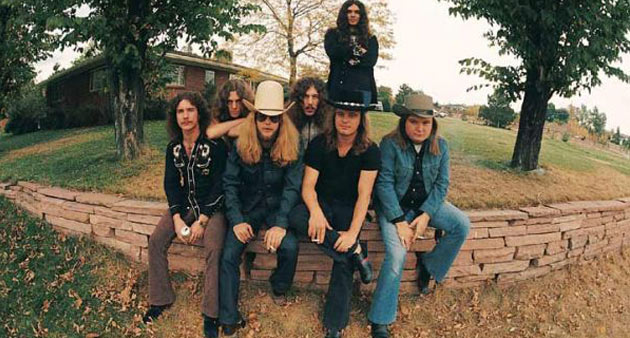
    For Lynyrd Skynyrd  Best part 2  Even as the band traveled abroad to London for the first time on the infamous 1975 “Torture Tour”, Lynyrd Skynyrd  guitarist Gary Rossington explains in my  classic rock interviews that lead singer/lyricist Ronnie Van Zant found it hard to outrun his own shadow. As eldest son of Van Zant patriarch Lacey, a truck driver and former professional boxer, Ronnie had a notorious reputation in the band’s Jacksonville Florida hometown as a street fighting, straight razor-toting brawler. As undisputed band leader, Ronnie dealt out intraband discipline in a similar manner and, according to lead guitarist Ed King, as the pressures of recording and touring increased after Lynyrd Skynyrd’s third album Nuthin’ Fancy, the violence escalated.

    “There was abuse in ‘the family’ “, Ed King (below right) explains on why he quit the band abruptly midway through that tour. And following their first UK shows, original drummer Bob Burns likewise bailed on the boys from the cabin in the swamps on McGurd’s Creek, leaving the remaining four to face their first major defections from more innocent times. LYNY-SKYN-ed-686a14b527633a6ccb96db7388d2776f


    This  In The Studio is particularly melancholy, as the interviews underscore the continued loss of dear hearts and enormous musical talents from Lynyrd Skynyrd, as well as the pride and fierce determination of the survivors. For example, original bass player Leon Wilkeson appears here in what turned out to be his last radio interview before dying in late July 2001, teaming with Gary Rossington for insights into how Ed King’s departure plus a different producer affected the next album, Gimme Back My Bullets. And the late pianist Billy Powell makes a cameo here, as well, with his endorsement of our third guest, singer Johnny Van Zant. The story behind surprise hit live album One More From the Road, and the stopgap time it afforded them to integrate guitarist Steve Gaines into the fold whiles writing some of their strongest material ever for Street Survivors, concludes this part two. (Find  part one here ) –Redbeard LYNYRD-SKYNRD-RStarkey-10411884_10204036833214791_4566038257644978749_n


    (Ed King (l), Gary Rossington (c), Johnny Van Zant in Dallas 1991)