Tag: 1981

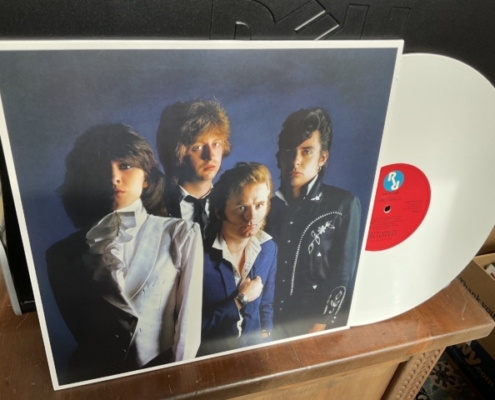
  • Pat Benatar- Precious Time 45th Anniversary
    Pat Benatar- Precious Time 45th Anniversary

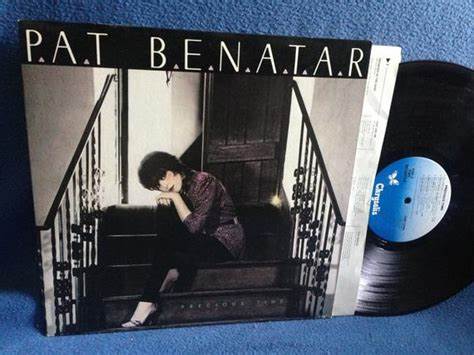
    One of the blessings that comes with maturity is the confidence to tell the unvarnished truth, and in my classic rock interview to mark  her #1-selling third album Precious Time, Pat Benatar makes a series of eyebrow-raising revelations here In the Studio.

    “It went platinum (1,000,000 sales) in thirteen days,” Pat Benatar states matter-of-factly about her explosive third album Precious Time, while she and hubby/musical director Neil Giraldo reminisce In the Studio. It headed rapidly to the top-selling perch in America by August 1981. There are some powerful perennials on her best-charting collection, including the timeless tortured love rockers “Promises in the Dark” and “Fire and Ice”. No doubt delivered with complete conviction, Pat was just attempting to rebound from a bad first marriage as she was falling in love with her new guitar player. But the real story wasn’t between the sheets.

    “You gotta understand, I was twenty-seven years old. I came off a few years of a very bad relationship, was around a lot of girlfriends who went through hell with (abusive) men. You have to understand that I grew up with the Women’s Movement. I was ready to stretch and flex. I was happenin’ ! (chuckles) So I would inflict serious injury if a guy gave me a lot of crap.” When husband Neil Giraldo recoils in mock horror, Pat quickly adds,”But I’ve mellowed, you see. But I’ve learned to put the glove on the fist. Except I always think that I’m big!” she blurted out in laughter,”I always think that I’m big, I do! When you’re a little person, when you got pushed around on the playground, that makes you into something else that big people don’t have to deal with. And it wasn’t limited to men, it was people in general.”

    It is important at this point to remind you of just how much the business of pop music has changed over the Precious Time of forty-five summers since Pat, identified by the Rolling Stone Encyclopedia of Rock’n’Roll  as “the most popular female rocker in the Eighties”, earned that accolade. “That was when we were doing twelve, even fourteen months (touring). During In the Heat of the Night  we did fourteen months in a row. It was nuts. But that was old way. That’s what you did. There was no MTV. You had to expose what you were doing to everybody and that’s how you did it. I look back on it nowadays and I think, ‘Oh man, that purple zebra leotard. What was I thinking ?!” According to Pat Benatar and Neil Giraldo, those who were supposedly on her management and record company team chose sexploitation as a business plan. “Redbeard, you gotta understand, in ’81 the record company was airbrushing ( her photos) ,” Neil says exasperatedly,”They were airbrushing…”

    “My clothes off !” Benatar blurts out.

    “You’re talking about management and the record company,” Giraldo continued,”that she really couldn’t do anything! We were trying to make records, and they were telling us what we can and can’t do, and would play both ends against the middle.”

    “What happened was that I had a record company and a management group who refused to be open-minded,” Pat pointed out.”It was a constant battle with them. I was already gone (figuratively) by the time this record came out. By the time this came out, I was already moving to another place. Except that they weren’t letting me. And at that time they still had control, they had contractual control. I didn’t have a choice at that time. And that was when I said, ‘You can do anything you want, but you can’t make me make records. And if you don’t let me make the kinds of records that I want to make, I WON”T make them anymore.” –Redbeard

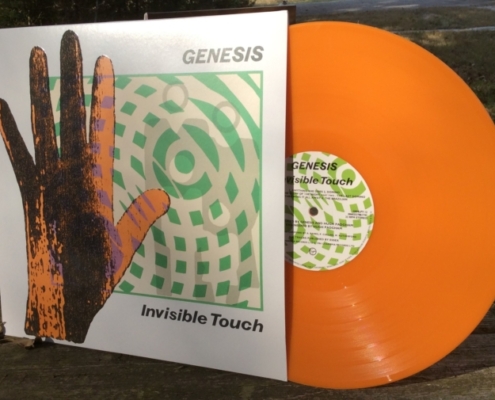
  • Genesis- Invisible Touch @40- Mike Rutherford, Tony Banks, Phil Collins
    Genesis- Invisible Touch @40- Mike Rutherford, Tony Banks, Phil Collins

    The fortieth anniversary of Genesis’ biggest album in their long fifty year+ career, Invisible Touch  (worldwide sales estimated at 15,000,000) has arrived, so we convened Mike Rutherford, Tony Banks, and Phil Collins here In the Studio  to discuss the blockbuster sales behind “Tonight, Tonight, Tonight”, “Land of Confusion”, “In Too Deep”, “Throwing It All Away”, and “Invisible Touch”.

    Between 1980 and 1986, the British trio Genesis released a series of four consecutive hit albums, each more successful than its predecessor by as many as five times, which include 1981’s Abacab  and 1986’s Invisible Touch. Because drummer/singer/songwriter Phil Collins had a parallel solo career take off during that time, revisiting the critical reviews  from many respected music writers in that period reveals a prevailing assumption that Genesis guitarist Mike Rutherford and keyboardist Tony Banks unwittingly (if not unwillingly) were somehow led by Collins in a more mainstream pop direction. However, the simple facts just don’t bear out that inference, as all three members explain here.

    The title song “Abacab” (named nonsensically after the three musical sections “a”, ‘b”, and “c” ) was nowhere near the pop mainstream. “Man on the Corner ” was indeed a hit, but in it Collins addresses the issue of homeless people and society’s reluctance to acknowledge them or, in many cases, feel any responsibility for finding solutions… not exactly your typical pop banality. “Land of Confusion” going Top Five as a single says a lot more about the changing mainstream tastes in 1986  rather than any musical agenda by the band, and the #3 hit “Tonight,Tonight,Tonight” from the astonishing 15 million-seller Invisible Touch  effectively silenced any silly debate about pop vs. rock by running over nine minutes long!

    Moreover , it wasn’t just Collins who was branching out. By the time his 1985 third solo album No Jacket Required   made Phil deservedly a star in his own right, Rutherford and Banks had each done no less than two solo efforts apiece. Instead of siphoning off creativity and diluting Genesis of strong material, the respective solo albums clearly inspired the group to lift any self-imposed restrictions to the Genesis sound, as you will hear in my classic rock interview In The Studio.Redbeard 

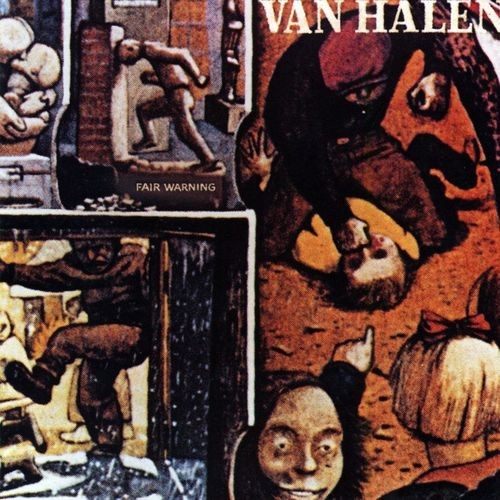
  • Van Halen- Fair Warning@45- Eddie & Alex Van Halen
    Van Halen- Fair Warning@45- Eddie & Alex Van Halen

    The upside/downside comparison of Van Halen’s April 1981 album Fair Warning  can probably explain why it is easily the band’s most overlooked effort in the original David Lee Roth era. Pro: Fair Warning  is the most Eddie Van Halen-dominated album until the mega-hit 1984.  Con: as AllMusic.com‘s Stephen Thomas Erlewine nails it, “Fair Warning  was the first Van Halen album that doesn’t feel like a party.” Pro: three of the best rockers the band ever did are on Fair Warning, “Unchained”, “Hear About It Later”, and the woulda-coulda-shoulda been big “So This is Love?”. Con: those are the only three songs most people can recall from the album. Pro: Fair Warning  sold over two million copies, a feat any band today would kill for. Con: at only a little more than two million sold, Fair Warning  by comparison was Van Halen’s slowest seller from the original foursome.

    Even my guest with Eddie, drummer Alex Van Halen, says regretfully, “I watched while Eddie suffered relentlessy through making that album”, as apparently the pace and Guinness Book-level hedonism of those first four albums and tours were leaving the song tank near empty. Eddie and Alex both weigh in on Fair Warning‘s forty-fifth anniversary. –Redbeard 

    UNITED STATES - JANUARY 01: Photo of VAN HALEN and Michael ANTHONY and Eddie VAN HALEN and David Lee ROTH and Alex VAN HALEN; Posed group portrait backstage L-R Michael Anthony, Eddie Van Halen, David Lee Roth and Alex Van Halen (Photo by Richard E. Aaron/Redferns)
    UNITED STATES – JANUARY 01: Photo of VAN HALEN and Michael ANTHONY and Eddie VAN HALEN and David Lee ROTH and Alex VAN HALEN; Posed group portrait backstage L-R Michael Anthony, Eddie Van Halen, David Lee Roth and Alex Van Halen (Photo by Richard E. Aaron/Redferns)


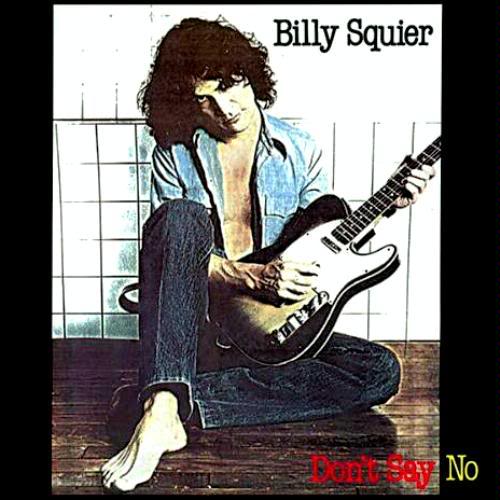
  • Billy Squier- Don’t Say No 45th Anniversary
    Billy Squier- Don’t Say No 45th Anniversary

    My guest Billy Squier’s 1981 second solo album, Don’t Say No, sold over three million copies (!) because of songs “In the Dark”, “My Kinda Lover”, “Lonely Is the Night”, & the big hit ” The Stroke”. Squier grew up in the Boston suburbs as an only child (“Life isn’t easy from the singular side…” Billy sings in the opening to “In the Dark”), the son of an executive of the Converse Shoe Company,the people who make the iconic Chuck Taylor All Stars. So growing up in the Squier household, it’s safe to assume that Buddy Holly shared star billing with Bob Cousey, Bill Russell, and John Havlicek of the Boston Celtics.

    Billy Squier discovered John Mayall’s Bluesbreakers at age 14, which in turn introduced Billy to guitarist Eric Clapton, changing everything for the young adolescent American. Squier’s desire got him first to Boston University, and then his talent got him into the prestigious Berklee School of Music. But the first half of the Seventies for Squier was spent pretty much shuffling in and out of bands in Boston and New York City.

    Then Billy Squier got his first taste of the record business, recording two albums on a major label fronting the band Piper in 1976 and 1977 before splitting up. Undeterred, Squier landed a lucrative solo deal and debuted with 1980’s The Tale of the Tape, containing “The Big Beat” which I played to great response on ROCK 103/Memphis. So it was with eager anticipation that Don’t Say No was received in April 1981.

    Billy told me In the Studio that the song “Nobody Knows”, written by Squier about John Lennon while the former Beatle was still alive, ironically shares the dubious distinction of having been recorded at the same place and time as one of rock history’s darkest days: the assassination of John Lennon in New York City December 8, 1980. “The inspiration for that song was the life of John Lennon, and I wrote it prior to his death,” Billy Squier tells me. “He lived in a building here in New York City called The Dakota, and I was walking past in the (Central) Park. I was reflecting on some of the events that had happened to me in my career, whereby my first album Tale of the Tape had generated some interest and activity. And I was just having a bit of a pause for reflection on how your life is perceived from people outside the (music) industry, what the public perception is of an Artist, and the difference between that and the real private person and their innermost feelings. And looking at this building I naturally thought of Lennon, who was one of the most prolific, important Artists of our time, and I was thinking about what it must be like to be John Lennon. That’s the basis of my song “Nobody Knows”, that ‘ nobody knows what it’s like to be in my skin…”.

    BILLY-SQUIER-1131984104_0824Billy Squier had already begun recording his second solo album at the Power Station( now Avatar Studio) on West 53rd in Manhattan when John Lennon returned to his Central Park West address only about twenty-five blocks away from the studio. “Ironically and very sadly, the night John Lennon was killed we were recording that very song,” Squier confides in this classic rock interview.

    When Foreigner opened their Foreigner 4  tour in Memphis in Summer 1981, they wisely invited Billy Squier as special guest to open every show, all but guaranteeing sell outs every stop. No doubt to show gratitude for my early support, Billy invited me to join him and his band on stage during the performance of his hit “The Stroke” to sing background vocals. Now, I cannot carry a tune in a bucket, but that night in Memphis’ Mid-South Coliseum in front of ten thousand fans fist-bumping into the air to the big beat, we discovered that I can shout “stroke! stroke! stroke!” with the best of ’em. –Redbeard

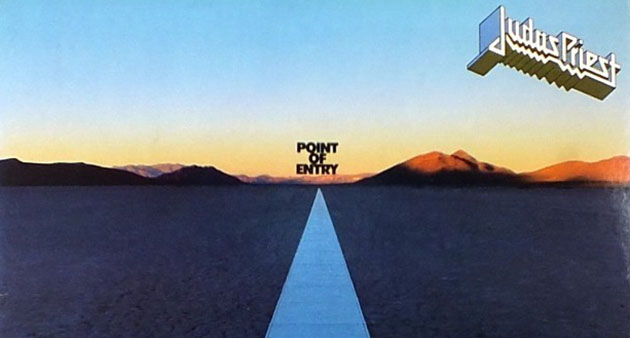
  • Judas Priest- Point of Entry 45th Anniversary- Rob Halford

    Judas Priest- Point of Entry 45th Anniversary- Rob Halford

    More than four decades after its February 1981 release, the double-edged guitars of Judas Priest on Point of Entry still slice and dice my speakers  (and frighten my cat). Mainstream success, which had eluded heavy metal in general and Judas Priest in particular in the US, had been tee’d up two years earlier when American FM rock deejays had discovered two curious cover versions on a live Japanese import. It took a full five albums and the entire 1970s decade for Judas Priest to break out, but few of the music critics who slagged them initially were around to write about the band’s multi-million selling successes in the Eighties, starting with the live Unleashed in the East  in late 1979, followed by the definitive metal statements British Steel   in 1980, Point of Entry  in 1981, and Screaming for Vengeance  mid-1982. Point of Entry  includes “Hot Rockin’ ”  and “Heading Out to the Highway” here in my Judas Priest lead singer Rob Halford’s classic rock interview.

    All of the members of Judas Priest grew up in or around the northern industrial English city of Birmingham amidst coal  mines, steel factories, iron ore smelters, and the  mountainous piles of waste, or”slag”, an inevitable by-product from such heavy industry (the most notorious “slag heap” in rock is the album cover photo on The Who’s Who’s Next ). In English slang, to” slag off” somebody or something meant to reduce its value to nothing. While still trying to get a band together, Judas Priest lead guitarist Glenn Tipton actually worked at British Steel for his day job. Recently it appeared that some 21st century Madison Avenue “Mad Men” advertising exec was a closeted heavy metal fan, slipping Judas Priest into the soundtrack of a recent Honda Accord car tv commercial. Point of Entry which includes “Hot Rockin’  and “Heading Out to the Highway” are here in Judas Priest lead singer Rob Halford’s classic rock interview  including reinventions of Peter Green/ Fleetwood Mac’s “Green Manalishi”and Joan Baez’s “Diamonds and Rust”, “Living After Midnight”,”You’ve Got Another Thing Coming”, and “Turbo Lover”.  –Redbeard

  • The Pretenders- Chrissie Hynde

    The Pretenders- Chrissie Hynde

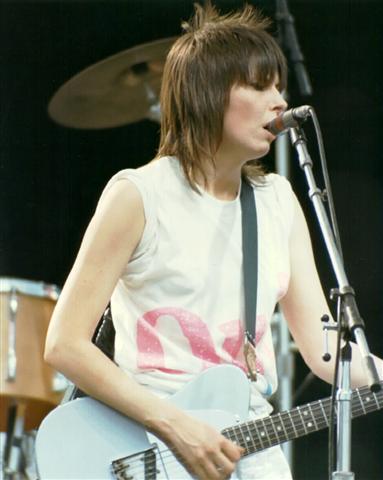
    We had never met anyone in rock music quite like The Pretenders’ bandleader Chrissie Hynde, and honestly, in the  forty-plus years since The Pretenders debut, I still haven’t. And if anyone tried to tell her story, you would swear it was some punk rock fairy tale dreamed up by a screenwriter with an over-active imagination. That’s why I have Chrissie Hynde here to speak for herself In the Studio  about The Pretenders/ Pretenders II, one of rock’s most important one-two Post-Punk punches.

    To be completely honest, the almost instant appeal of The Pretenders debut, practically  from the outset in January 1980, caught me and not just a few of my American radio brethren off guard. Rock’n’roll in general, and rock radio in particular, being such a boys club back then, we could understand Pat Benatar’s brand of Eighties feminism singing, “Hit me with your best shot” all the while gyrating pixie-style in a skimpy leotard (in fairness, not her idea). But the woman out front of The Pretenders clearly wore the pants in the family, and those were LEATHER pants behind that electric guitar.

    I’ll never forget my first two encounters with The Pretenders singer/songwriter. The first was my live radio interview on ROCK 103  while in Memphis during their first U.S. tour April 4, 1980. Although the band had been there less than 24 hours, Chrissie had already spent the night in a Memphis jail, but not before she kicked out the rear window of a police cruiser which had been called to escort her away in handcuffs from the local TGI Friday’s restaurant. To say that our initial live interview was tense the next day is an understatement. In the course of discussing “Precious”,”Mystery Achievement”, The Pretenders’ cover of The Kinks’ “Stop Your Sobbing”, and Chrissie’s authentic portrayal of a greasy spoon diner waitress in the video to “Brass in Pocket”, I must admit that I was intimidated by how this supposed rock rookie took control of the conversation, and bristled indignantly at any perceived slight by the interviewer.

    Nevertheless, she and original members guitarist James Honeyman-Scott, bass player Pete Farndon, and drummer Martin Chambers quickly followed up the impressive debut with an Extended Play mini-album containing three of my personal Pretenders favorites, the propulsive rocker “Message of Love”, the jangly wistful waltz “Birds of Paradise”, and the brilliantly compact, surprisingly mature “Talk of the Town”. The subsequent full album Pretenders II  would peak at #7 UK, #10 in Billboard, but sadly it would be the final effort of the original band, the reasons Chrissie Hynde delves into quite frankly in my classic rock interview.
    My next encounter with Ms.Hynde was five years later, backstage at the Live Aid concert in Philadelphia on July 13 1985, where I was interviewing rock’s biggest stars including Eric Clapton, Jimmy Page & Robert Plant, Phil Collins, Tom Petty, Ozzy Osbourne, Bryan Adams, even movie stars Tim Robbins & Jack Nicholson. I spotted Chrissie Hynde standing in the doorway of her dressing room trailer, looking very sharp in a tailored sky-blue suit, with red henna highlights in her hair. As I approached her with my microphone in hand, suddenly I became aware of her steely stare & what felt to be an invisible force-field that projected about five feet in front of her that announced, “Do NOT put that thing in my face unless you want it embedded in your ear.”
    I decided to go talk to Jack Nicholson instead, much less intimidating.

    But another 13 years later it seemed that motherhood & maturity allowed Chrissie Hynde to “wear it well”, & as you will hear, I found her to be frank, thoughtful, & gracious in recounting her very beginnings from growing up in Akron, Ohio to eventually coming full circle…literally… to the Rock and Roll Hall of Fame just an Uber ride north in Cleveland. –Redbeard

  • Loverboy- The Kid is Hot Tonight- Santa Monica CA 4-17-81
    Loverboy- The Kid is Hot Tonight- Santa Monica CA 4-17-81

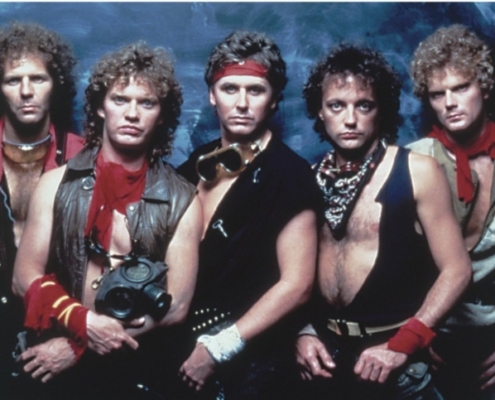
    I was very fortunate to see Loverboy in concert twice in barely six weeks over the Winter 1980-81, and it was readily apparent even then that this Canadian quintet had the fire in the belly to want to make a name for themselves, and the musical chops to make everyone in the audience remember it. Here is Loverboy performing “The Kid is Hot Tonight” on stage at the Santa Monica Civic Auditorium in April 1981. -Redbeard

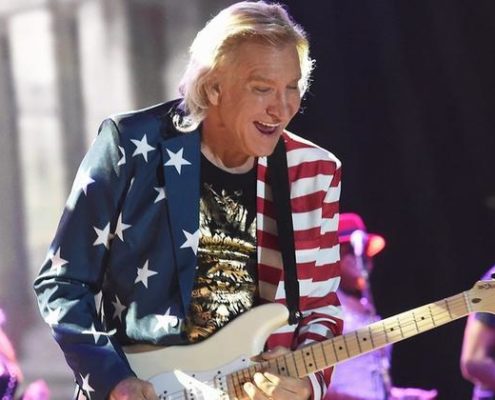
  • Joe Walsh- Dreams- Dallas 7-10-81

    Joe Walsh- Dreams- Dallas 7-10-81

    Joe Walsh reactivated his popular solo career in the early Eighties while the Eagles were on hiatus, and in July 1981 played Dallas Reunion Arena to a full house. With the golden anniversary of Joe Walsh’s The Smoker You Drink… album imminent, here is a live performance of a tasty tune,”Dreams”, which first appeared on that breakthrough album. –Redbeard

  • Sting- Message in a Bottle- London 1981

    Sting- Message in a Bottle- London 1981

    This solo performance by Sting (his first ever) of “Message in a Bottle” at the second Amnesty International fundraiser, known as The Secret Policeman’s Other Ball   in London 1981,  is extremely rare on compact disc, but thankfully many of the stellar performances over the years have been collected now on DVD. “Love can mend your life, But love can break your heart…” –Redbeard

  • Cars- Shake It Up 40th anniversary- Greg Hawkes, the late Ric Ocasek

    Cars- Shake It Up 40th anniversary- Greg Hawkes, the late Ric Ocasek

    Contrary to the checkered flag cover art on The Cars‘ 1980 album Panorama , for that third lap the band had finished back in the pack as compared to the winners circle finishes of the first two, 1978’s multi-platinum debut The Cars  and the high octane  follow-up Candy O. Their last to be produced by English veteran Roy Thomas Baker,  Shake It Up  was their first album to contain a Top Ten Billboard  hit in the title song, so 1981’s Shake It Up, with its peak at #9 on Billboard  album sales chart as well as #34 for the entire year, was seen by many  as a return to high performance by the Boston band. A decade before film director John Singleton introduced mainstream America to Boyz in the ‘Hood , writing on Pitchfork.com Alfred Soto notes,”…singer/songwriter Ric Ocasek wrote hooky songs about girls on hoods: dumb but not stupid, sexist but not offensive…In that pre-MTV era, The Cars were an ideal first vehicle.”Shake It Up  went on to sell more than two million copies of the album which also contained “Since You’re Gone”, the sleeper “I’m Not the One (‘Round & ‘Round)”, and I included the late Ben Orr’s and Ric Ocasek’s rare cover of the 1965 Nightcrawlers gem “Little Black Egg” just for fun. Ric, who sadly passed away from heart disease in 2019, and Greg Hawkes are my guests In the Studio  in this classic rock interview. –Redbeard