Tag: best selling albums 1987

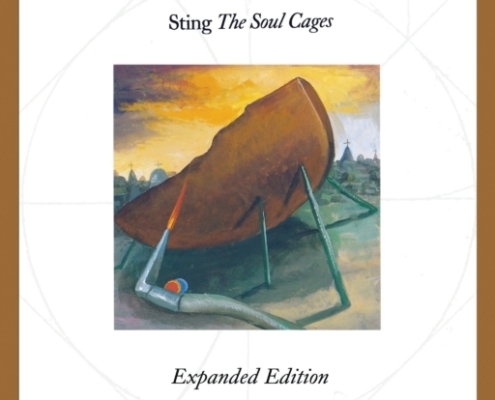
  • Sting- The Soul Cages 35th Anniversary

    Sting- The Soul Cages 35th Anniversary

    We had already done multiple interviews when Sting was in The Police, and now by the time we reconvened, the Chief of Police had released three highly-acclaimed solo albums, The Dream of the Blue Turtles (1985), …Nothing Like the Sun (1987), and The Soul Cages in 1991. By then Sting had lost both parents, the most recent his father, and was clearly wrestling with his star of success and celebrity ascending amidst the pain of personal loss. While that is an inevitable, wholly predictable, nearly universal experience for tens of millions, strangely little exists in Western culture that is readily available to prepare one for it.

    Not since the Beatles had a band exited the international stage at the zenith of their popularity quite like The Police following 1983’s Synchronicity  album and eighteen month world tour, so to say that Police singer/songwriter Sting’s first solo album, The Dream of the Blue Turtles, was highly anticipated is quite an understatement. Musical direction-wise it surprised some who did not know Sting’s pre-punk jazz roots at college, but in no way did it disappoint, with “If You Love Somebody, Set Them Free”, “Russians”, and “Fortress Around Your Heart” framed by sophisticated arrangements showcasing the lilting soprano sax of Branford Marsalis. …Nothing Like the Sun  in October 1987 continued that musical direction with “Be Still My Beating Heart”,”Englishman in New York”, and the #7 “We’ll Be Together” resulting in the album’s debut at #1 in the UK, a #9 peak in sales stateside, garnering three Grammy nominations including Album of the Year, and eventually selling an estimated eighteen million copies worldwide.

    For  The Soul Cages, Sting’s second #1-seller in the UK and a Grammy Award winner in 1992 for Best Rock Song with the title track, a new digital-only expanded edition has been released containing remixes, Spanish and Italian vocal singles, live performances, and two covers. The extended remix of “Mad About You” and an exquisitely faithful reading of Elton John and Bernie Taupin’s “Come Down in Time” are included here, the latter with  Sting on acoustic upright bass that’s worth the price of admission.

    In my In The Studio  classic rock interview, Sting covers a lot of ground, including paying his dues pre-Police by playing in cabarets and backing stand-up comedians; the pejorative term “Third World countries” and the conundrum of developing nations; the alarming lack of heroes in our society today, and the failure of politicians to provide leadership; ecology, global warming, and threat of pandemic disease; how fatherhood changed his relationship with his own father; losing both parents at the height of international stardom; his favorite pop songwriter; the Nordic myth that inspired “The Soul Cages”; and the satisfaction Sting derives from writing such timeless songs as “Roxanne”, “Message in a Bottle”,”Every Breath You Take”,”King of Pain”, “All This Time”,”If I Ever Lose My Faith in You”,”Fields of Gold”,” and “Brand New Day”.

    “Basically, misinformation is the most frightening aspect about American culture. People only get the information that confirms their prejudices. The opposing viewpoint isn’t really easy to find.” Sting made that observation to Spin  writer Vic Garbarini, not echoing the conclusions of US intelligence agencies in the last ten years, but rather presciently predicting it in October 1987 in conjunction with Sting’s sophomore solo release …Nothing Like the Sun. –Redbeard

  • Motley Crue- Theatre of Pain- Nikki Sixx, Vince Neil

    Motley Crue- Theatre of Pain- Nikki Sixx, Vince Neil


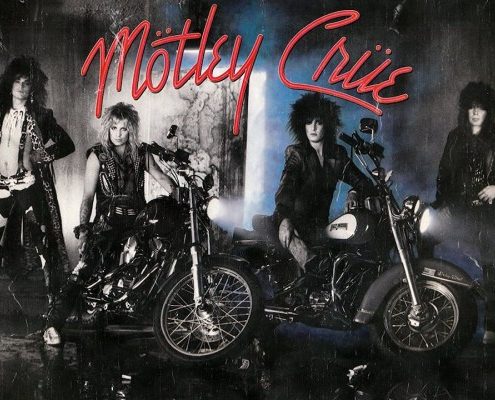
    Okay, it’s ‘fess up time for me regarding Motley Crue and their June 1985 third album, Theatre of Pain. I absolutely loved “Looks That Kill” (and still do, can’t get enough ), but after hearing their record company’s choices for singles, first Motley Crue’s cover of a Brownsville Station mid-chart early Seventies pop song”Smokin’ in the Boys Room”, followed by a slow piano arrangement crooning”Home Sweet Home”, I decided that my Dallas-based regional powerhouse rock radio station would go easy on the airplay. We knew that Motley Crue’s third album Theatre of Pain was released in June 1985 following lead singer Vince Neil’s deadly car crash and subsequent manslaughter charge, but as both Neil and Motley Crue bassist/songwriter Nikki Sixx told me In the Studio, that wasn’t the half of it. Meanwhile, relatively new national influencer MTV went all in with saturation exposure for Theatre of Pain, particularly Motley Crue’s “Home Sweet Home” video. Turns out I was wrong, about four million times over!

    Life can’t always be big issues and brain surgery, which is precisely why the world needed Motley Crue and Girls, Girls, Girls in mid-1987, to report in from the “Wild Side” while marauding through North America “All in The Name of Rock”. Peaking at #2 on Billboard Album Sales chart, Girls, Girls, Girls  would eventually equal their preceding mega-seller, Theatre of Pain, with another four million copies sold. The always eyebrow-raising Nikki Sixx and hilarious Vince Neil are my guests In the Studio. 

    In an alternate universe where being boring and predictable is the Original Sin, Vince Neil, Mick Mars, Nikki Sixx, and Tommy Lee of Motley Crue would be sanctified saints, because they have been waging  jihad against the tyranny of the mainstream for more than four decades. After appearing earlier that afternoon on my Dallas radio show, Motley Crue lead singer Vince Neil was  running from side to side at the front lip of their huge stage during a 1989 stop on their Dr.Feelgood   tour in front of 18,000 fans, everyone on their feet. Motley Crue ripped through a pile-driving version of “Looks That Kill” (which still makes me reach for the volume knob exactly the same way it first did in September 1983), and from my vantage point on the floor sidestage, Vince ran straight at me out onto a wing which extended almost to the first loge of seats just above my head, occupied by row after row of dancing, innocent-looking young women. Suddenly, as Neil reaches the edge of the stage closest to these wide-eyed young female fans, the girls simultaneously all lift their tops to expose matched pairs of bare breasts. In that instant, Vince Neil dropped the wireless microphone from his face to his side and, looking down at me in breathless bewilderment and amazement, rolled his eyes as if to say,”Can you believe this is my life?” It wasn’t Spinal Tap, it was pure Groucho Marx.

    Motley Crue as model citizens? Hardly. Harmless except to themselves ? Certainly not to the friends and family of Hanoi Rocks drummer Nicholas “Razzle”Dingby, who paid with his life for riding with Vince Neil in 1984 just before Theatre of Pain was recorded; or to Tommy Lee ex-wife Pamela Anderson, who was kicked by Lee while she held their infant son (Lee did four months in jail for assault ); nor harmless to the family of 4 year-old Daniel Karven-Veres, who drowned in Lee’s pool during a June 2001 birthday party. Essential to the evolution of rock music? Probably. It’s arguable that without Motley Crue and Guns’n’Roses, grunge bands including Nirvana, Pearl Jam, and Soundgarden would not have had a reason to exist, or at least not in the same rock binge-and-purge role. Likable  funny guys? You bet, in that same lovable way that while you scratch a puppy’s ear it pees on your shoe. You’ll see when you listen to Nikki Sixx and Vince Neil In the Studio in this classic rock interview with me  marking the fortieth anniversary of Theatre of Pain. –Redbeard

  • John Mellencamp- Big Daddy

    John Mellencamp- Big Daddy

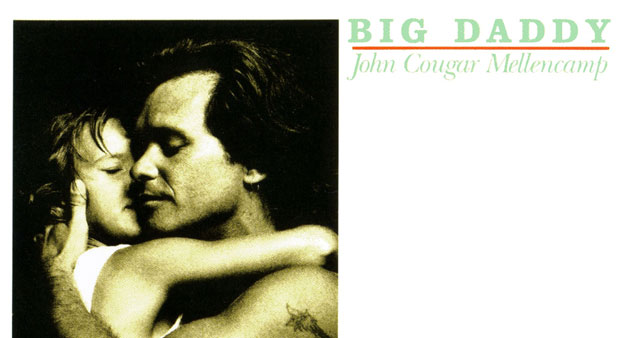
    With 1989’s Big Daddy, we find Indiana singer/songwriter John Mellencamp, who ran the table in the Eighties with four platinum albums in a row, writing even more while enjoying it less, and wondering aloud why he still wasn’t happy.
    If the Eighties made anyone a star, it was John Mellencamp. In direct contrast to the Pop Metal of the day in those  years from Def Leppard, Whitesnake, Bon Jovi, Motley Crue and a horde of hair bands, John Mellencamp had progressed from writing ” a little ditty ’bout Jack and Diane…” into deeper waters of social issues, but when the self-described “just a song and dance man” waded into the deep end, he found the cross currents of public scrutiny to be swift, with riptides unseen until you are swept up in them. It was about that time that John Mellencamp’s new-found stardom, wealth, and lack of privacy started to raise issues with his working class values, in his mind and, in at least some cases, his personal relationships. The 1989 release Big Daddy  exposed a sense of malaise that had crept into his lyrics even as Mellencamp’s career was at a peak.

    His second marriage was on the rocks, he had just turned the Big Four Oh, and his daughter made him a grandfather all about this same time, reflected in the songs “Pop Singer”, “Martha Say”, the stinging Reagan indictment “Country Gentleman”, and the bleak “Jackie Brown”. In this revealing classic rock interview, John Mellencamp takes the American electorate out to the woodshed for sleepwalking through the democratic process while complaining about the dysfunctional results. –Redbeard

  • Pink Floyd- A Momentary Lapse of Reason- David Gilmour, Nick Mason
    Pink Floyd- A Momentary Lapse of Reason- David Gilmour, Nick Mason

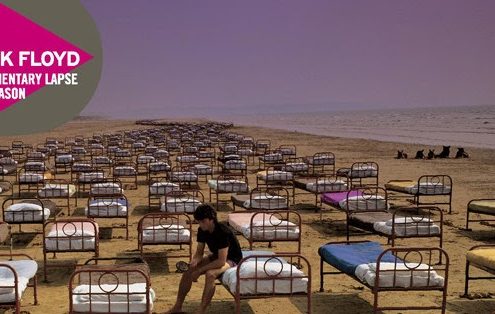
    Perusing Pink Floyd’s A Momentary Lapse of Reason gave me ample reasons to reflect back to a chance meeting backstage at London’s Wembley Arena after a Deep Purple concert in February 1987, when David Gilmour pressed his Astoria Studio phone number into my hand in the crowded dressing room and whispered into my ear,”There’s going to be a new Pink Floyd album this year. Call me at the studio tomorrow.” I could barely sleep that night in anticipation, and brought the details back to America that A Momentary Lapse of Reason, Pink Floyd’s first without conceptual composer Roger Waters, and the band’s first album after a long, uncertain hiatus, was in fact coming in September. As my guests David Gilmour and Pink Floyd drummer Nick Mason share here In the Studio, on A Momentary Lapse of Reason practically nothing was guaranteed …except that the stakes were staggeringly high.

    By the mid-Eighties it had become painfully apparent that there was a yawning hole in the rock world that previously had been occupied uniquely by Pink Floyd, even then the most popular progressive rock band ever. With co-founders Roger Waters and Nick Mason plus Rick Wright and David Gilmour, Pink Floyd had paved a road of musical experimentation, exploration, and innovation incorporating heady atmospheric, cinematic arrangements and profound lyrical themes on Dark Side of the Moon, Wish You Were Here,  the under-rated Animals,  and the epic album, tour, and film The Wall.

    (L-R) The late Rick Wright, David Gilmour, and Nick Mason
    As so often is the case, the creative sparks that ignited such memorable music were in large part generated by friction between the brilliant but flinty Waters with the other three band members, and following the making of 1982’s
    The Final Cut  (described to me by David Gilmour as “sheer torture”), Pink Floyd was M.I.A. for five long years,  conspicuous in their absence, for instance, at the largest one day gathering of rock royalty, Live Aid, in July 1985. It was not until the end of that year that Roger Waters’ official departure from Pink Floyd was revealed to the other band members, and this bowling ball revelation left the group with the musical equivalent of the dreaded 7-10 split. 

    Waters threatened legal injunctions from allowing Gilmour and Mason to continue to record and tour as Pink Floyd, but when those threats never materialized (there are no pre-nuptial agreements in rock bands), at least one high profile rock writer was enlisted instead to carry Roger’s “water” to the court of public opinion, where an ugly war of words questioned the legitimacy of a Pink Floyd without him. It was against this backdrop which such songs as “Learning to Fly”,”One Slip”,the hymn-like “On the Turning Away”, the dirge “Yet Another Movie”, and the hypnotic “Sorrow” were all composed and recorded for A Momentary Lapse of Reason.

    Mercifully, time, maturity, other creative outlets, and the loss of mutual dear friends and colleagues all have brought the disenfranchised factions of Pink Floyd to a truce in the 21st century, but in 1987 this international superstar band faced its greatest existential threat, while simultaneously experiencing A Momentary Lapse of Reason. David Gilmour and Nick Mason tell, with little restraint, the back story of one of the against-all-odds comebacks ever in rock history in this emotional classic rock interview. –Redbeard

  • Aerosmith- Permanent Vacation- Steven Tyler, Joe Perry, Tom Hamilton
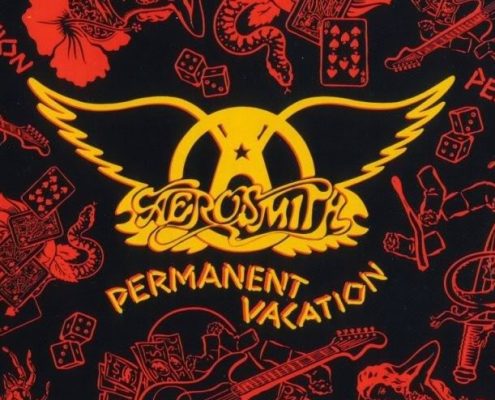
    Aerosmith- Permanent Vacation- Steven Tyler, Joe Perry, Tom Hamilton

    You think you know the story behind Aerosmith and their fabled  resurrection  with the superb Permanent Vacation in 1987, due in great part to several things: 1) the zealous publicity from then-new manager Tim Collins, utilizing the  clout of music mogul David Geffen’s record label; plus 2) the prime years of MTV. But the stakes for this phoenix-like comeback  could not have been higher, or the outcome more uncertain.

    You see, in 1985 when the label released Done With Mirrors, the  first post-rehab Aerosmith album with the original members, the Boston quintet had only a glorious past with those first four  Aerosmith albums in the Seventies as a legacy. Then two forgettable studio efforts plus a dud live album treaded water before both guitarists, Joe Perry (who co-wrote most of the songs with Steven Tyler) and Brad Whitford, each bailed out of the band for separate projects. So much was made of Aerosmith’s deterioration by drugs (lead singer Steven Tyler can be heard forgetting the lyrics to a third of the songs on the VHS video Aerosmith Live Texxas Jam ’78 ) that most fans completely miss the fact that copious cocaine and heroin abuse simply magnified the stark personality differences between the two songwriters, Tyler and Perry, as well as the lone lucid man in the middle, bass player Tom Hamilton.  Tyler sober, supremely talented, relentlessly intense, mercurial, restless, and bold, with seemingly no filter between thought and expression,  easily can be the most difficult child of God to ever grace a stage or recording studio, and after the supposed “comeback” Done With Mirrors came and went with a whimper, Aerosmith’s future was anything but secure. Tyler, Perry, and Hamilton join me In the Studio in this classic rock interview for the back story on “Magic Touch”,”Dude Looks Like a Lady”,”Rag Doll”, “Hangman Jury”, and the #3 power ballad “Angel” which erased all doubts…to the tune of over 5,000,000 sold. – Redbeard

  • John Mellencamp- The Lonesome Jubilee 35th anniversary
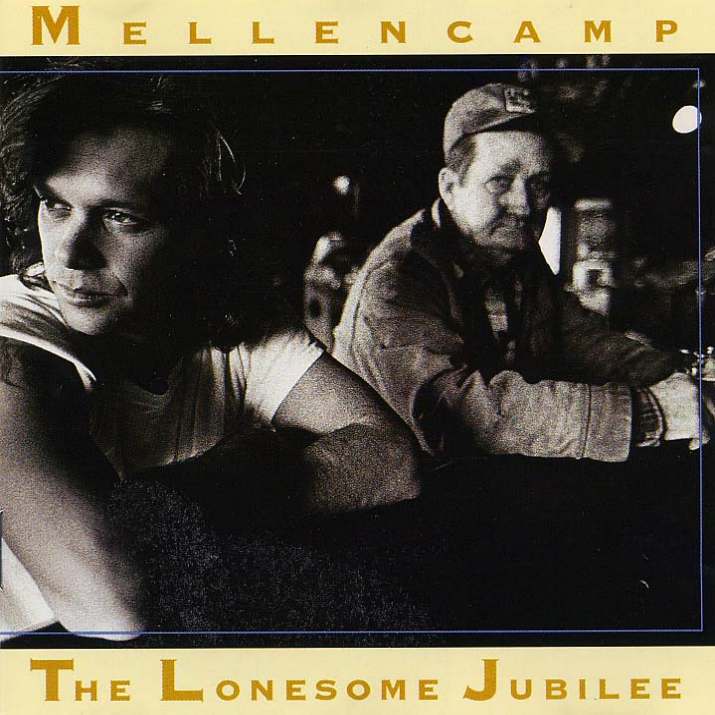
    John Mellencamp- The Lonesome Jubilee 35th anniversary

    Highly-acclaimed and influential rarely go hand-in-hand with mainstream popularity. The ultimate example is the incomparable Bob Dylan, who recorded fifteen original albums before he got a single platinum seller (Blood on the Tracks). But when a unique sound, like the fiddle and accordion arrangements paired with a crackling backbeat, met the songs of John Mellencamp on his August 1987 release The Lonesome Jubilee, such as “Paper in Fire”,”Check It Out”,”The Real Life”, and “Cherry Bomb”, the rock, pop, and country music worlds were changed indelibly while cash registers rang up #6 sales on the Billboard album chart. Personally I could  relate to John Mellencamp, and not just because our people came from rural farming folk in Central Indiana. We were both late bloomers. After all, it wasn’t until John Mellencamp’s seventh album, Uh Huh, that he wrote “Pink Houses”, not just a popular song but an important one. With “Pink Houses” Mellencamp became as keen as Springsteen, Seger, and Petty as chroniclers of late twentieth century American life, and with John’s eighth album Scarecrow he filled an entire record with songs of similar substance. He had already influenced the sound of Pop music earlier in the Eighties by moving drummer Kenny Aronoff up front in the mix on the #1 hit “Jack and Diane” and “Hurt So Good”, and with his ninth album The Lonesome Jubilee in August 1987 , John Mellencamp not only influenced Pop and Rock but infiltrated the citadel sound of Nashville as well by arranging these songs with accordion, dobro, and fiddle over a basic rock rhythm section. Almost instantly, acts as diverse as Paul Simon and The Talking Heads took notice. John Mellencamp is my guest In the Studio  with one of the most important albums of the Eighties, dedicated this edition to John Cascella, whose accordion on The Lonsome Jubilee and Big Daddy albums influenced countless musicians and producers by re-introducing the charm and romance of that sound back into Pop and Country. John Cascella died suddenly in 1993.  –Redbeard 

  • Grateful Dead- In the Dark- Bob Weir, Mickey Hart, Phil Lesh
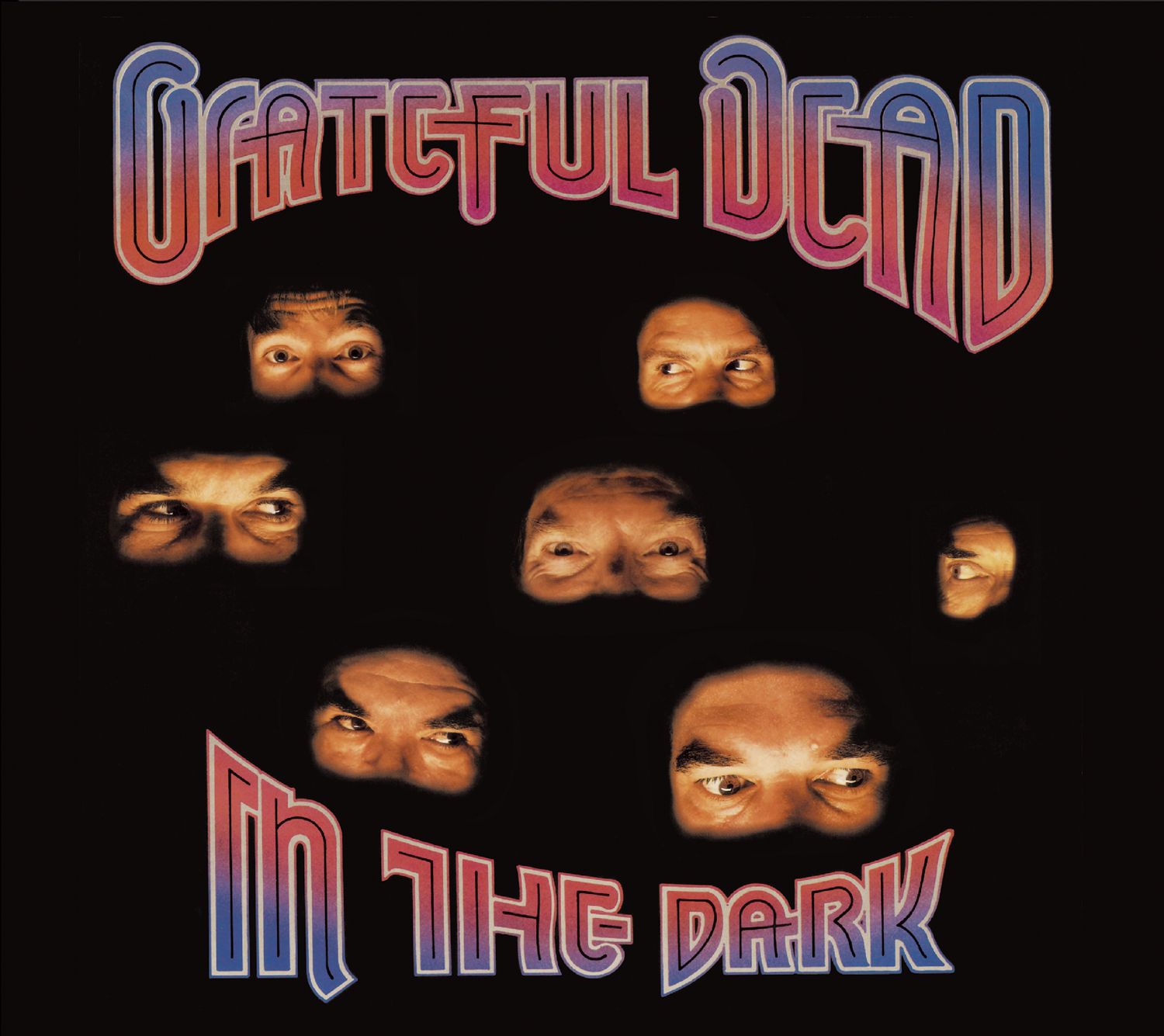
    Grateful Dead- In the Dark- Bob Weir, Mickey Hart, Phil Lesh

    To describe the inexorable passage of time, longtime Grateful Dead lyricist Robert Hunter certainly was not the first to use the metaphor of a mighty endlessly flowing river, but it was so appropos in the Dead hymn “Black Muddy River” which concludes the 1987 In the Dark album, as well as my interview with the band’s Bob Weir, Mickey Hart, and Phil Lesh. Hunter had the clarity, and even the courage, to acknowledge a lifetime in this world to be murky, where you cannot possibly see the bottom or gauge the depth, and rife with relentlessly perilous and unseen cross-currents, swirling eddies, and whirlpools. The paradox, of course, is that the same black muddy river of time has both the power to sustain life, to transport you away (for better or worse), and yet the potential to erode or even drown your life forever.

    “Wave that flag, Wave it red, white, and blue…“- Jerry Garcia,”US Blues” (1974)

    Over fifty years ago when Jerry Garcia and the Grateful Dead released “US Blues” it seemed almost subversive, but now it seems so natural, so right, that we feature the most American of bands and their most successful album, In the Dark, the Fourth of July week. Bob Weir, Mickey Hart, and Phil Lesh convened In the Studio for a very rare classic rock interview to discuss a lengthy period of Grateful Dead history which included the historic sessions which yielded “Touch of Grey”,”Hell in a Bucket”,”West L.A. Fadeaway”,”Throwing Stones”, and the hymn “Black Muddy River”.

    Along the way Mssrs. Weir, Hart, and Lesh continue to laugh easily and often, frequently at their own expense. When asked how they reacted in the latter Seventies to derision in the Punk Rock era, Mickey Hart seemed perplexed (“We didn’t even notice”),while the late Phil Lesh was far more challenging.”What ‘era’ ?” The dearly missed Bob Weir had a genuine belly-laugh. “I was made aware from time to time that there were some taking aim at us, but hey, take your best shot, guys. And it wasn’t as though we were standing our ground then, either. We were proceeding at a full racing trundle just like we always did!” –Redbeard 

  • Sammy Hagar- I Never Said Goodbye

    Sammy Hagar- I Never Said Goodbye

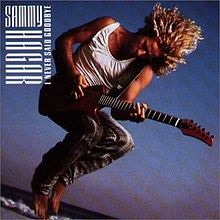
    After years of struggle as the undercard rock palooka who could take a punch and never go down,  Sammy Hagar answered the bell  in 1984 and came out swinging, scoring a technical knockout with his mainstream hit “I Can’t Drive 55” from his eighth (!) solo album, VOA. Then in 1987 Sammy won by a knockout with his solo album I Never Said Goodbye, at #14 his highest charting album ever, and that while being newly installed as Van Halen’s lead singer.

    For five decades, Sammy Hagar has punched way above his weight, from co-writing and belting out the songs on that first classic Montrose album in 1973, to a decade of undercard matches night after night as a solo bandleader. Finally breaking through to an arena headliner in the mid-Eighties with million sellers Three Lock Box  and VOA in 1984, Hagar got the high risk/high reward job of fronting one of America’s biggest bands then, Van Halen. But Sammy Hagar had to provide a new solo album to his former record company to make the deal palatable. Simply titled Sammy Hagar upon release that Summer 1987, it has since been re-titled I Never Said Goodbye,  but the songs remain the same: the plea for the Red Rocker’s Golden Rule,  “Give to Live”; Top Gun training soundtrack “Eagles Fly”; and the affirmation of “Returning Home”. Hagar reveals some deeply held, intensely personal insights into what has driven him to this day as the leader of the superstar bands Chickenfoot and now Sammy Hagar & the Circle.- Redbeard

  • Bon Jovi- Slippery When Wet- Jon Bon Jovi, Richie Sambora
    Bon Jovi- Slippery When Wet- Jon Bon Jovi, Richie Sambora

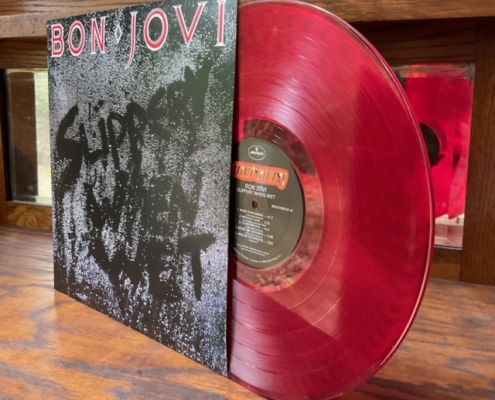
    One of my guests, original Bon Jovi lead guitarist/ co-writer Richie Sambora, dropped a bombshell while looking back to the first two albums which preceded Slippery When Wet, indicating how close the phenomenal August 1986 release came to never being made. “Quite frankly, “Quite frankly, I didn’t enjoy either of those first two (Bon Jovi , 7800 Degrees F) records personally,” Sambora admits.”I wasn’t even sure that the band was going to survive. To me, I don’t think we reached the soul of it, probably not until Slippery When Wet .”  To attempt to get your head around the phenomenon of Bon Jovi’s third album  Slippery When Wet    three decades ago, it helps to write out the worldwide sales estimate since then : 28,000,000  copies. No hyperbole here, it is impossible to overstate how massively popular Bon Jovi’s Slippery When Wet  became quickly after release in Summer 1986, or how influential its sound and success were for the rest of Eighties Rock. But what does that do to the lives of the individuals involved? Find out from namesake Jon Bon Jovi and original guitarist/ co-writer Richie Sambora in this classic rock interview, framed by unforgettable songs “You Give Love a Bad Name”,” Living on a Prayer”, and “Wanted Dead or Alive”, here In the Studio. -Redbeard

  • Jethro Tull- Crest of a Knave- Ian Anderson

    Jethro Tull- Crest of a Knave- Ian Anderson

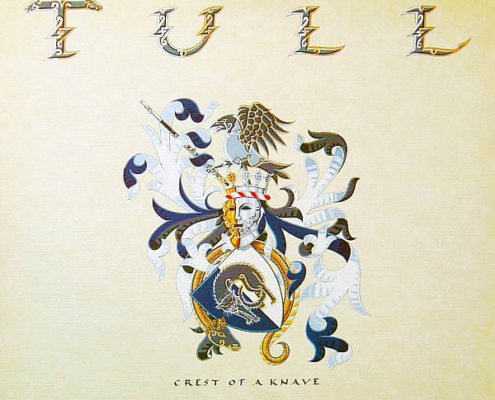
    Beginning in 1979 and continuing all the way until 1987’s Crest of a Knave, Jethro Tull’s fate and fortunes would be quite unlike their first decade of success, when the  unique amalgam of blues rock, Scottish Highlands folk, and hard rock, led by Ian Anderson and exemplified by Aqualung and the worldwide #1-seller Thick As a Brick, packed US arenas. Bass player John Glasscock died from heart surgery just five weeks after Stormwatch‘s 1979 album release, a tough blow. Then to add insult to injury, the album was the first since the 1968 debut not to reach the US Top 20 in sales. The Broadsword and the Beast in 1982 easily could have been the theme for the HBO hit series Game of Thrones, albeit written thirty years too soon. Jethro Tull certainly were not alone, as many of their Seventies peers struggled as they did then amidst Pop Metal hair bands that were selling millions of records and hair mousse by the gallon.

    But after an eight year sales drought, Jethro Tull had all of the tumblers click on the 1987 album Crest of a Knave,  containing”Farm on the Freeway,”Steel Monkey”, and the epic cinematic Budapest“. A Top 20 seller in the UK and #3 in the States, Crest of a Knave eventually won a Grammy Award and reignited concert ticket and further album sales for Rock Island  in 1989 with “Kissing Willie”; and Catfish Rising  in 1991 which included “Rocks on the Road” and “This is Not Love.

    In my wide-ranging exclusive classic rock interview, Ian Anderson discusses getting teargassed by Italian riot police; the benefits of a revolving cast of talented band members over the many decades, anchored by a nearly half century working relationship with under-rated guitarist Martin Barre; how Anderson pioneered working from home forty years ago; Anderson’s concerns as far back as 1989 for the encroachment of corporate sponsorship into rock tours and subsequent ticket prices; and why he doesn’t hang out at the local pub down the lane from his farmhouse west of London, where “Old Dylan” will gladly put a coin in the jukebox and punch up “She Said She Was a Dancer” when some American deejay pops in looking for directions. –Redbeard