Tag: David Gilmour

  • Pink Floyd- Division Bell World Premiere- Miami 3-30-94
    Pink Floyd- Division Bell World Premiere- Miami 3-30-94

    One thing is incontrovertible about Pink Floyd: their collective creative imagination has always innovated, and usually in a very big way. Such was Pink Floyd’s decision to debut their Division Bell album, seven years in the making, live on hundreds of North American radio stations from Joe Robbie Stadium in Miami opening night on their massive sixty-date tour, in front of sixty-three thousand fans!

    Part one of the live satellite broadcast is above, the conclusion is below in part two.
    Thanks to Pink Floyd superfan Christopher Neely for the inspiration to post it after more than thirty years. –Redbeard

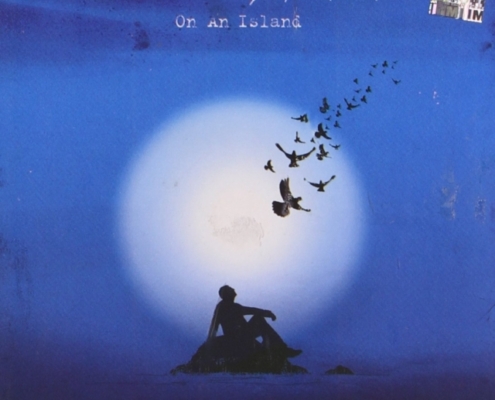
  • David Gilmour- On an Island 20th Anniversary

    David Gilmour- On an Island 20th Anniversary

    In mid-2005 David Gilmour had been hard at work on only his third solo album, which eventually would be released as On an Island in March 2006, when he got a call from Pink Floyd: The Wall movie leading man and Live Aid organizer Bob Geldof: would David agree to perform with Nick Mason, Rick Wright, and Roger Waters regrouped as Pink Floyd for the one-off Live Eight charity concert in Wembley Stadium and broadcast worldwide?

    All past loyalties aside, according to David Gilmour, it wasn’t an easy decision.

    “In fact, I initially turned it down,” Gilmour admitted here In the Studio, “because I thought it would distract from the project I had been working on. And I wasn’t unaware of the sort of hornet’s nest that would get opened up by doing it. But you know, there’s something more important at stake, so obviously it was better to get in there and do it, and deal with a certain amount of rubbish at the same time. The important thing was taking part in that event in order to try and persuade the leaders of those eight countries so that they should put their hands in their pockets and dig out some cash and free a lot of (African) countries from the burdens of servicing the debts that they had. And all the other (media) rubbish pales into insignificance alongside of that.”

    Coming as it did in March 1984, David Gilmour’s second solo album, About Face,  marked a distinct period of spectacular worldwide success with Pink Floyd, capped off by The Wall, only to be followed by the inglorious thud of the aptly titled The Final Cut, Pink Floyd’s last with Roger Waters and described to me by Gilmour as “pure torture” to make. Mercifully, the band disintegrated, but as Waters and Gilmour were soon to find, years of deliberate marketing of Pink Floyd as an image, without a recognizable front man, would soon make solo careers surprisingly daunting. So whatever David Gilmour did next, it needed to be considered, and he probably should call his “A” list friends to help, which is why About Face  has contributions from Pete Townshend (lyrics on “All Lovers are Deranged” and “Love on the Air”), Deep Purple organist the late Jon Lord, Toto drummer the late Jeff Porcaro, keyboardist Steve Winwood, orchestration the late Michael Kamen, and produced by The Walls Bob Ezrin.

    Throughout his long illustrious career David Gilmour has often sung the thoughts and lyrical observations of others, whether interpreting  Roger Waters’ second-person ruminations from  fifty years ago on Pink Floyd’s Wish You Were Here,  or singing a verse which lyricist wife Polly Samson wrote last night. “It takes thought and it takes concentration,” David admits. “With most of Roger’s (Waters) brilliant lyrics and with Polly’s lyrics too, I find that I can do that. I hope that I do it justice. But it is something you often think about. But, ya know, you’re forced to be that person who is using those words as if they were your own. I’m only borrowing them. I mean I’ve written enough songs with words of my own to know how it’s done.”” I think there is still an enormous amount of prejudice against all sorts of people: women, people of different sexual orientation, religions”, David points out. ” The world is rife with prejudice still, and  we’re deluded if we think it’s gone away… I think it will take centuries for a lot of the prejudice at the core of people’s being to go away.  I think we’ll get there in the end, but I think the mind moves way ahead of the instinct, or what one might call the instinct. I think I’d call the instinct  probably the result of years of being indoctrinated in one way or another. And  what we think is our instinct is more prejudice. Harmless, and very light in most people in most ways. But it’s still there.” –Redbeard 

  • Pink Floyd- Wish You Were Here- Roger Waters, David Gilmour, Nick Mason

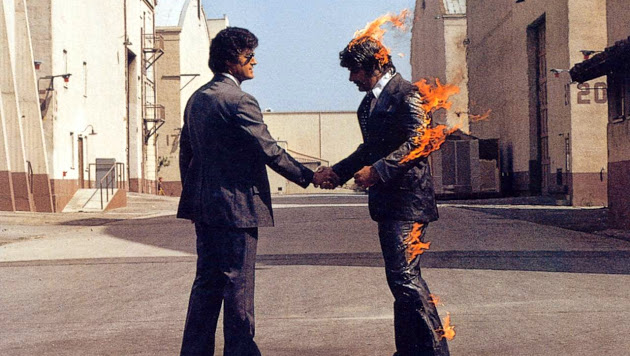
    Pink Floyd- Wish You Were Here- Roger Waters, David Gilmour, Nick Mason

    It didn’t take long for progressive rock masterpiece Dark Side of the Moon‘s  worldwide success to affect the individual members and the band collective in Pink Floyd, and their followup in September 1975, Wish You Were Here, reflected a fond farewell to both long-gone Pink Floyd co-founder Syd Barrett as well as their innocence.
    “YOU try following up Dark Side of the Moon.  Go on, just try it!” playfully admonishes Pink Floyd guitarist/singer David Gilmour.”We’ve been trying to do it ever since,” laughs drummer Nick Mason. Yet not only is that follow up album Wish You Were Here  their confessed favorite of all that they did, this postcard from the edge of Pink Floyd founder Syd Barrett’s madness holds up exceedingly well because of classics Shine On You Crazy Diamond”,”Have a Cigar”,”Welcome to the Machine”, and the title ode.  

    There’s a common misconception that the fracturing of Pink Floyd occurred at some time after their worldwide blockbuster The Wall  album and movie. However, this week’s classic rock interview with  Waters, Gilmour,  Mason, and the late Richard “Rick” Wright clearly reveals that Waters has a completely different recollection than the other three of the 1975  recording sessions for Wish You Were Here, with Waters declaring to me pithily, “That album should have been called ‘Wish WE Were Here’, because we weren’t, really. Already the rot had set in…”

    Regardless of the conflicting perceptions by the participants, Rolling Stone magazine ranks Wish You Were Here at #211 on their Top 500 Albums of All Time, with readers to Britain’s Q magazine voting it much higher at#34 all time. Even prior to the reissue and box set in 2011, Pink Floyd’s ninth album had sold in excess of 13,000,000 copies. David Gilmour and Nick Mason are my guests, Roger Waters makes a cameo, and we include archive comments from the late keyboard player Richard Wright to round out the definitive classic rock interview regarding Wish You Were Here. –Redbeard

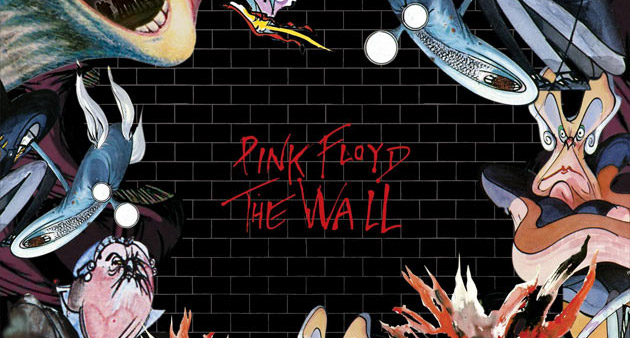
  • Pink Floyd- The Wall- Roger Waters, David Gilmour, Nick Mason
    Pink Floyd- The Wall- Roger Waters, David Gilmour, Nick Mason

    Upon the album’s release in late 1979, one of the more ironic trivia “bricks” in the original limited concert staging of The Wall by Pink Floyd was that, unbeknownst to hardly anyone then outside the band’s tight inner circle, the internal power struggle, dissatisfaction with the contributions of two members, and the thinly-veiled attitude of a third had finally resulted in original Pink Floyd keyboard player Richard Wright being forced out. Ultimately, Wright was hired to play on The Wall  tour as a sideman, but The Wall concept creator Roger Waters insisted that Rick’s severance include a clause forbidding Wright from ever officially rejoining Pink Floyd again, a barely submerged shoal of contention that would emerge far into the “endless river” of Pink Floyd’s future.

    The original performances of The Wall  were so elaborate, so expensive, tickets so limited (Roger Waters refused to do it in stadiums originally), and the dates so few (about thirty) that Waters, David Gilmour, and Nick Mason all lost money touring it, whereas as a salaried employee with expenses paid by Pink Floyd, keyboardist Rick Wright was the only one who actually made money!

    “Time has a way of making you behave,” David Gilmour reminded me when recounting performing as a guest with Roger Waters in 2011 at London’s O2 Arena, but it could just as easily have been said by the surviving Pink Floyd alumni Nick Mason or even Waters himself, all of whom rejoined me for the first of our two-part peek behind The WallFor instance, Roger Waters admitted to me that, in 1980, Pink Floyd had been guaranteed one million dollars per night to perform The Wall  on a stadium tour. “And I refused to do it outdoors,” Waters tells me in this classic rock interview. “But how can you do a show that’s about the alienation you feel about doing stadium shows, in a stadium?”

    Apparently Waters reconciled that personal dilemma, as evidenced by his multi-year globetrotting tour recently. This is part one.- Redbeard

  • Pink Floyd- The Wall pt2- Roger Waters, David Gilmour, Nick Mason

    Pink Floyd- The Wall pt2- Roger Waters, David Gilmour, Nick Mason

    Whether architectural student-turned-musician/composer Roger Waters would have designed an actual structure more acclaimed or lucrative than The Wall, his musical concept for the Pink Floyd November 1979 double album, is pure conjecture, but the numbers that it has generated are starting to rival the Great Wall of China: #129 ranking on Rolling Stone magazine’s 2020 Top 500 Albums of All Time; worldwide sales of an estimated 30,000,000; a historic performance, broadcast and film at the actual Berlin Wall in 1990 by Waters and guest stars; a multi-year multi-continent extended live concert production of The Wall  by Roger Waters, and most recently his politically-charged Us + Them tour. 

    Waters talks about the original Pink Floyd album, the limited initial live performances in late 1979 and early 1980, and The Wall  film which followed three years after the album, with pre-Live Aid organizer and Boomtown Rats singer Bob Geldof as the disillusioned, increasingly isolated “Pink”. David Gilmour and Nick Mason also disassemble The Wall pt2  in my classic rock interview here. – Redbeard 

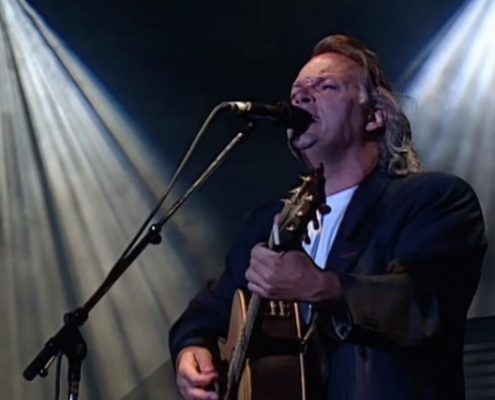
  • Pink Floyd- Comfortably Numb- Knebworth 6-30-90
    Pink Floyd- Comfortably Numb- Knebworth 6-30-90

    This song performance first appeared  in the Later Years  box set, and now the entire Pink Floyd Knebworth 1990  set is available too. Practically all of the later headliner performances at the 1990 Knebworth Festival outside of London were plagued by the rain, but the hearty British spirit won the day both onstage and in the soaked crowd. Here is Pink Floyd soldiering through defiantly with a particularly fiery lead guitar solo by David Gilmour on “Comfortably Numb”, originally on The Wall. – Redbeard


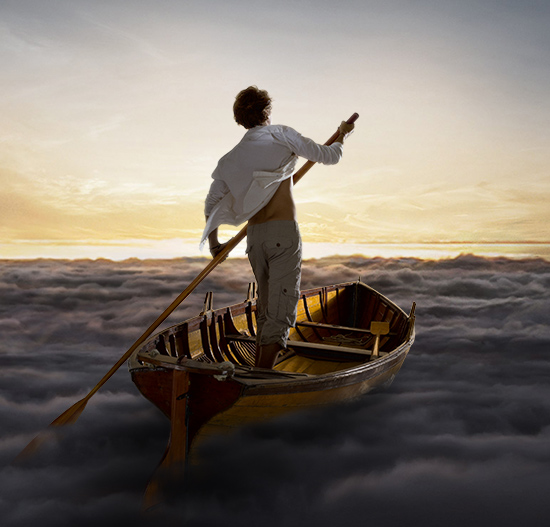
  • Pink Floyd- Endless River- David Gilmour, Nick Mason
    Pink Floyd- Endless River- David Gilmour, Nick Mason

    My revelatory interviews with David Gilmour and Nick Mason aboard Pink Floyd’s floating studio on the Thames River in 2014 were regarding the surprise album so far of the 21st century, Pink Floyd’s The Endless River. This is the fascinating back story of a “final ” musical statement, 1994’s The Division Bell,  which was never intended to be the superstar progressive rock band’s last word, as told by Pink Floyd singer/ guitarist/ composer David Gilmour and percussionist Nick Mason, and featuring historic final performances by Pink Floyd keyboardist Rick Wright , who passed away in September 2008.

    UK Music Hall of Fame 2005 - Backstage( Nick Mason  (l) with David Gilmour ).

    The backwaters of The Endless River  saga run deep and the tributaries feeding it are many, and Gilmour and Mason do a very comprehensive job here in my classic rock  interview detailing the many heroes at the headwaters who are responsible for the first Pink Floyd new studio release in the 21st century. The Endless River peaked at #1 sales in the UK, #3 in the States and has sold over two and a half million copies. –Redbeard

    ( Rick Wright  recording with Pink Floyd at London’s Brittania Row studio in 1993 ).PINK-RICK-e0af7b45e7ddb84dd86334d96cb7edc8


    PINK-FLOYD-maxresdefault

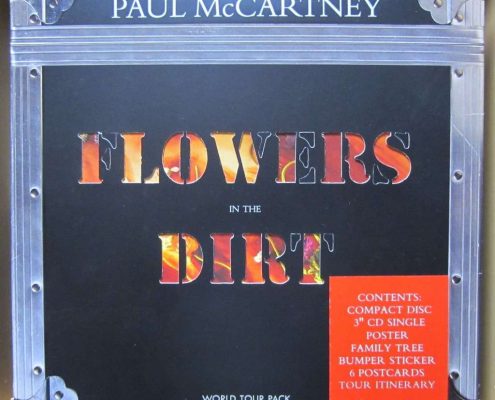
  • Paul McCartney- Flowers in the Dirt 35th Anniversary

    Paul McCartney- Flowers in the Dirt 35th Anniversary

    It is the thirty-fifth anniversary of Flowers in the Dirt, a pivotal June 1989 release by the incomparable Paul McCartney. As rock music and culture exploded in so many places and in so many ways in the second half of the Eighties, nevertheless the decade was particularly problematic for many of the giants of rock and roll’s British Invasion, the second generation of rock, even Paul McCartney. By late in the decade The Beatles had been twenty years gone down the long and winding road. The Rolling Stones, The Who, Led Zeppelin, and Pink Floyd were either on hiatus, in court, broken up completely, or not speaking to one another. Yet standing on the threshold of the final decade of the 20th century, something remarkable was stirring worldwide, the likes of which we had not witnessed in the twenty years since Americans first walked upon the Moon and Jimi Hendrix played the “Star Spangled Banner” as the Sun rose over Woodstock.

    In 1989, Soviet premiere Gorbachev lifted the Iron Curtain, cracks appeared in the Berlin Wall, a giant rock festival played Moscow, and both the Rolling Stones and Paul McCartney got their respective mojos working with strong new albums and electrifying world tours. In the case of McCartney, 1989’s Flowers in the Dirt was heralded by music writers and the music public as a strong return to form after Macca released a series of uninspired pop studio releases over the previous thirteen years following Paul’s historic Wings Over America concert tour.

    When revisiting this 1989 Flowers in the Dirt “comeback” album for Paul McCartney, you may be pleasantly surprised how bountiful the harvest is and, with the forthcoming expanded deluxe editions available, just how well songs like “Figure of Eight”,”Rough Ride”,”My Brave Face”, “Put It There”, and “We Got Married” have blossomed with new remastered sound. We are thrilled and honored to welcome back Sir Paul McCartney to guest host In the Studio!- Redbeard

    ( L-R Redbeard sticking tongue out; Paul McCartney; Andy Lockridge; Kenny Sargent 1990 Texas Stadium)

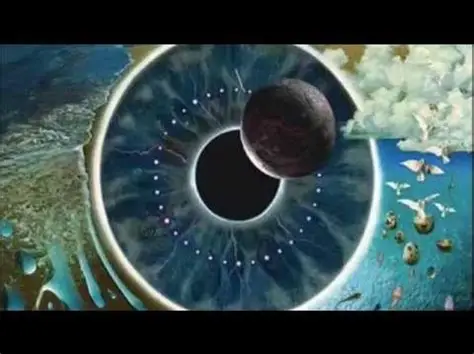
  • Pink Floyd- The Division Bell- David Gilmour, Nick Mason

    Pink Floyd- The Division Bell- David Gilmour, Nick Mason

    Never intended to be the last word in the long-running Pink Floyd legacy, nevertheless March 1994’s The Division Bell became, in effect, the final offering of new music from the remaining triumvirate of singer/guitarist/composer David Gilmour, drummer Nick Mason, and keyboard player Richard Wright. The Division Bell sold over three million copies just in the Nineties, and the Pink Floyd tour mounted in support of its release grossed a reported $100,000,000 in concert ticket sales. Wow.

    When Pink Floyd’s The Division Bell  was released in March 1994, the term “Brexit” had not been coined and Elizabeth II was Queen. Astrophysicist Stephen Hawking (who did a cameo on the song “Keep Talking”), Pink Floyd keyboard player Rick Wright, orchestrator/arranger Michael Kamen, and longtime Pink Floyd manager Steve O’Rourke were all very much alive. Then, too, Polly Samson was known only as a journalist, and the three now-grown children she would bear with Pink Floyd guitarist/singer/composer David Gilmour were only a vibrato in Dave’s Stratocaster when I hosted the Division Bell world premiere broadcast in March across North America on opening night from Miami Joe Robbie Stadium on the Pink Floyd tour. Listening to this classic rock interview, one of the last ever with the  gentle and fragile original Pink Floyd keyboard player Richard Wright, you would have no indication of the circumstances under which we had this conversation. In mid-March 1994 I had been driven to a decommissioned Air Force base in the California desert at dusk, where we were met at the gate by Military Police with white gloves and live ammo in their M-16 rifles. The reason that the British band Pink Floyd was rehearsing their 1994 Division Bell   North American tour at a U.S. military base was simply because nothing smaller than a C-5 military transport hangar could accommodate the massive stage, lights, and sound system. A month later I would find myself broadcasting my Dallas/ Ft.Worth afternoon radio show live from the gondola of the Pink Floyd blimp airship (below,) with Captain Hunter letting me take the controls high over North Texas (I must admit, though, that Q102 Promotions Manager Kacy Harrison flew the blimp much better than I did).

    PINKFLOYD-ArlingtonTX-280800

    For the thirtieth anniversary of this progressive rock milestone, David Gilmour and Nick Mason join me here In the Studio, plus archival comments from the late Rick Wright, to detail the songs “Keep Talking”, “What Do You Want from Me”, Rick Wright’s last lead vocal “Wearing the Inside Out”,”Take It Back”, “Coming Back to Life”, and the epic “High Hopes” for the future of Pink Floyd, which were cut short with Rick Wright’s death in September 2008. –Redbeard

  • Pink Floyd- Dark Side of the Moon- David Gilmour, Nick Mason, Roger Waters

    Pink Floyd- Dark Side of the Moon- David Gilmour, Nick Mason, Roger Waters

    And so it was, the progressive rock masterpiece by Pink Floyd which not even “Time” can “Eclipse”: The Dark Side of the Moon! To illustrate how seriously many of the post-British Invasion bands were approaching the rock idiom by early 1973, you need look no further than Pink Floyd’s Dark Side of the Moon  to see how this “progressive“ rock movement had matured,  with spectacular results both artistically and commercially. Worldwide sales of Dark Side of the Moon are estimated at forty-five million copies! These facts are confirmed in this classic rock interview by my guests, musical lunar explorers David Gilmour, Roger Waters, and Nick Mason.

    After a half-century of electronic music, it may be difficult for some to imagine that these sounds on Pink Floyd’s Dark Side of the Moon utilizing “The Putney” had never been head before in popular music, having escaped the laboratory only a few years prior. It has become rather painfully apparent that the musical tomb has been raided, the ultimate box sets already released, even some of the principals responsible for its creation, including Pink Floyd keyboard player Rick Wright and cover artist Storm Thorgerson, are now gone. What remains timeless, along with the music at the pinnacle of Progressive Rock, are the first-person stories of Dark Side of the Moon‘s conception, evolution, and recording by my guests Roger Waters, David Gilmour, and Nick Mason.

    As you shall hear in my classic rock interview, none other than Paul McCartney and guitarist Henry McCulloch of Wings were both recorded for Dark Side of the Moon as two of the disembodied voices heard throughout Pink Floyd’s album. It’s McCulloch who is heard to say,”I don’t know, I was really drunk at the time”, but McCartney’s recording was dropped. Find out why here from Roger Waters. As early as the Moody Blues’ 1968 Days of Future Passed, which was the result of a combination of new technology (the Mellotron , which crudely emulated choral and orchestral sounds) and desperation, an increasing number of British and European bands expanded rock’s canvas musically and lyrically without the slightest consideration to the pop hit mainstream. King Crimson’s stunning debut in 1969,  In the Court of the Crimson King, inspired others such as fellow Londoners YES to release Close to the Edge   less than a year after their breakthrough album Fragile . While not normally considered a prog-rock band, Traffic nevertheless had their biggest seller in 1972 with The Low Spark of High Heeled Boys,  built around the 11 minute hypnotic title song which featured electronically synthesized saxophone, while Trilogy  from Emerson , Lake , and Palmer  as well as Foxtrot  and Selling England by the Pound from the Peter Gabriel-led Genesis, had critics raving and cash registers ringing. slider-pink-floyd-2

    (L-R: Nick Mason, David Gilmour, Roger Waters, Rick Wright)

    Of course  all of this would  culminate in Spring 1973 with the incomparable Pink Floyd album The Dark Side of the Moon , an iconic masterpiece which long ago threw off any binders imparted by categorization merely as progressive rock, but not before both Jethro Tull’s  Thick As a Brick   and the Moody Blues’ Seventh Sojourn   would each rack up #1 international sales in 1972. – Redbeard