Tag: Joe Elliott

  • Def Leppard- High ‘n’ Dry- Joe Elliott, Rick Savage

    Def Leppard- High ‘n’ Dry- Joe Elliott, Rick Savage

    The memory certainly is etched in my mind to this day: an intrepid Mercury Records promotion man working out of their Chicago office, Cliff Burnstein, called me at Memphis radio ROCK 103 in March 1980 and said he was sending “…a one-listen easy add to your playlist” by a new British band, Def Leppard. When the song “Rock Brigade” arrived, it was the UK single, a 45 rpm vinyl record with the small hole for the spindle. Cliff was right, we started playing “Rock Brigade” immediately even before the Def Leppard debut full album, On Through the Night, was released Stateside.

    Up to the point when the second album High’n’Dry by Def Leppard arrived, I knew them as an eager puppy dog band of English teens from the tough industrial Northern city of Sheffield who had impressed with their debut single “Rock Brigade” a year earlier. But the first time that I heard High’n’Dry‘s “Bringin’ on the Heartbreak” by Def Leppard with that huge soaring vocal chorus hook, it grabbed me in the same way that The Outlaws’ “You Are the Show” had done. As it turns out there should be no surprise since both were produced by South African “Mutt” Lange, suddenly the hottest producer extant then because of blockbusters Highway to Hell and Back in Black  for AC/DC, and Foreigner 4, all padding Lange’s resume.

    (Can you believe these kids grew up to be MTV sex symbols? L-R Steve Clarke, Ric Savage, Pete Willis, Rick Allen, and  rear Joe Elliott)

    It had been a wonderful personal experience to watch the sweet, kind, grounded guys in the Sheffield England band Def Leppard grow up literally in public on their way to induction on the first ballot into the Rock and Roll Hall Fame. I had the great pleasure of meeting and interviewing several of the band members in Memphis on their first U.S. tour supporting their debut, On Through the Night, when not one of them was out of their teens (drummer Rick Allen, at the tender age 15, was working in the country completely illegally).

    Their delight in playing in America, being on the same bill as their heroes Thin Lizzy and Scorpions  back then, was positively  endearing. Yet three years later with their third album, February 1983 release Pyromania, suddenly the pecking order inverted almost overnight as the album went on to sell more than ten million in just the States, simultaneously setting the pop metal path that countless bands would follow throughout the 1980s. In this very personal classic rock interview Def Leppard’s Joe Elliott, Rick Savage, and Phil Collen go into great detail to sort through why band co-founder Pete Willis had to leave after High’n’Dry  (replaced on guitar by Collen), while lead guitarist/songwriter Steve Clarke was allowed to remain another eight long years, despite the fact that both Willis and Clarke both suffered from alcoholism.  –Redbeard

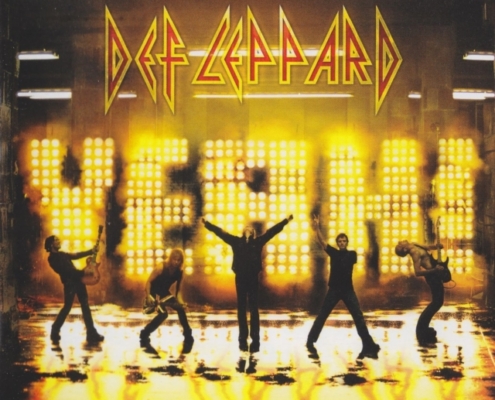
  • Def Leppard- Yeah! (covers album)- Joe Elliott, Phil Collen
    Def Leppard- Yeah! (covers album)- Joe Elliott, Phil Collen

    There was an interesting trend in rock music approximately twenty years ago whereby superstar legacy bands, including Rush, Styx, and Def Leppard all released albums containing nothing but classic rock cover songs. Rush raised eyebrows with Feedback in 2004; a year later Styx released Big Bang Theory; and Def Leppard followed suit in 2006 with Yeah!

    Honestly, I don’t know if all three major bands recording and releasing albums of cover versions was due to some negotiating tactic with their respective music labels, song publishers, or the music downloading/streaming services upstarts which had emerged then. Or maybe it was simply pure coincidence. But I do know this: all three covers-only projects were done exceedingly well and, without exception, seemed to reinvigorate the bands, who all sounded like they were having a blast reconnecting to their roots.
    In the case of Def Leppard, now celebrating forty-five years since the Sheffield, England band’s introductory On Through the Night was released in March 1980, anyone wishing to understand where they come from musically would do well to listen here to my guests lead singer Joe Elliott and lead guitarist Phil Collen. The tunestack on Yeah! is a virtual look at the playlists of BBC Radio One and Radio Luxembourg circa 1973, with Def Leppard sinking their collective teeth into “20th Century Boy” by Marc Bolan’s T. Rex, “Rock On” by David Essex, the Kinks‘ sublime time capsule “Waterloo Sunset”, Roxy Music’s “Street Life”, “Little Bit of Love” by Free, the Glam anthem “Golden Age of Rock’n’Roll” from Joe Elliott’s hero Ian Hunter and Mott the Hoople, and two white-hot closers, “Don’t Believe a Word” by Thin Lizzy and Rod Stewart and the Faces‘ “Stay With Me”. Find out from Def Leppard’s Joe Elliott and Phil Collen why their ninth studio album, Yeah!, reached an impressive #16 sales on Billboard‘s Album Sales chart. -Redbeard

  • Def Leppard- Pyromania- Joe Elliott, Phil Collen, Rick Savage
    Def Leppard- Pyromania- Joe Elliott, Phil Collen, Rick Savage

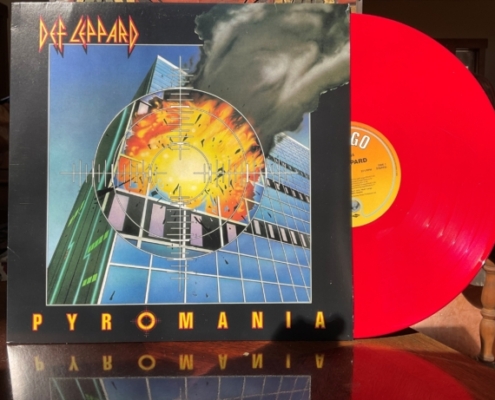
    As it turned out, In the Studio episode #13 was a very lucky number for us in Summer 1988 because we were able to feature Def Leppard,  the band which pretty much lit the match for the Pop Metal Eighties explosion five years earlier with Pyromania, at precisely  the time when they were cresting worldwide in popularity with the blockbuster follow up, Hysteria. It had been a wonderful personal experience to watch the sweet, kind, grounded guys in the Sheffield England band Def Leppard grow up literally in public on their way to induction on the first ballot into the Rock and Roll Hall f Fame. I had the great pleasure of meeting and interviewing several of the band members in Memphis on their first U.S. tour supporting their debut, On Through the Night,  when not one of them was out of their teens (drummer Rick Allen, at age 15, was working in the country technically illegally!).Their delight in being on the same bill as their heroes Thin Lizzy and Scorpions playing in America back then was positively puppy dog endearing, but three years later with their third album, January 1983 release Pyromania,  suddenly the pecking order inverted almost overnight as the album went on to sell more than ten million in just the States, simultaneously setting the pop metal path that countless bands would follow throughout the 1980s. Def Leppard lead singer Joe Elliott, bass player Rick “Sav” Savage, and late ’82 addition on lead guitar, Phil Collen, joined me In the Studio   for Pyromania.- Redbeard

  • Def Leppard- Hysteria- Joe Elliott, Ric Savage

    Def Leppard- Hysteria- Joe Elliott, Ric Savage

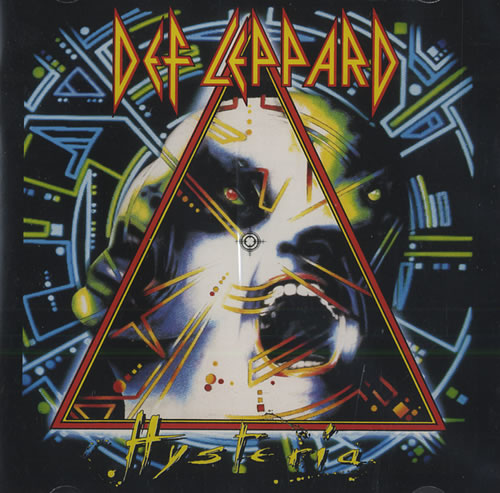
    It is like a greatest hits package all on its own: Def Leppard’s August 1987 Hysteria  album, one of the most popular albums ever at an estimated twenty-five million copies. Yet as Joe Elliott and Ric Savage remind us in my classic rock interview, it is a miracle that it ever was finished. The epic saga is revealed behind “Pour Some Sugar on Me”,”LoveBites”,”Animal”,”Women”,”Armageddon It”, and “Hysteria” as Def Leppard copped a first-ballot induction into the Rock and Roll Hall of Fame in 2017.

    After World War II the worldwide success of The Beatles, Rolling Stones, The Who, The Kinks, Cream, and a bit later Led Zeppelin all had a profoundly positive effect on the British self-esteem. All of these predecessors of Def Leppard were almost entirely influenced musically by the blues, rhythm and blues, and soul music of African-Americans, yet it is most telling that when the Sheffield England quintet compiled an all-covers tribute album a few years ago made up of their most-loved  formative impressions, all but one were by white British musicians.

    “We grew up on a bunch of British pop music that never even infiltrated the American psyche,” asserts Def Leppard lead singer/songwriter Joe Elliott.” Of course we dearly love bands like Led Zeppelin and (Deep) Purple,what you may call heavier album track bands, but I think when we first started listening to radio it was the British Top 40 on (BBC) Radio One and Radio Luxembourg, which was a little more adventurous with their playlist. They’re the kinds of songs that we obviously got to listen to a lot. We were fortunate that the British music scene from ’70- ’71 to ’74 had a lot of the bands like Slade and Sweet and David Bowie and T Rex were very guitar-based three minute pop songs, which by today’s standards may be called ‘hard rock’, because it was just big drums and guitars and big honkin’ choruses. Some of them cheesy, some not. But you have to weed through the dross. A lot of the Slade singles were top notch.” Phil Collen: “Where we came from, Thin Lizzy was a huge influence on Def Leppard, you know, the two guitar thing. And Queen was. We wanted to sound like Def Leppard, but we wanted people to know where we come from…We got the blues stuff second hand from Zeppelin and whomever, really.”

    JE: ” We have been influenced by what they kind of call ‘glam rock’, but I know that term offends half of the artists, so I’m trying to avoid that phrase. Bowie hated being typed as ‘glam rock’. A lot of the songs were basically just twelve bar, based around the same three chords that the blues were. But they were kind of sped up, and they started to introduce a lot of the tricks that Motown used to do, like the the hand claps on the snare drum. But they didn’t have the R & B sound about them, they didn’t have the blues about ’em.Unless you studied them really hard, they don’t really sound like B.B.King or Chuck Berry or the Stones, or even early Who or Kinks.There was more emphasis on the production by the time the ’70s came around. They were starting to invent a whole new sound: (producers) Chinn and Chapman were doing it for Sweet and Susie Quatro, and even (producer) Bob Ezrin was doing it for Alice Cooper. Equipment was getting better, studios were improving, and all of a sudden production got taken to a whole new stage by (producer) Roy Thomas Baker and Queen come ’73-’74. The first time we heard Sheer Heat Attack, before we even knew what musicians were, you listen to that record and it’s just an amazing adventure…how to use stereo to its absolute maximum effect, and panning and phasing and flanging, just clever techniques that take a song further than live performance ever could.” –Redbeard           L-R Def Leppard drummer Rick Allen, Redbeard, Def Leppard tour manager Malcolm

  • Def Leppard “Rock of Ages” Medley

    Def Leppard “Rock of Ages” Medley

    This fabulous “Rock of Ages” medley by Def Leppard  was unavailable in the U.S. for about twenty years, so to blow up the request lines at Dallas/Ft.Worth radio station Q102, I used to throw on this live mashup consisting of Def Leppard’s “Rock of Ages” plus Buddy Holly’s “Not Fade Away”,”My Generation” from The Who, “Radar Love” from Golden Earring, “Come Together” from the Beatles, & Led Zeppelin’s “Whole Lotta Love”- all done by Def Leppard! Perfect to prime the pump for their thirty-fifth anniversary Hysteria visit here In the Studio  coming August 1st. –Redbeard ( Ric Savage (L) and Joe Elliott performing with Def Leppard at Chicago’s Wrigley Field July 2022)

  • Def Leppard- Story So Far pt2- Joe Elliott, Ric Savage

    Def Leppard- Story So Far pt2- Joe Elliott, Ric Savage

    After World War II the worldwide success of The Beatles, Rolling Stones, The Who, The Kinks, Cream, and a bit later Led Zeppelin all had a profoundly positive effect on the British self-esteem. All of these predecessors of Def Leppard were almost entirely influenced musically by the blues, rhythm and blues, and soul music of African-Americans, yet it is most telling that when the Sheffield England quintet compiled an all-covers tribute album a few years ago made up of their most-loved formative impressions, all but one were by white British musicians.
    “We grew up on a bunch of British pop music that never even infiltrated the American psyche,” asserts Def Leppard lead singer/songwriter Joe Elliott.” Of course we dearly love bands like Led Zeppelin and (Deep) Purple,what you may call heavier album track bands, but I think when we first started listening to radio it was the British Top 40 on (BBC) Radio One and Radio Luxembourg, which was a little more adventurous with their playlist. They’re the kinds of songs that we obviously got to listen to a lot. We were fortunate that the British music scene from ’70- ’71 to ’74 had a lot of the bands like Slade and Sweet and David Bowie and T Rex were very guitar-based three minute pop songs, which by today’s standards may be called ‘hard rock’, because it was just big drums and guitars and big honkin’ choruses. Some of them cheesy, some not. But you have to weed through the dross. A lot of the Slade singles were top notch.”

    It became like a Greatest Hits package all on its own: Def Leppard’s July 1987 Hysteria  album, one of the most popular albums ever at an estimated twenty-five million  copies, yet as Joe Elliott and Ric Savage remind us here in part two of The Story So Far,  it is a miracle that it ever was finished. The epic saga is revealed here behind “Pour Some Sugar on Me”,”Love Bites”,”Animal”,”Women”,”Armageddon It“, and “Hysteria” , plus Nineties and 21st century chestnuts “Slang”, “Now”,”Let’s Go”,”Dangerous”, and the uncanny Depeche Mode cover “Personal Jesus“, as Def Leppard are inductees into the Rock and Roll Hall of Fame! –Redbeard