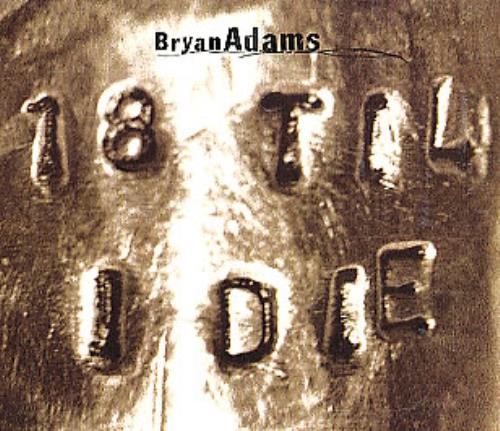
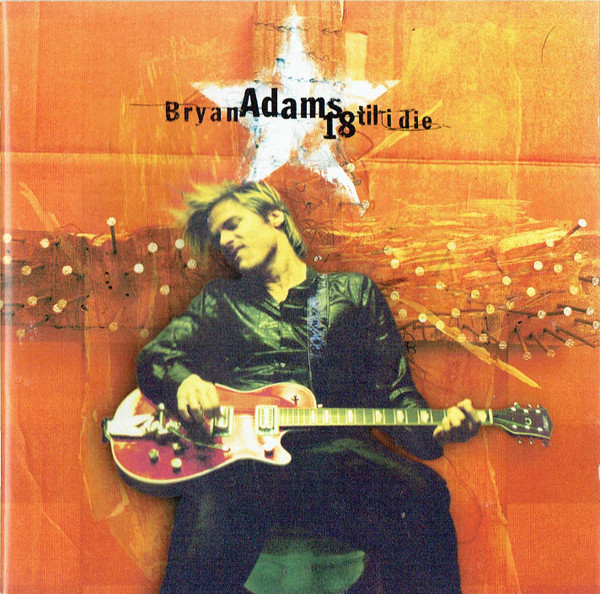
Bryan Adams’ seventh studio album 18 ‘Til I Die was a #1 seller in the UK and Top Five sales in Australia, Austria, Belgium, Canada, Finland, Germany, Sweden, and Switzerland. The international popularity was driven by hits “The Only Thing That Looks Good on Me is You”, “Have You Ever Really Loved a Woman”, and the title song. This point thirty years ago, however, was also the first indication for Bryan Adams of a bizarre syndrome peculiar to American media whereby, in spite of over a decade of prior multi-million US album sales, 18 ‘Til I Die peaked on the Billboard sales chart at a perplexing #31.
This baffling reaction by US media gatekeepers, particularly latter twentieth century rock radio programmers, was first pointed out to me by The Edge of U2 while conversing about that band’s late Eighties road movie, Rattle and Hum. The Edge pointed out a long-standing mistrust by music writers of such early pop music idols as Frank Sinatra and Elvis Presley “…going off to Hollywood and never coming back.” So apparently, Bryan Adams’ original sin was to include, on his previous album Waking Up the Neighbours (packed with no less than a dozen flat-out rockers), a single ballad,”Everything I Do (I Do It for You)” that happened to run under the credits at the end of a hit chick flick that year. MTV played the video in saturation airplay because it had scenes from the blockbuster Kevin Costner film, Robin Hood: Prince of Thieves. Everyone benefited from this cross-marketing, by the way: North American rock radio played six great rockers from that album on the way to record high ratings, Bryan’s record company had a #1 seller worldwide, MTV had record ratings, & the movie company broke box office ticket sales records. So what p0ssibly could someone complain about?
But when the next Bryan Adams studio album 18 ‘Til I Die came out in June 1996, US rock radio programmers decided, in spite of the music actually on the album to the contrary, to brand Bryan strictly as a love song balladeer. Not rock enough, not alternative enough, not cool enough. “And don’t confuse me with the facts, all those millions of people in all of those other countries buying 18 ‘Til I Die are not in my town, so we are different here in the Greater Tri-State Area. See?” Yeah, whatever.
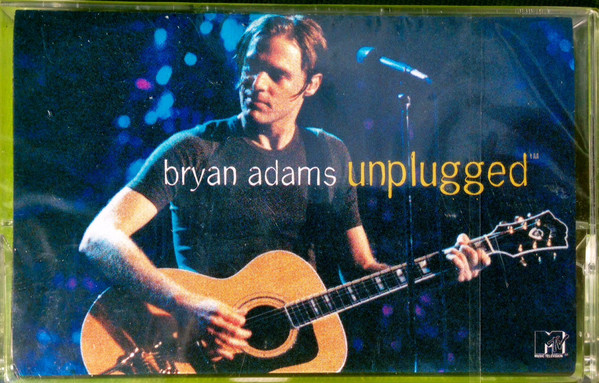
So then, as much to remind everyone what an enormous contributor his music had been to the preceding decade of popular music, Bryan Adams performed on MTV Unplugged, which we also discuss in detail here In the Studio in my classic rock interview. Included were brilliant new arrangements of “Summer of ’69”, “Cuts Like a Knife”, “Heaven”, a stunning reworking of “I’m Ready”, a medley “If You Want to Be Bad You Gotta Be Good/Let’s Make a Night to Remember”, and a song composed specifically for Unplugged, “Back to You”. –Redbeard
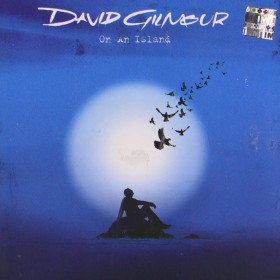
In mid-2005 David Gilmour had been hard at work on only his third solo album, which eventually would be released as On an Island in March 2006, when he got a call from Pink Floyd: The Wall movie leading man and Live Aid organizer Bob Geldof: would David agree to perform with Nick Mason, Rick Wright, and Roger Waters regrouped as Pink Floyd for the one-off Live Eight charity concert in Wembley Stadium and broadcast worldwide?
All past loyalties aside, according to David Gilmour, it wasn’t an easy decision.
“In fact, I initially turned it down,” Gilmour admitted here In the Studio, “because I thought it would distract from the project I had been working on. And I wasn’t unaware of the sort of hornet’s nest that would get opened up by doing it. But you know, there’s something more important at stake, so obviously it was better to get in there and do it, and deal with a certain amount of rubbish at the same time. The important thing was taking part in that event in order to try and persuade the leaders of those eight countries so that they should put their hands in their pockets and dig out some cash and free a lot of (African) countries from the burdens of servicing the debts that they had. And all the other (media) rubbish pales into insignificance alongside of that.”
Coming as it did in March 1984, David Gilmour’s second solo album, About Face, marked a distinct period of spectacular worldwide success with Pink Floyd, capped off byThe Wall, only to be followed by the inglorious thud of the aptly titled The Final Cut, Pink Floyd’s last with Roger Waters and described to me by Gilmour as “pure torture” to make. Mercifully, the band disintegrated, but as Waters and Gilmour were soon to find, years of deliberate marketing of Pink Floyd as an image, without a recognizable front man, would soon make solo careers surprisingly daunting. So whatever David Gilmour did next, it needed to be considered, and he probably should call his “A” list friends to help, which is why About Face has contributions from Pete Townshend (lyrics on “All Lovers are Deranged” and “Love on the Air”), Deep Purple organist the late Jon Lord, Toto drummer the late Jeff Porcaro, keyboardist Steve Winwood, orchestration the late Michael Kamen, and produced by The Wall‘s Bob Ezrin.
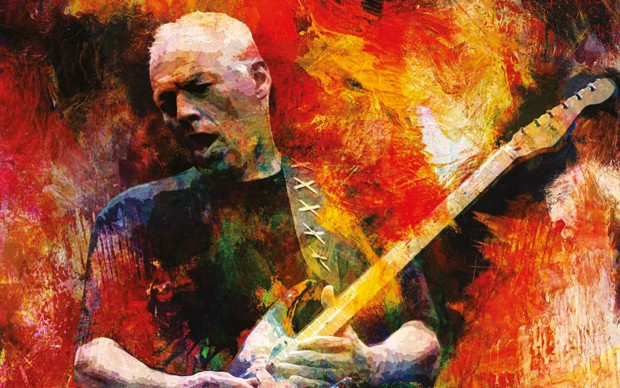
Throughout his long illustrious career David Gilmour has often sung the thoughts and lyrical observations of others, whether interpreting Roger Waters’ second-person ruminations from fifty years ago on Pink Floyd’s Wish You Were Here, or singing a verse which lyricist wife Polly Samson wrote last night. “It takes thought and it takes concentration,” David admits. “With most of Roger’s (Waters) brilliant lyrics and with Polly’s lyrics too, I find that I can do that. I hope that I do it justice. But it is something you often think about. But, ya know, you’re forced to be that person who is using those words as if they were your own. I’m only borrowing them. I mean I’ve written enough songs with words of my own to know how it’s done.”” I think there is still an enormous amount of prejudice against all sorts of people: women, people of different sexual orientation, religions”, David points out. ” The world is rife with prejudice still, and we’re deluded if we think it’s gone away… I think it will take centuries for a lot of the prejudice at the core of people’s being to go away. I think we’ll get there in the end, but I think the mind moves way ahead of the instinct, or what one might call the instinct. I think I’d call the instinct probably the result of years of being indoctrinated in one way or another. And what we think is our instinct is more prejudice. Harmless, and very light in most people in most ways. But it’s still there.” –Redbeard
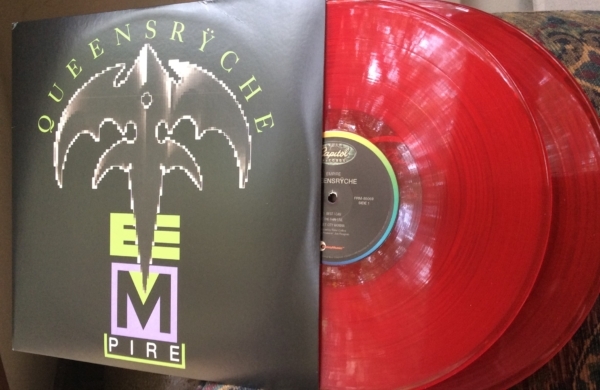
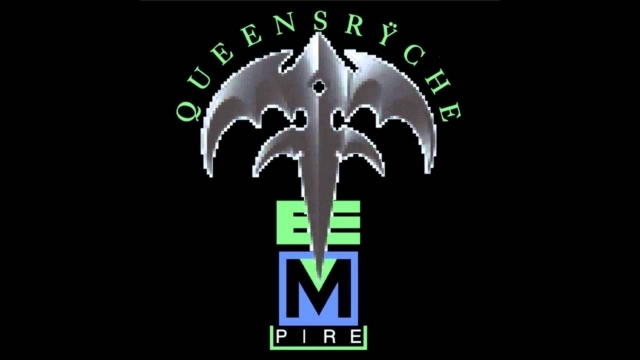
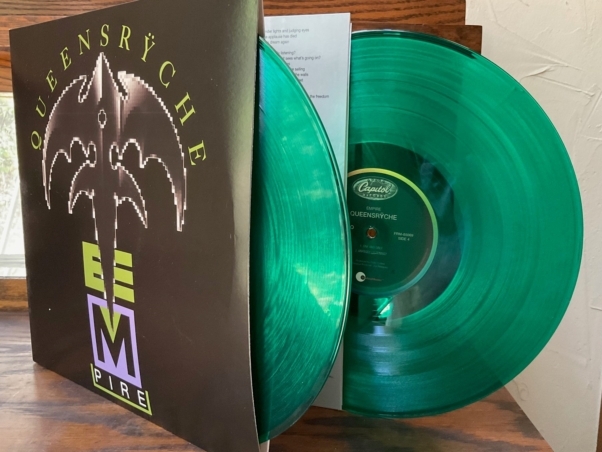
As early as 1983’s “Queen of the Reich”, Seattle’s Queensryche had shown that they could rock with conviction. While 1988’s thematic Operation: Mindcrime revealed keen collective intellect with bold musical ambition on songs such as “Eyes of a Stranger”, it was September 1990’s fourth full Queensryche effort, Empire, that planted the quintet’s flag in a whole new territory of popularity atop the sales charts. This Empire had scope, extending into the following year as the #9 seller for the entire year 1991! And Empire by Queensryche has aged not a lick in thirty-five years in its ability to rock your viral blues away while surgically implanting multiple massive chorus hooks in your head. Before leaving, Queensryche dual founders Geoff Tate and Chris DeGarmo held court with me while dealing in the coin of the realm including “Best I Can”,”Another Rainy Night”,”Jet City Woman”,”Resistance”, “Hand on Heart”, and the epic “Silent Lucidity” here In the Studio.
Watching the February 1992 internationally-televised Grammy Awards, there was Queensryche performing the most unlikely Top Ten Billboard hit and Grammy-nominated Rock Song of the Year, “Silent Lucidity” from September 1990 release Empire. Performed live with a symphony orchestra conducted by the late Michael Kamen and telecast worldwide to hundreds of millions, I couldn’t help but note how far Queensryche had come – how far rock had come – to be recognized in such a prestigious mainstream manner. As you hear in my classic rock interview, it certainly hadn’t started out that way for the Seattle quintet. Co-founder/composer/guitarist Chris DeGarmo and former singer/ songwriter Geoff Tate may be gone from Queensryche now ( the former pilots corporate jets, the latter heads the band Operation Mindcrime), but they tell the story of the blockbuster four million-seller Empire and the amazing songs “Best I Can”, “Jet City Woman”,”Della Brown”,” Resistance”,”Hand on Heart”, even a live performance from London’s Hammersmith Odeon just weeks after Empire’s 1990 release. –Redbeard
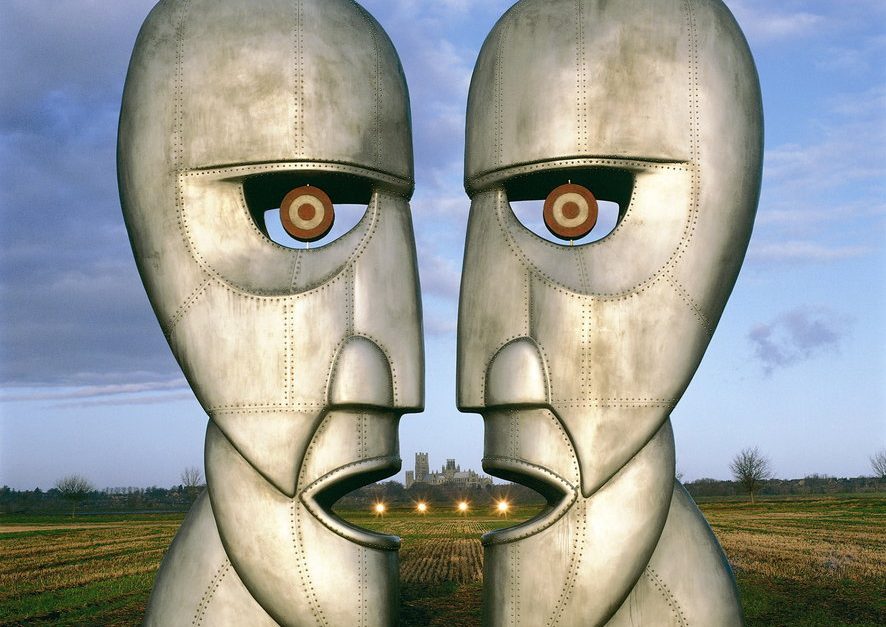
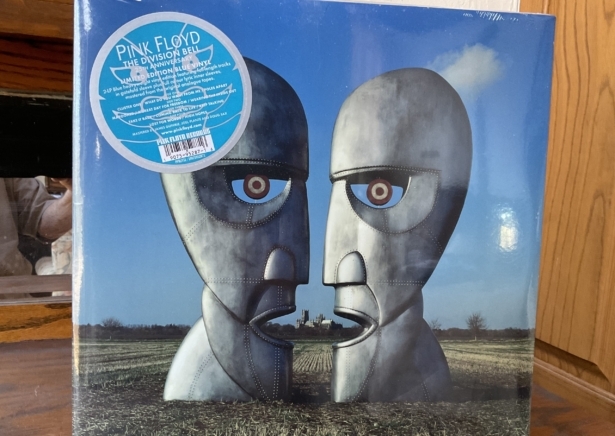
Never intended to be the last word in the long-running Pink Floyd legacy, nevertheless March 1994’s The Division Bell became, in effect, the final offering of new music from the remaining triumvirate of singer/guitarist/composer David Gilmour, drummer Nick Mason, and keyboard player Richard Wright. The Division Bell sold over three million copies just in the Nineties, and the Pink Floyd tour mounted in support of its release grossed a reported $100,000,000 in concert ticket sales. Wow.
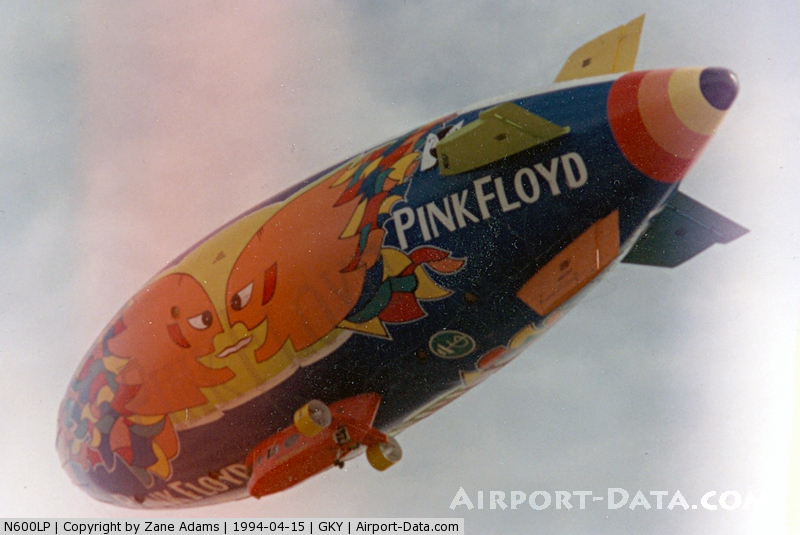
When Pink Floyd’s The Division Bell was released in March 1994, the term “Brexit” had not been coined and Elizabeth II was Queen. Astrophysicist Stephen Hawking (who did a cameo on the song “Keep Talking”), Pink Floyd keyboard player Rick Wright, orchestrator/arranger Michael Kamen, and longtime Pink Floyd manager Steve O’Rourke were all very much alive. Then, too, Polly Samson was known only as a journalist, and the three now-grown children she would bear with Pink Floyd guitarist/singer/composer David Gilmour were only a vibrato in Dave’s Stratocaster when I hosted the Division Bell world premiere broadcast in March across North America on opening night from Miami Joe Robbie Stadium on the Pink Floyd tour. Listening to this classic rock interview, one of the last ever with the gentle and fragile original Pink Floyd keyboard player Richard Wright, you would have no indication of the circumstances under which we had this conversation. In mid-March 1994 I had been driven to a decommissioned Air Force base in the California desert at dusk, where we were met at the gate by Military Police with white gloves and live ammo in their M-16 rifles. The reason that the British band Pink Floyd was rehearsing their 1994 Division Bell North American tour at a U.S. military base was simply because nothing smaller than a C-5 military transport hangar could accommodate the massive stage, lights, and sound system. A month later I would find myself broadcasting my Dallas/ Ft.Worth afternoon radio show live from the gondola of the Pink Floyd blimp airship (below,) with Captain Hunter letting me take the controls high over North Texas (I must admit, though, that Q102 Promotions Manager Kacy Harrison flew the blimp much better than I did).
For the thirtieth anniversary of this progressive rock milestone, David Gilmour and Nick Mason join me here In the Studio, plus archival comments from the late Rick Wright, to detail the songs “Keep Talking”, “What Do You Want from Me”, Rick Wright’s last lead vocal “Wearing the Inside Out”,”Take It Back”, “Coming Back to Life”, and the epic “High Hopes” for the future of Pink Floyd, which were cut short with Rick Wright’s death in September 2008. –Redbeard
“You know, I think that a lot of Rush fans always wanted to hear us play like we used to play, if I can use that phrase,” Rush guitarist/co-writer Alex Lifeson admitted to me a couple of years after the October 1993 Counterparts album release. “Bringing back that certain quality that we had in our earlier days of the three-piece core of the band. And being more forceful with it, and more focused and direct. I think it (Counterparts) was something Rush fans really welcomed.”
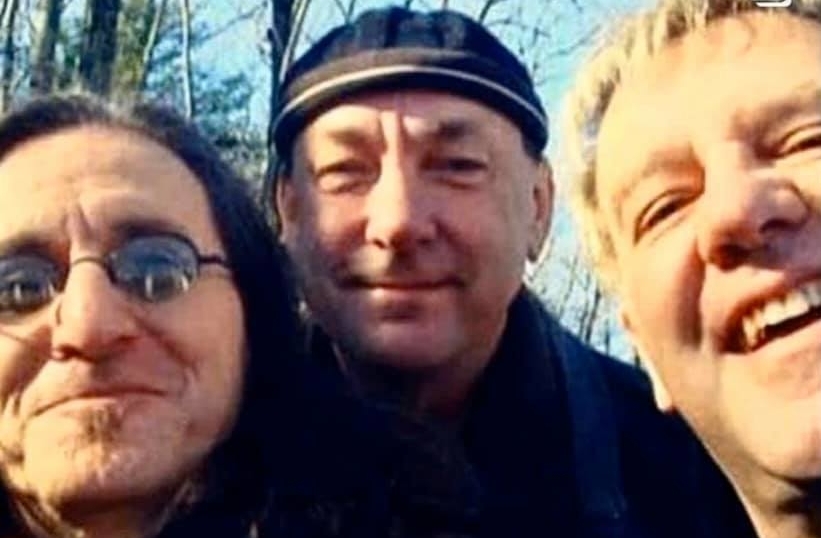
On Counterparts the sheer amount of Alex Lifeson’s powerful electric guitar was immediately noticeable, for sure, but the “live off the floor” approach Rush returned to on Counterparts is really apparent now in the way that legendary drummer the late Neil Peart really swings in his playing. Peart adapted jazzy, dare I say even dancey, time signatures to his prodigious arsenal on songs including “Animate”,”Stick It Out”,”Cut to the Chase”, and “Cold Fire”, providing a pocket for Lifeson and Rush bass player/singer Geddy Lee to really show their chops. ( Geddy Lee (l), Neil Peart, and Alex Lifeson (r) in one of their last selfies)
Counterparts also contains “Nobody’s Hero”, a stunning high point not only for Rush but also for the whole of the Nineties imho. The late maestro Michael Kamen was brought in to impart the sweeping Imax grandeur that Neil Peart’s compassionate lyrics, and Geddy’s singing of same, required on “Nobody’s Hero”, a song that never fails to put a lump in my throat ever since. The result was a #2 Billboard magazine album sales debut, Rush’s highest American sales sinceMoving Picturesover a decade earlier. Alex Lifeson is my guest here In the Studio for Counterparts. –Redbeard
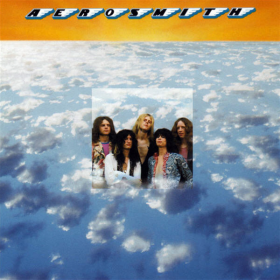
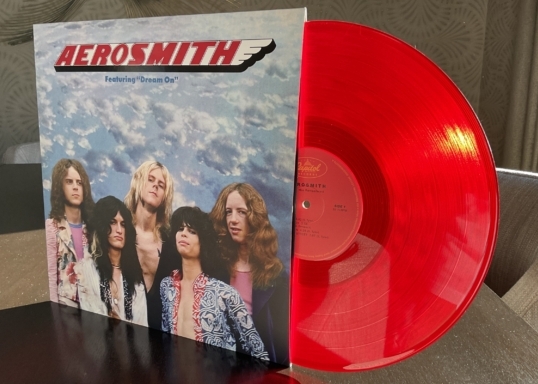
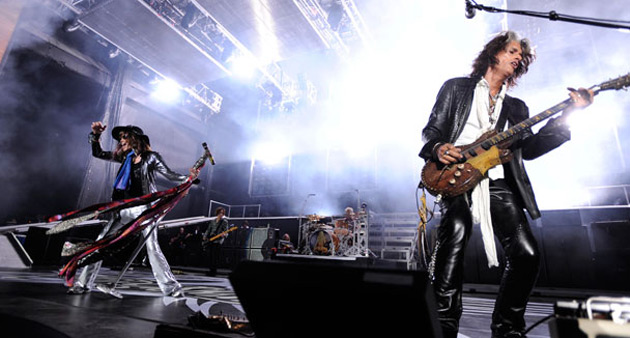
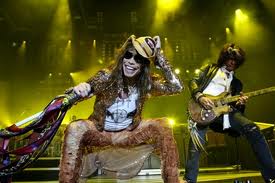
This classic rock interview is a real treat because you will hear Aerosmith lifers Steven Tyler, Joe Perry, and Tom Hamilton reminiscing about pre-Aerosmith hopes and dreams on the eve of their debut release; not fitting in and “feeling like an outcast”; playing in rival bands, digging on British Invasion bands like the Yardbirds, and playing in nightclubs for beer because nobody showed up. You see nobody, not even America’s hard rock GOAT, Aerosmith, starts at the top.
Redbeard: Joe Perry, before forming Aerosmith there was one song that was on the set list for both Steven Tyler’s New York City high school band, which played the Lake Sunapee NH resort clubs in the summer, and the garage band that you and New Hampshire bass player Tom Hamilton had.
Joe Perry: I think it was “Train Kept a Rollin’ “, that Yardbirds song. But the blues in the English form of the word, ya know, the blues that had been already taken and redefined by the English bands. I mean I knew people that were these blues players. In fact, in our band, Tom Hamilton and I had a guy named John McGuire, and he really wanted to play blues. He really wanted to wear baggy jeans and be barefoot and just play Howlin’ Wolf songs and Muddy Waters songs, just the way that they did it. Ya know? We basically made a decision. We said, ‘”No, we want to wear white Capezios and play through big amps and wear tight pants. Ya know, we want to rock.” And at that point he left and stayed up in the woods, up in New Hampshire, and Tom and I went down to Boston to seek our fortunes. So we weren’t really like blues fanatics, I mean we knew where it came from and we were inspired by it. But we liked the energy and the excitement of the rock. So the song that we had in common (with Steven Tyler) was this song called “Train Kept A’Rollin’ “. And you’re right, it is a blues song, and as we kinda learned who did it, and then we listened back and it was actually not even a blues song in the form that basically the Yardbirds took. If you listen to the Tiny Bradshaw version with all the answer backs and the callin’, it was all like kinda swingy and big band-y, and the blues was definitely this kind of thing beneath it all. And I don’t think we realized it, at that point, how important it was to us.
RB: By listening to Yardbird songs from England, even though the song was written by African-Americans, blues was then and is now a common language between musical strangers.
JP: That was kind of traditional in the way bands got together. If it was somebody that you were basically looking for a guitar player or a drummer, you’d first start talking to them and kind of see where they’re at, if you got along and you had some common interests, then obviously you talk about music. And then when you got down to it, the more songs that you knew in common defined what kind of taste you had, and kind of put you in the running to join the band or form a band with these other guys. So for us it was just that one song. ‘Cause Steven’s band was a little more vocal heavy. They had two or three guys that could sing and sing really strong harmony, so they were able to cover Beatles songs and Steve Miller songs and Byrds songs. So they were able to sing more of that kind of pop harmony- driven kind of thing. Whereas Tom and I were more into the crunchy guitar stuff, and to us singing was just something to take up space between guitar solos ! There are a lot of people that make a living at reproducing, or trying to reproduce, the old classics. And we don’t consider ourselves in Aerosmith blues players, so to speak. And I just wanted to make that clear, that we didn’t and don’t feel like we would put ourselves in that driver’s seat. I mean we’re a rock band and we have been influenced by the blues. I mean all of our pop music that we listen to now comes from the blues. Everything has its roots there. So we just wanted to kind of honor that and then put our own stamp on those kind of tunes. There are a lot of people that hear blues and they think BB King, Eric Clapton and Buddy Guy and that’s it. And then the new guys are, ya know, Johnny Lang and medium new guy is Robert Cray. And that’s it. That’s what they think of as blues. I mean they are only exposed to so much. I think the music does the talking. Once you hear it, you don’t have to talk about it anymore. RB: To prove that blues is the musical ground that Aerosmith sprang from, and is rooted in to this day, recall the very first song you ever wrote with Aerosmith lead singer Steven Tyler over fifty years ago.
JP: Yeah, that’s easy. That’s like (plays guitar). That was” Movin’ Out”. That was the first song that we wrote. And the lyric was very descriptive of our life, what was going on for us. Which again, is very bluesy. (Sings “We all live on the edge of town, where we all live ain’t no one around…” ). That’s why we got a really good singer! We figured if there was somebody going to be taking up time between guitar solos, you got to be as good as you can be.
RB: “Movin’ Out” on the January 1973 debut Aerosmith was unadulterated blues no matter how you slice it. But self-appointed blues purists can be very territorial, and unfortunately that’s nothing new. I reminded Joe Perry of Aerosmith how Texas blues rocker Johnny Winter had used his celebrity in the mid-seventies at the peak of his career to do a series of Muddy Waters albums on Winter’s Blue Sky label. The attacks that the critics launched against Winter were alarming. But the series was certainly one of Muddy’s biggest paydays ever, and exposed Muddy Waters’ music to a whole new mainstream audience.
JP: Yeah, it did. And at that point in Muddy’s career, he was kind of resting on his laurels at that point. And I don’t think he was playing with the best people, but Johnny made it a point to try and get people that really gave a sh*t. And surround him with some great players and just injected a vibe of ” Let’s do this “ ,‘cause he loves Muddy so much. And just as a tribute to give something back. It was like when Keith Richards did (the movie) Hail Hail Rock and Roll with Chuck Berry to kinda say at the end of his career,” Berry’s always playing with these sh*tty pick-up bands. I want to put him with a real band at least for once, ya know, have him do his songs, ya know, doing the honor of doing that.” So I think that with Johnny Winter playing it really inspired Muddy, ya know. Because I think Johnny was one of the guys that Muddy really had a lot of respect for. And didn’t mind him lurking around, ya know. What about the Electric Mud album? I mean obviously Muddy wanted to try something, ya know. But at least he did something that was really true to what he did. I mean that recording of “Mannish Boy” is like unstoppable. I mean that is a force of nature. –Redbeard
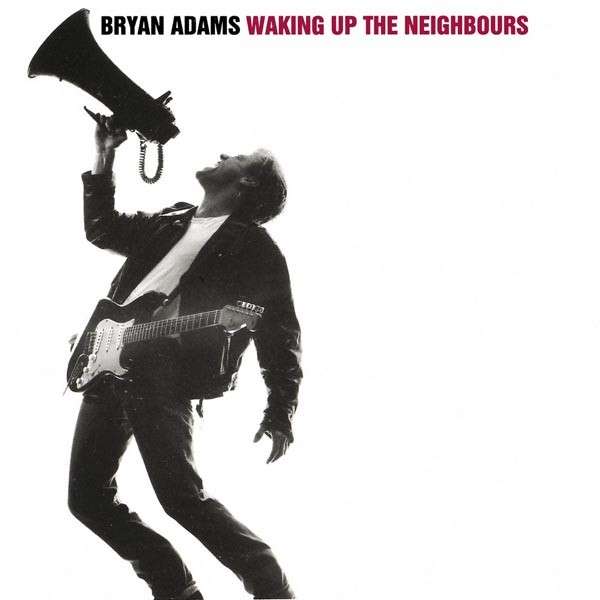
The Bryan Adams 1991 album Waking Up the Neighbours was gi-normous the world over (16 million sold), containing terrific rockers “Hey Honey I’m Packin’ You In”,”Can’t Stop This Thing We Started”,” House Arrest“, “There Will Never Be Another Tonight”, “Not Guilty”, and “Touch the Hand”. It also contained the mid-tempo killer chorus of “Thought I’d Died and Gone to Heaven”, plus the closing theme to Kevin Costner/Morgan Freeman’s international hit movie Robin Hood: Prince of Thieves entitled “(Everything I Do) I Do it for You”. Bryan Adams is my guest willing to break his lease for Waking Up the Neighbours.
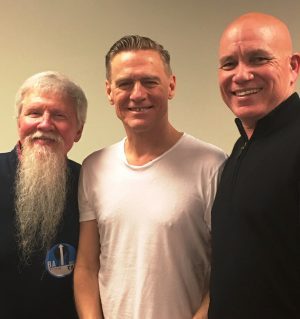
Because the In The Studio rockumentary series has always focused on the biggest and best rock albums in history, we throw around sales figures each episode of two, three, seven, even ten million sold. But when you actually write out the fact that Bryan Adams sold 16,000,000 copies worldwide of Waking Up the Neighbours since 1991, it starts to take up some real estate on the page. In this week’s classic rock interview, diplomat’s son Bryan reminds us that he had a passport before he had a guitar, and explains how one song in particular,”Everything I Do, I Do It for You” appearing under the closing credits at the very end of the Kevin Costner film Robin Hood: Prince of Thieves, put awareness of his considerable talent in front of people in places where Bryan Adams’ music had never penetrated. –Redbeard( L-R Redbeard backstage with Bryan Adams & Sirius/ XM’s Kurt Gilchrist )
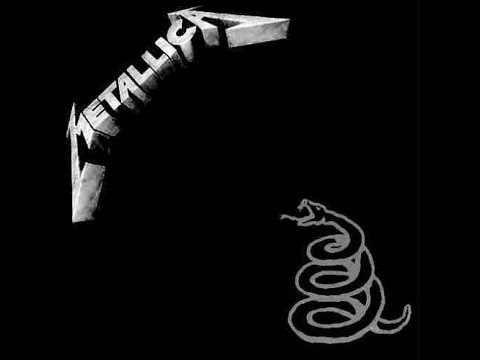
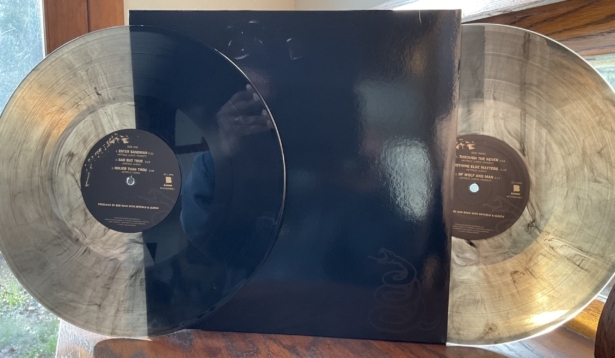
To put this musical monster into historical context, since its August 1991 release Metallica (affectionately known as “The Black Album” in the same way The Beatles had been dubbed “The White Album”) has sold an estimated twenty-two million copies worldwide. That is several million copies more than either Sgt. Pepper’s… or Abbey Road by the Beatles, or any Led Zeppelin album. In this classic rock interview with Metallica’s lead singer/songwriter James Hetfield and lead guitarist Kirk Hammett, we show how the band sits atop the family tree of hard rock/heavy metal evolution, which you can trace all the way back over fifty years to Deep Purple In Rock and the first Black Sabbath album. Like AC/DC’s Back in Black a decade before, Metallica’s “Black Album” is the hard rock collection for people who thought they didn’t like hard rock.
With writers at Rolling Stone magazine ranking it #252 on their Top 500 Albums of All Time, you would assume that Metallica (containing “Enter Sandman”,”The Unforgiven”,”Nothing Else Matters”,”Sad But True”) coasted unimpeded to this pinnacle, but quite the opposite is true.The traditional gatekeepers and kingmakers of rock respectability, including U.S. radio, the rock press, the Grammy Awards, and to a lesser extent MTV, all thought that by ignoring heavy metal that it would just go away. That conspiracy lasted a full twenty years. “Conspiracy, I like that,” chuckles Metallica frontman James Hetfield. “That’s pretty spot on,” agrees lead guitarist Kirk Hammett. “It resonates within a lot of people, heavy metal and aggressive music. People hear it and can relate instantly because it strikes an (emotional) chord within them that they can relate to . ..It takes them away in a way that they want to be taken.” –Redbeard
 Bryan Adams’ seventh studio album 18 ‘Til I Die was a #1 seller in the UK and Top Five sales in Australia, Austria, Belgium, Canada, Finland, Germany, Sweden, and Switzerland. The international popularity was driven by hits “The Only Thing That Looks Good on Me is You”, “Have You Ever Really Loved a Woman”, and the title song. This point thirty years ago, however, was also the first indication for Bryan Adams of a bizarre syndrome peculiar to American media whereby, in spite of over a decade of prior multi-million US album sales, 18 ‘Til I Die peaked on the Billboard sales chart at a perplexing #31.