Tag: Robert Plant

  • Genesis- Mama- Knebworth 6-30-90

    Genesis- Mama- Knebworth 6-30-90

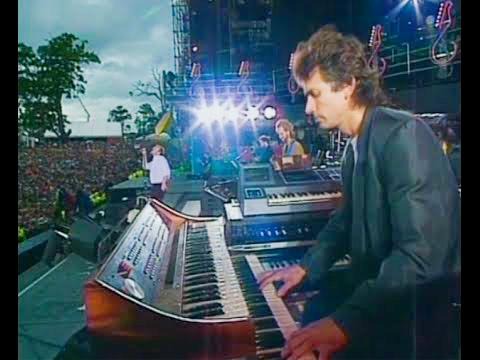
    If you were a nationally respected charity in the UK in 1990, you may have had a snowball’s chance to get a top music act such as Robert Plant, Genesis, Eric Clapton, Paul McCartney, or Pink Floyd to play for your benefit. But if you were the Nordoff-Robbins Music Therapy charity in those days, you could get them ALL to play on one humid, soon-to-become rainy day in late June at that year’s annual Knebworth Festival outside London. Here is  scheduled performer Phil Collins calling out special guests Tony Banks and Mike Rutherford of Genesis on that memorable day to perform “Mama” to over 100,000. –Redbeard

  • Led Zeppelin- Presence 50th Anniversary- Jimmy Page
    Led Zeppelin- Presence 50th Anniversary- Jimmy Page

    With the recording and subsequent late March 1976 release of Presence, their seventh studio album, thus began a five year period when a series of tragedies befell Led Zeppelin, even while guitarist/composer/producer Jimmy Page, singer/ lyricist Robert Plant, bass/keyboard/composer John Paul Jones, and drummer John Bonham continued to record timeless hard rock. The recorded performances of “Achilles’ Last Stand”, “Nobody’s Fault but Mine”, and “For Your Life” from Presence were so realistic as to be almost palpable, about which the sonic slam startles even now half a century later.

    Jimmy Page, the mastermind Presence behind the Led Zeppelin legacy, returned In the Studio to reveal that by the time that the lengthy sold-out tour to support the  iconic double album Physical Graffiti  wound down in 1975, the Led Zeppelin juggernaut had soared to heights previously unknown by a rock band and had entered, figuratively speaking, the jet stream of the entertainment world. From that altitude the view is breathtaking, but the extremes of speed, temperature, and lack of oxygen make it impossible to survive without aid and the right protection. Just one misstep and the unforgiving immutable laws of Nature kick in, regardless of Led Zeppelin’s Presence atop both US and UK album charts or how many concert tickets they sold. In the case of Led Zeppelin Presence, Robert Plant was still so badly injured from a car crash while on vacation with his family off the coast of Greece that he actually recorded his vocal parts for Presence while seated in a wheelchair.

    When Led Zeppelin released their eighth studio album In Through the Out Door in August 1979, we had no way of knowing that it would be their last original studio effort. In Through the Out Door was immediately massively successful, rocketing to #1 sales in only its second week  in both the US and UK because of songs “In the Evening”, “Southbound Suarez”, “Fool in the Rain”, and the achingly tender “All My Love”, eventually equaling Led Zeppelin II  for career best-seller.

    And in spite of overwhelming popularity, about half of the music critics of the day, cruel but consistent, savaged Led Zeppelin upon release of In Through the Out Door in August 1979 for being woefully out of synch with the Punk Rock ethos, which many of those self-anointed gatekeepers saw as a musical laxative for rock’s bloat. Never mind that many of those same punk bands lauded Page & Plant for “Communication Breakdown” from Led Zeppelin 1 a decade earlier for inspiration.

    Led Zeppelin guitarist/composer/producer Jimmy Page joins me for a rare classic rock interview here In the Studio to recall the considerable challenges they faced making Presence  fifty years on. –Redbeard

  • Led Zeppelin- For Your Life- London 12-10-07
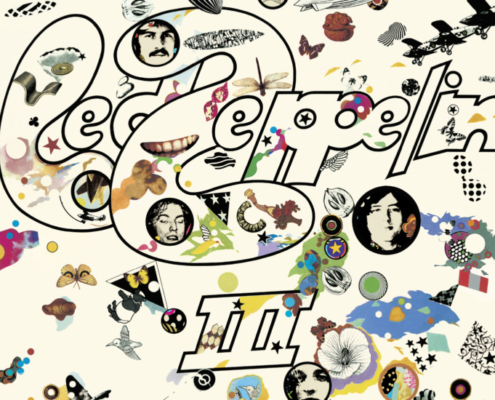
    Led Zeppelin- For Your Life- London 12-10-07

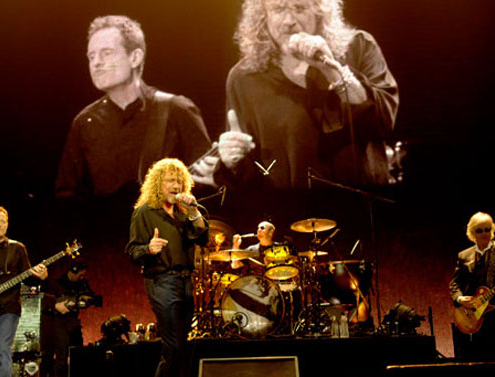
    Regarding Led Zeppelin’s final original studio album In Through the Out Door, it is worth noting that we never got to hear any of its songs performed live by Led Zeppelin, as during rehearsals for the tour to do so, drummer John Bonham died of alcohol poisoning. And precious few heard live performances of the preceding Led Zeppelin album Presence, either, as that 1977 concert tour was cut short due to the sudden death of Robert Plant’s son, Karac, due to illness. That makes the choice by Plant, Jimmy Page, John Paul Jones, and Bonham’s drummer son Jason to perform “For Your Life” during Led Zeppelin’s 2007 reunion benefit concert at London’s O2 Arena such a treat.

    In the December 2007 reunion concert at London’s O2 Arena to pay tribute to the late Atlantic Records founder Ahmet Ertegun, Led Zeppelin trotted out “For Your Life”, a song from Presence  which lead singer Robert Plant informs us that the original band with the late drummer John Bonham had never performed in concert.  –Redbeard

  • Led Zeppelin III @50- Jimmy Page, Robert Plant, Terry Manning
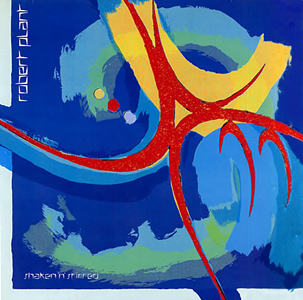
    Led Zeppelin III @50- Jimmy Page, Robert Plant, Terry Manning

    Led Zeppelin’s third album did not have the first blush of discovery like the debut, nor a bonafide hit like “Whole Lotta Love” on Led Zeppelin II, but now in hindsight Led Zeppelin III is revered for being the musical bridge to even greater successes soon to come. The second Led Zeppelin album had been a surprisingly mass appeal hit in America, and truth be told, we had not really waned in our ravenous repeated plays of it when Led Zeppelin III  appeared October 5, 1970 with surprisingly little notice. Containing “The Immigrant Song”,”Gallows Pole”, and “Since I’ve Been Loving You”, Led Zeppelin III  also planted exotic seeds of sounds in “Friends” with its Middle Eastern orchestration, which would skip several subsequent albums only to germinate with legendary impact on Physical Graffiti.

    In the careers of the great legendary bands, there are less-than-bestselling transitional albums which, in hindsight, clearly show you where they were headed: Meddle  by Pink Floyd, Desperado  by the Eagles, Beggars Banquet  from the rapidly evolving Rolling Stones, and Eldorado  by Electric Light Orchestra come to mind as musical suspension bridges to glory which stand up mighty well over time but, like Led Zeppelin III, went under-appreciated in their time. Truth be told, for many years that third effort was remembered as much for its unique interactive “wheel” album cover, which is quite a collector’s item.And speaking of collectibles, before the digital compact disc and box sets in the Eighties, the most sought B-side in rock was the flip side of “The Immigrant Song” which came out in Japan with a song from the III  sessions called “Hey Hey What Can I Do”, which was as good as anything on the album. My guests Jimmy Page, Robert Plant, and Led Zeppelin III  recording engineer at Ardent Studio in Memphis, the late Terry Manning, tell the story here In the Studio. –Redbeard

  • Robert Plant- Shaken ‘n’ Stirred

    Robert Plant- Shaken ‘n’ Stirred

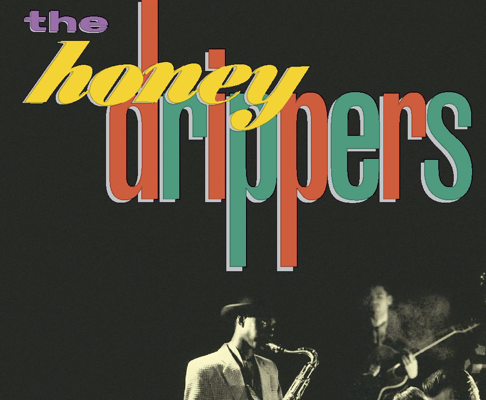
    In 1985, Robert Plant had just raised eyebrows (and skirts) with his retro-rockin’ big band one-off The Honeydrippers, only to follow it up with the adventurous modern rock-influenced Shaken ‘N’ Stirred. His third solo album bearing his name, Shaken ‘N’ Stirred  contained the infectious song “Little by Little” which helped to drive the album sales to #19 in Robert Plant’s UK homeland, as well as #20 Billboard charting in the US.

    It was 1983’s The Principle of Moments, Robert Plant‘s second solo album, which  convinced us that Plant could sustain a viable solo career outside of the legendary Led Zeppelin which he fronted for twelve fabled years. But for me personally it was Shaken ‘n’ Stirred,  served up pre-release on a little Walkman cassette player onboard a Boeing 747  at 40,000 feet over the Atlantic Ocean, that began my professional relationship with the complicated singer.

    Angular extended songs “In the Mood” and the cryptic “Big Log” from The Principle of Moments  became rock radio staples in the States, followed by the earworm “Little by Little” from Shaken ‘n’ Stirred  in 1985. However, not until 1988’s Now and Zen ( his fourth solo sortie if you don’t count the one-off Honeydrippers  EP) did Plant shed the self-conscious shadow of Led Zeppelin by exorcising his ghosts with the song ” Tall Cool One”, brilliantly sampling the “thunder of the gods” iconic licks and employing Zeppelin mastermind Jimmy Page on guitar.“Heaven Knows” and “Ship of Fools” made Now and Zen a blockbuster, with “Hurting Kind” in 1990 from Manic Nirvana  and the tender heartfelt “29 Palms” on Fate of Nations completing our visit with Robert Plant In the Studio for this classic rock interview.- Redbeard

  • Robert Plant- Rockin’ at Midnight- Birmingham UK 9-85
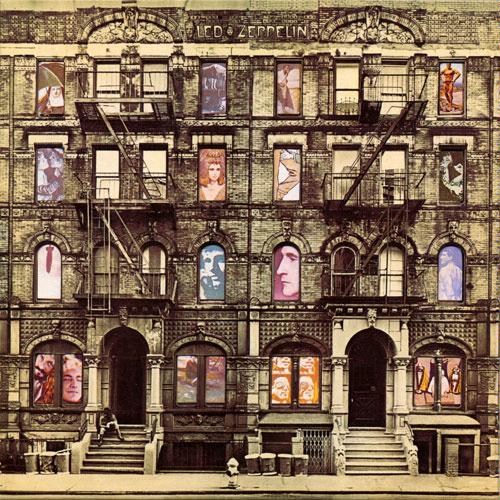
    Robert Plant- Rockin’ at Midnight- Birmingham UK 9-85

    When Robert Plant performed this toe-tappin’, finger snappin’ “Rockin’ at Midnight” in concert in Birmingham England in September 1985, he had already successfully lifted the curtain on Act Two of his lengthy post-Led Zeppelin career. Midway through the Eighties Robert Plant was trying to outrun the long global shadow cast by serving at the front of the incomparable Led Zeppelin for a decade. That shadow turned out to be the size and speed like some rock solar eclipse, from which Plant would struggle to escape for the rest of the Eighties. Robert seemed positively liberated by the 1984 one-off EP project The Honeydrippers precisely because there could be no comparison of their big band horn-driven swing to Zeppelin’s Hammer of the Gods. -Redbeard

  • Led Zeppelin- Physical Graffiti- Jimmy Page
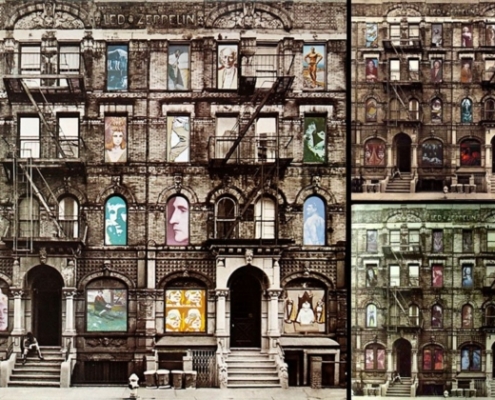
    Led Zeppelin- Physical Graffiti- Jimmy Page

    By the time of its late February 1975 release, Led Zeppelin’s sixth album Physical Graffiti signaled a fundamental change in the popular music and media equation that began with  IV .  With “Stairway to Heaven” Led Zeppelin had proven that the album format had matured to the point that a hit single for Top 40 radio was no longer a necessity for huge album sales in America. By the time of recording the wide variety of styles for Physical Graffiti‘s  four sides, a hit single wasn’t even a consideration for Page, lead singer/lyricist Robert Plant, bass playing multi-instrumentalist John Paul Jones, and legendary drummer John Bonham.

    In the delightful 2008 electric guitar documentary film It Might Get Loud  starring Led Zeppelin founder Jimmy Page along with The Edge from U2 and Jack White, we finally get a glimpse inside the English country manor house known as Headley Grange,  immortalized as the site of recording Led Zeppelin’s record-breaking  sixth album  Physical Graffiti. Clearly, in the film Page cannot contain his pleasure with returning to the scene of creating that iconic fourth Led Zeppelin recording, as well as what would become the inspired double album Physical Graffiti   three years later.
    To reissue this 16X platinum ( ! ) magnum opus, producer/ co-writer Jimmy Page meticulously remastered the bounty of songs on the original and combined them with unheard demos, roughs, and working versions from the Physical Graffiti sessions for a truly deluxe edition worthy of the term. In my classic rock interview for part one, Jimbo lifts the curtain on the rapier “Custard Pie”, the funky romp”Trampled Underfoot”, the thunderous grind of “The Rover”, the acoustic toe-tapper “Black Country Woman”, and the whisper-to-a-scream dynamic eleven minute ecstasy of “In My Time of Dying”. Jimmy Page joins me as very special guest for the first of our two-part exploration of the album Rolling Stone magazine ranks at #70 on their ” Top 500 Albums of All Time”. –Redbeard

  • Led Zeppelin- Physical Graffiti pt2- Robert Plant, Jimmy Page
    Led Zeppelin- Physical Graffiti pt2- Robert Plant, Jimmy Page

    Fifty years on, Led Zeppelin’s 1975 double album Physical Graffiti‘s sonic slam has not diminished one iota in strength, sheer number of exceptional songs, the band at peak performance, and Jimmy Page’s impeccable production. Funky “Custard Pie”, “The Rover”, the furious “In My Time of Dying”, the playful “Houses of the Holy”, funky electricity of “Trampled Underfoot”, and epic synth/French horn arrangement of “Kashmir” can still leave the listener breathless five decades later…and that’s just the halfway mark.

    “Traveling the world was now a constant thing…The whole thing was becoming a creative process,” Led Zeppelin’s Jimmy Page said  at a press conference, reminiscing about the February 1975 double album  Physical Graffiti . By the time of composing for this, their sixth studio album, Led Zeppelin’s international success was taking their tours to far-flung places in the world, which in turn exposed the band to even more creative stimuli. For instance, a distinct new flavor had already started to spice up the blues-based hard rock on certain songs on the preceding Houses of the Holy : Jimmy Page’s staccato guitar was locking in far more often with John Bonham’s inventive percussion in a choppy rhythmic manner, which in turn left space for multi-instrumentalist John Paul Jones to fill with a new instrument, the electric clavinet.
    LED-ROBT-935939_10200327575093923_1720918598_nIn the recording, the daunting challenge of capturing the sheer scale of Led Zeppelin’s sonic dynamics was never so successfully rendered by Jimmy Page in the producer’s role, without overwhelming the recording process of the day nor compromising the visceral impact of this double album. Here in the conclusion of my interview, Page discusses the grandeur of “Kashmir”, the progressive rock of “In the Light”, the furious electric funk of “The Wanton Song”, and the shimmering delicacy of “Ten Years Gone”. Inside Robert Plant ( r ) explains the elusive motivational sparks which were responsible then for Physical Graffiti  brilliance which has accounted for sales of over sixteen times platinum.

    LED-JIMMY-PAGE-720x405-458901406Listen to Jimmy Page (l) and Robert Plant In the Studio for the conclusion of the Physical  Graffiti  deluxe edition. – Redbeard 

  • Led Zeppelin II – Jimmy Page, Robert Plant
    Led Zeppelin II – Jimmy Page, Robert Plant

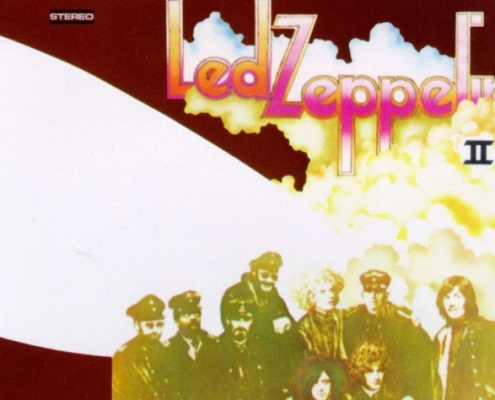
    Though barely ten months had passed between the  releases of their debut and follow up in 1969, so much had transpired in that brief time with the band- and the world- that by the time Led Zeppelin II erupted in late October 1969, the largest music event in history had occurred at the Woodstock Festival barely six weeks after two Americans walked on the Moon. And then “Whole Lotta Love” blew up my car radio that Autumn and changed everything.

    The first Led Zeppelin album in  1969 was released, like the vast majority of unknown untested “baby bands”, in January that year. It was unhyped, particularly in America, as three of the four members of the British band had no reputations Stateside whatsoever, and only band founder/lead guitarist Jimmy Page had some fame in the dying embers of the Yardbirds. Fast-forward ten months to Led Zeppelin II, and by then all of that had changed. Led Zeppelin II  was released the same year 1969 in October, when record companies put out their blockbusters guaranteed to rack up holiday sales. And unlike the first album, Led Zeppelin II  hit American Top 40 radio  fifty-five years ago like a thunderclap. When I heard both Chicago radio powerhouses WLS and WCFL play “Whole Lotta Love” by Led Zeppelin in Fall 1969, it changed my life and the lives of millions worldwide by forging the template for hard rock/heavy metal for half a century. In classic rock interviews, Jimmy Page and Robert Plant join me here In the Studio for Led Zeppelin II to document what had ensued in the ten months between the first two releases, and to reveal the songs you know by heart including “What Is and What Should Never Be”, “Thank You”, “Heartbreaker/ Living Loving Maid(She’s Just a Woman)”, and “Ramble On”. –Redbeard

  • Led Zeppelin 1 – Jimmy Page, Robert Plant

    Led Zeppelin 1 – Jimmy Page, Robert Plant

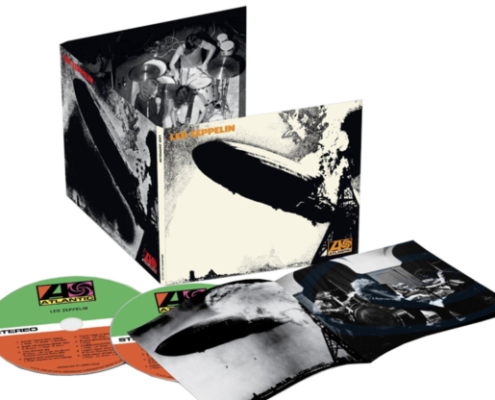
    This classic rock In the Studio episode  features what turned out to be my first of many subsequent in-depth conversations about the Led Zeppelin legacy with band mastermind Jimmy Page and singer/lyricist Robert Plant.  One of the most significant debut albums in rock history, Led Zeppelin 1 was released in January 1969 but, not surprisingly, its arrival was unheralded. Only two of the quartet, guitarist/songwriter Jimmy Page and bass player John Paul Jones, had any musical calling cards, Page in the last days of The Yardbirds and Jonesy as an arranger, but even those reps were restricted pretty much to the late Sixties London recording studio scene. But the dramatic high-contrast photo of the actual German airship “The Hindenburg” erupting in flames on the cover of Led Zeppelin 1 served as both an invitation and a warning concerning the explosive sonic contents within.

    There was considerable buzz in the rock music world recently when Jimmy Page, the brilliantly gifted architect of the Led Zeppelin I sound since it was unleashed  January 1969, announced that he was personally overseeing a comprehensive updating of the entire Led Zeppelin catalog as deluxe editions with remastered sound, new twenty-first century artwork and graphics, previously unreleased demos, alternate mixes, and those notoriously bootlegged live Led Zeppelin concert performances.  Both Led Zeppelin I   and II  came out in 1969 barely ten months apart,  and then  the transitional, often under-appreciated Led Zeppelin III,  which together comprised the initial deluxe reissues. To explore each, we arranged for Page, Robert Plant, and John Paul Jones to go “under the hood” to reveal the thoughtful approach to the Led Zeppelin sound, echoes of which are apparent to this very day.- Redbeard