Tag: best selling albums 1980

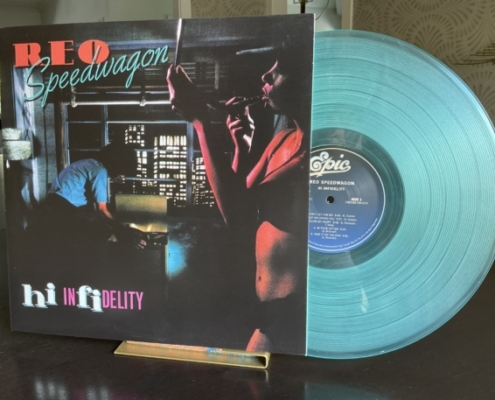
  • REO Speedwagon- Hi Infidelity 45th- Kevin Cronin, Neal Doughty

    REO Speedwagon- Hi Infidelity 45th- Kevin Cronin, Neal Doughty

    The hard-charging Illinois band named after an Oldsmobile fire engine (don’t laugh, Buffalo Springfield was the manufacturer of a steamroller, for heaven sake ), REO Speedwagon believed in their long game, and their long-suffering record label gave them TEN trips to the plate until the band touched all the bases in November 1980 with Hi Infidelity. Lead singer Kevin Cronin and band keyboard player co-founder Neal Doughty tell the worst-to-first “ten year overnight sensation” story behind “Don’t Let Him Go”,”Follow My Heart”,”Tough Guys”,”Take It on the Run”, and the #1 “Keep on Lovin’ You” here.

    Legendary major league baseball manager Leo Durocher reportedly uttered that famous quote,”Nice guys finish last”, but with the November 1980 release of REO Speedwagon’s Hi Infidelity,  at least one exception refuted Durocher’s platitude spectacularly. Matter of fact, if REO Speedwagon was a baseball team, their statistics for their 1980-81 season would be as follows: 9- Hi Infidelity  was the band’s ninth studio album; 4- the number of times REO changed lead singers; 2- the number of times Kevin Cronin was hired to be that lead singer; 5- the number of charted singles from that sole album; 1- the chart sales peak of both the Hi Infidelity  album and its first single,”Keep on Loving You”; plus the first band live concert ever presented on the emerging MTV video music channel; 15- the number of weeks as the top-seller in the US; 10,000,000+ -the number of copies sold of REO Speedwagon’s Hi Infidelity.

    In a lot of ways, REO Speedwagon was much like the Midwest region from which they sprang at the University of Illinois at Champaign: solid, unassuming, hard-charging musical journeymen determined to make it. They set it up with songs including “Roll With the Changes”,”Time for Me to Fly”, and “Back on the Road Again” before releasing Hi Infidelity forty-five years ago as Cronin and co-founder Neal Doughty reveal in my classic rock interview, which also serves as a tribute to the late REO guitarist/songwriter for the first twenty years, Gary Richrath.

    When Hi Infidelity by REO Speedwagon was released in early November 1980, it was the band’s ninth studio album in ten years of trying. While rock radio listeners in New York City, Los Angeles, and San Francisco were just introduced to REO Speedwagon two years earlier with “Roll with the Changes” and “Time for Me to Fly”, millions of other Americans between the Rockies and the Ohio River could recall seeing REO play their high school proms, college homecomings, and countless state fairs for ten long years. With the release of Hi Infidelity forty-five years ago, the tumblers all clicked and the jackpot was stunning. –Redbeard

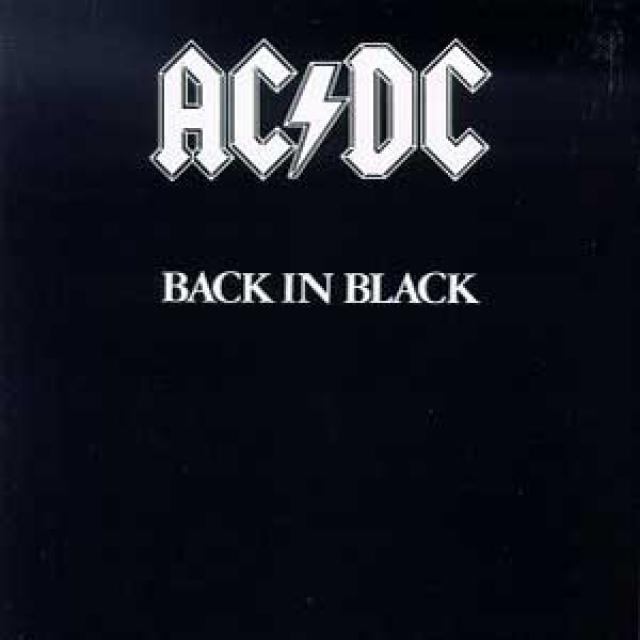
  • AC/DC- Back in Black- Angus Young, Brian Johnson
    AC/DC- Back in Black- Angus Young, Brian Johnson

    My rare Malcolm Young interview from the In the Studio archive will be certain to give you even more insight into the gut-wrenching circumstances which precipitated the making of “Hell’s Bells”, “Shoot to Thrill”, “You Shook Me All Night Long”, “…Money Honey”, “Have a Drink on Me”, and “Back in Black” as Angus Young and Brian Johnson host AC/DC’s forty-fifth anniversary of the world-wide phenomenon Back in Black with me here In the Studio. Just how phenomenal is it? 27,000,000 copies in America. And that’s not a typo.

    The Back in Black  AC/DC  secret has now been revealed, but until the In the Studio series of exclusive classic rock interviews, you didn’t find it in the myriad of magazine articles, online biographies, books, and fan sites dedicated to the band. Sure, you’d see tons of photos and references to lead guitarist Angus Young’s frenetic stage energy while performing in his schoolboy short pants. But understand this: AC/DC was  always  his big brother Malcolm Young ‘s band. My initial hunch that this was true came during my first classic rock interview with the band, as Angus, singer Brian Johnson, and I were discussing the breakthrough album Highway to Hell  (the last with colorful ruffian singer Bon Scott, who died of alcohol poisoning shortly after) and the follow-up with Brian singing, Back in Black. Numerous times during the conversation, both Angus and Brian alluded to what Angus’s older brother, rhythm guitarist Malcolm Young, thought, said, or did. It became increasingly apparent as the stories unfolded that, musically and inspirationally, Malcolm Young was to whom the others in AC/DC looked. Angus Young may have been chosen early on to be the focal point of AC/DC, but big brother Malcolm was always  the heart and soul of this band, becoming even more so after the death of Bon Scott in 1980. (That’s a young Young: Malcolm left, then Atlantic Records promo veteran Michael Prince center, and even younger brother Angus Young, right)
    So a few years later when another AC/DC interview opportunity arose, I insisted that Malcolm be included, and my hunch was quickly confirmed. Malcolm was plain-spoken, unpretentious, wise, and doggedly determined. And while the excellent biographers at AllMusic.com correctly note that AC/DC’s popularity and sales waned from the mid-1980s through the end of the decade, they fail to grasp why: Malcolm’s drinking had increased to a debilitating point whereby it was affecting not only his health but his creative leadership of the band, and Mal wisely  took a leave of absence for over two years. So it was then no coincidence,  when a clean and sober Malcolm Young rejoined AC/DC  for 1990’s The Razor’s Edge, that it became the quintet’s biggest seller and best-reviewed album since Back in Black a decade earlier.

    Notably, like AC/DC Back in Black released in late July 1980, several of the best-selling hard rock albums in history also have been made under the most dire of circumstances amidst tremendous tragedy and loss:

    Deep Purple Machine Head – lost their reserved recording studio to a massive fire the night before they were to begin. Result: one of the quintessential hard rock albums of all time.

    Def Leppard Hysterialost their key man producer; lost their way in the studio; drummer lost his arm in a car crash. Result: 25 million copies sold worldwide.

    Whitesnake (’87) – bandleader David Coverdale lost his voice; lost his band; lost $3 million making it. Result: estimated 9.5 million copies sold.

    Metallica Metallica (Black Album) – band lost their bass player in a Swedish tour bus rollover crash. Result: 16.5 million copies sold in the US.
    We are saddened  that AC/DC co-founder Malcolm Young has passed after a long bout with dementia. Nevertheless, it always was Malcolm’s band. The most popular selling rock album ever, AC/DC Back in Black marked its forty-fifth anniversary with a massive North American tour  and a stop here In the Studio for Angus Young and Brian Johnson. –Redbeard

  • Queen- The Game- Brian May, Roger Taylor

    Queen- The Game- Brian May, Roger Taylor

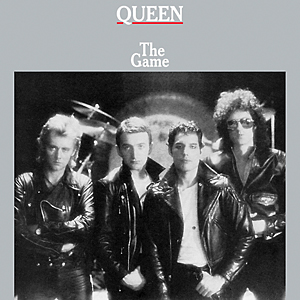
    Funny how “Bohemian Rhapsody” and its accompanying album, A Night at the Opera, stand so firmly in our collective memory, but in fact it was The Game five years later that crowned Queen #1 worldwide. It was precisely because of the balance of hits “Crazy Little Thing Called Love”, “Another One Bites the Dust”, and “Play the Game” with the blistering album tracks “Dragon Attack”, “Rock It”, and the sleeper “Sail Away Sweet Sister”. Brian May and Roger Taylor are suited up to play The Game  here In the Studio, and play it well.

    By the Summer 1980 release of The Game, “There was a time there, about three seconds, when we were the biggest band in the world,” modestly chuckles Queen guitarist/songwriter Brian May in my  classic rock interview about the worldwide #1 album. Yet there he stood, smiling in Memphis radio station ROCK 103, delightfully soft-spoken, gracious, and thoughtful  before playing to a sold-out 10,000-seat arena crowd a few hours later. Queen had succeeded as four real “mates” on an international scale, which would continue only to increase for the next decade. With four writers, the band had a surplus of strong songs once again ( “Play the Game”, the live-in-the-studio throwdown”Dragon Attack”, the Glam rock-reminiscent “Coming Soon”, “Need Your Loving Tonight”, the touching “Sail Away Sweet Sister”, the prescient “Save Me”, and two #1s,”Crazy Little Thing Called Love” and “Another One Bites the Dust”) while Queen lead singer Freddie Mercury possessed such an operatic voice that it’s easy to forget that both Brian May and drummer Roger Taylor also sang lead on select songs. What really impressed me then, as now, is how appreciative Brian May was, of the fans, the countless deejays, and journalists for supporting Queen’s efforts over the years. Brian would later suffer a broken marriage, separation of his kids, and the passing of both parents, but nothing short of the untimely death of Freddie Mercury in 1991 could silence the original band. And now we know even that wasn’t permanent. –Redbeard

  • Pete Townshend- Who Came First

    Pete Townshend- Who Came First

    Just watching the parade of some of the latest overly-ambitious, under-qualified politicians on the Sunday morning tv talkshows ever since 1972’s Who Came First by Pete Townshend, quickly it becomes clear that one need not actually lie to obfuscate the truth. Handlers teach them that you need not answer any direct question posed by an interviewer; rather, you simply rephrase the question with one that you do feel comfortable answering. Repeat a half-truth enough times in public and a certain percentage of the population will soon accept it, unchallenged, as fact. Pete Townshend has no such handlers, and I’m convinced that he would ignore any attempts at spin control even if he did.

    Townshend is the “George Washington of rock”, in that he seems incapable of telling a lie, even when the unvarnished truth paints him in a less than favorable light. Pete continues his frank critical assessment of The Who here, but saves his most revealing confessions for his solo works in my classic rock interview, including Who Came First,  All the Best Cowboys Have Chinese Eyes , White City, and his April 1980 critical and commercial success Empty Glass, all wonderfully represented on the collection Truancy: the Very Best of Pete Townshend.
    The release of Pete Townshend’s solo album Empty Glass in April 1980 was quite the media event, for a number of reasons. First, his new New York City-based label then was thrilled to get The Who’s genius songwriter after coveting the iconic group for many years, so much so that they erroneously promoted Empty Glass as Townshend’s first solo effort, at Townshend’s self-conscious insistence ( 1972’s Who Came First  had that distinction).
    By April 1980 we in the rock music world were beginning to miss Townshend’s new music, which had been a pretty consistent mainstay of rock’n’roll for fifteen years prior but had been understandably MIA since the sudden death of madcap Who drummer Keith Moon in 1978. Townshend filled Empty Glass   with his grief over the loss of his friend, as well as very personal subjects including alcoholism, marital problems, and his conflicted reaction to Punk Rock in the songs”Rough Boys”,”A Little is Enough”,”Gonna Get Ya”, and pop spiritual”Let My Love Open the Door”, a Top Five US hit. –Redbeard

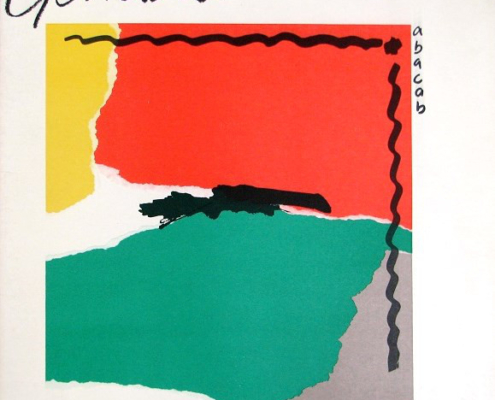
  • Genesis- Duke- Mike Rutherford, Phil Collins

    Genesis- Duke- Mike Rutherford, Phil Collins

    If you read album reviews of Duke by Genesis from March 1980, many respected music writers then right up to the present day still assume that because singing drummer Phil Collins’ solo career took off during the same period, and because any band’s singer automatically must be that band’s leader, that the other members of Genesis, guitarist Mike Rutherford and keyboardist Tony Banks, unwittingly if not unwillingly followed Collins into the pop mainstream. Phil remains adamant that is not true.

    “We never had a direction,” insists Phil Collins. “We wrote songs. Some of the songs were ten minutes, some were fifteen, some were twenty, some were three. And if they sounded better, if an idea sounded better in a three or four minute format, then we would leave it like that.”

    Mike Rutherford reminded us of the best reason for not handcuffing Genesis into any self-imposed musical restrictions. “Singles get so much visibility with (radio) airplay, MTV videos, etc. that people end up thinking ‘That’s what it’s all about.’…’Pop songs’ is a term people use as an ugly term, yet The Beatles are my all-time favorites and wrote the most wonderful pop songs. I’ve tried to, and it’s not easy. What we used to do is actually a wonderful cop out. You do these long songs by taking a short piece of music, maybe one or two minutes, and then segue into something else. You haven’t had to develop it into a song, which is actually much harder.”

    The demarcation line of the second Genesis band era was  clearly in focus with the March 1980 release of Duke, and then the subsequent Abacab eighteen months later. The veteran English band’s Duke studio album nevertheless  was the first Genesis album to graze the American Top Ten album sales on Billboard, and surprisingly the first Genesis million seller. Yet after the exits of storied lead singer/performance artist Peter Gabriel and lead guitarist Steve Hackett, it is no minor miracle that my guests Mike Rutherford, Phil Collins, and Tony Banks finally could make it to the Progressive Rock promised land. -Redbeard

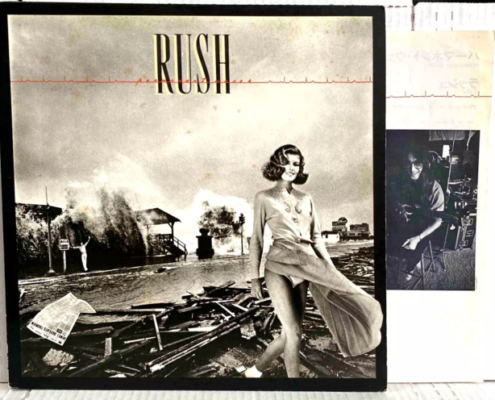
  • Rush- Permanent Waves 45th Anniversary- Geddy Lee, Alex Lifeson

    Rush- Permanent Waves 45th Anniversary- Geddy Lee, Alex Lifeson

    We may not have realized it as The Eighties dawned in January 1980, but the Permanent Waves that were emanating from Rush’s latest then were indeed indelible. For the first time, the majority of America’s rock radio stations relented in their resistance to the Toronto trio’s brand of brainy hard rock and tattooed the airwaves with “The Spirit of Radio”, “Free Will”, and tasty predecessors “Closer to the Heart”and “The Trees”. Geddy Lee, Alex Lifeson, and archival comments from the late Neil Peart are all part of the Permanent Waves forty-fifth anniversary.

    Four years before the dawn of MTV and almost two decades before the internet revolutionized the music industry, Rush sold more than a million copies of their 1978 Hemispheres  album and sold out 10,000-seat arenas, primarily on word-of-mouth and relentless touring. But I, for one, was continuing to get considerable pushback from powerful media consultants NOT to play Rush on the radio in the US, and these same guys influenced over a hundred big-city stations back then to do likewise. But with the January 1980 release of Permanent Waves,  containing “The Spirit of Radio” (a fond nod toward the intrepid support from hometown Toronto radio) and”Free Will”, the shut out was finally broken up by Rush hitting a home run. By the time these classic rock interviews occurred I had already interviewed Rush bass guitarist/singer Geddy Lee twice before, so I was reasonably confident on what to expect. Regarding his earliest recollections of music while growing up, imagine my shock when Lee (family name Weinrib) matter-of-factly answered my first innocuous question by replying,” I came from a family of immigrants, basically. My parents survived the Holocaust in Poland, and then married after the war and moved to Canada. I was brought up in a household that had survived turbulent times, to say the least, so there was a total rebuilding in a new country, in a new culture, & trying to adapt. Music wasn’t a prevalent and over-riding thing in our family.”I was stunned. There was nothing in any rock reference book or band biography then to prepare me for this revelation. The enormity of what Geddy Lee was saying, in a measured but sober tone, left me speechless. It felt like an eternity before I regained my composure enough to continue the conversation. Everything I had prepared to ask Lee, guitarist Alex Lifeson, and drummer/lyricist Neil Peart about Rush’s musical career struggles suddenly seemed so trivial, so inconsequential. Since then I have tried to keep some perspective on the relative importance of this rock’n’roll game in the search for real truth, real meaning in life. And now with the passing of Neil Peart, it is apparent that no one, not even the author of “Time, Stand Still”, can do so. -Redbeard