Tag: Lynyrd Skynyrd

  • Rossington Collins Band- Anytime, Any Place, Anywhere- Gary Rossington, Dale Krantz Rossington, Allen Collins

    Rossington Collins Band- Anytime, Any Place, Anywhere- Gary Rossington, Dale Krantz Rossington, Allen Collins

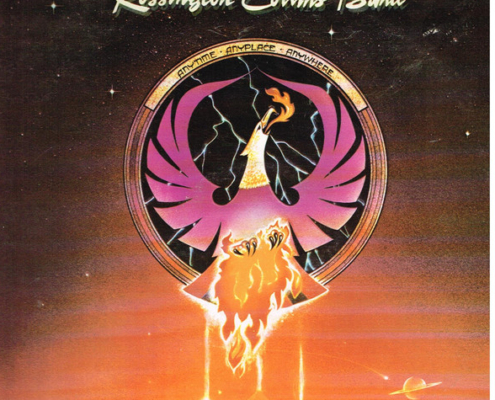
    There is an old adage,”Sometimes it pays to be good, and other times it pays to be lucky.” It turns out that any honest appraisal of my fifty year broadcast career reveals my success to have hinged as often on the latter as anything. Case in point: the World Premiere radio special in July 1980 for the Lynyrd Skynyrd band survivors’ highly-anticipated (and highly emotional) return as the Rossington Collins Band on Anytime, Any Place, Anywhere, for which I was chosen inexplicably to be the interviewer, producer, and host of the radio show on hundreds of North American radio stations. But why me?

    When MCA Records National Promotion Director Beth Rosengard,  charged with the radio rollout of the Rossington Collins Band debut, the company’s major effort to replace the gaping hole in the label’s lineup and ledgers since Lynyrd Skynyrd’s plane fell out of the sky three years earlier, called ROCK 103 in Memphis to offer me the golden opportunity to interview band namesake guitarists Gary Rossington, Allen Collins, and their surprising choice of singer, 38 Special backup vocalist Dale Krantz, I was stunned and baffled at my good fortune. The songs “Don’t Misunderstand Me”,”Prime Time”,”Opportunity”, and “Getaway” which Beth secretly sent several months before the album’s release, were all strong, with an unmistakable sonic signature that was immediately comfortable like your favorite pair of jeans, yet somehow fresh as cut flowers due to the special delivery of unheralded vocalist Dale Krantz.(L-R: Derek Hess, Gary Rossington, Barry Harwood, Dale Krantz, Leon Wilkeson, Billy Powell, Allen Collins)
    “You know these guys, right?” Beth exclaimed by way of explanation. Well sure, I had played every Lynyrd Skynyrd album since Pronounced  “out of the box” on radio stations in Ohio, Lincoln NE, and Hartford CT where I was live on the air the night of October 20, 1977 and had to break the news that nobody wanted to hear to our stunned audience. Now  May 1980 found me hosting a huge nightly regional audience as Music Director at Memphis’ soon-to-be #1 station ROCK 103, and while no outlet on the planet played more Southern Rock in general, or Lynyrd Skynyrd in particular, that still could not explain my good fortune to be offered complete interview access to the very reclusive survivors, plus the unfettered producer/host role for such a high profile release. Overnight this project launched my career as a rock musician interviewer and program producer.

    Decades later it would finally occur to me that this opportunity was a complete fluke, simply a case of mistaken identity. You see, some seven years earlier, Memphis deejay Jon Scott had indeed championed a new “baby band” with the funny name, even spearheading a legendary live-in-the-studio Lynyrd Skynyrd broadcast from Ardent Studio in late October 1973…but on another Memphis radio station (ironically the tapes of that performance, long missing, would mysteriously fall into my hands decades later and finally get an official release). Scott went on to a lengthy career in the record industry, but apparently when the time came to release Anytime, Any Place, Anywhere,  two things were painfully clear: 1) every newspaper, magazine, radio, and tv interviewer would want to talk about Lynyrd Skynyrd and, morbidly, about the plane crash still fresh in the traumatized minds and visibly scarred bodies of the surviving band members; and 2) it would be cruel and invasive torture to subject the band members, both old and new, to such scrutiny repeatedly in city after city on tour. So the decision wisely was made to do just one national interview, but with no restrictions. Somebody in the Rossington Collins Band sphere of influence held over from those early 1973 Lynyrd Skynyrd days probably instructed MCA Records’ exec Beth Rosengard to “get that night deejay from Memphis. The guys love him.” By that time, ROCK 103 was the only rock station in Memphis, and you-know-who got the call. There really is no other plausible explanation for it, totally a dumb lucky break for me. After  forty-five years, hopefully you will still enjoy this classic rock interview which effectively closed one chapter of the Southern Rock saga, and opened the door for me. –Redbeard

  • Lynyrd Skynyrd- Nuthin’ Fancy- the late Gary Rossington, Leon Wilkeson, Ed King
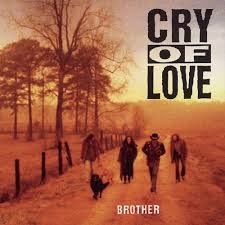
    Lynyrd Skynyrd- Nuthin’ Fancy- the late Gary Rossington, Leon Wilkeson, Ed King

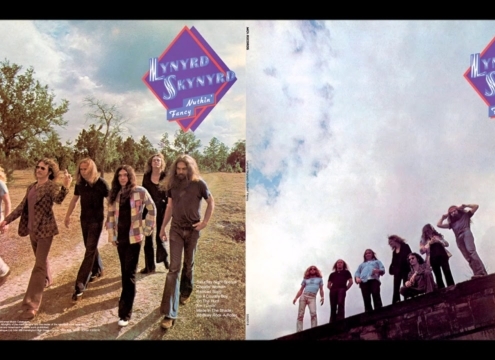
    Gazing at the cover for the third Lynyrd Skynyrd album Nuthin’ Fancy from March 1975 elicits mixed emotions. Clearly I recall the anticipation for it after the success of its predecessor, Second Helping, which had broken Lynyrd Skynyrd a year earlier with a roadcase full of strong songs and improved sound as compared to the Pronounced   debut. Producer Al Kooper would continue that sonic evolution on Nuthin’ Fancy, which spawned the lead single “Saturday Night Special”, driving Lynyrd Skynyrd’s first Top Ten sales with one of the best records to ever explode out of a car dashboard (not to mention an unlikely source for an anti-handgun message). “Whiskey Rock’a’Roller” was a toast to the hard-drinking life they had embraced, and “On the Hunt” remained a concert staple into the 21st century.

    The paucity of other timeless songs on Nuthin’ Fancy, however, indicated a creative well running low for Lynyrd Skynyrd which would only continue soon on Gimme Back My Bullets. No doubt the non-stop pace of nearly constant touring partly was to blame, but there was something darker and even more sinister which no one outside the band knew, nor anyone in it would admit. This tour had casualties. “There was abuse in ‘the family’,” the late guitarist Ed King (above) confided to me. Turns out that lead singer/lyricist Ronnie Van Zant attempted to ramrod his large seven-member band of rowdies in the fashion of his trucker father, Lacey, a former Golden Gloves boxer. After a particularly violent beating, King abruptly quit the 1975 Nuthin’ Fancy  trek mid-tour, a notorious series of shows dubbed by the resolute road crew as the “Torture Tour”.  Original Lynyrd Skynyrd drummer Bob Burns had flamed out after the band’s first UK tour, replaced for Nuthin’ Fancy  by Artemus Pyle, who gave the Skynyrd full-size cruiser an even more powerful engine. But the noxious atmosphere of alcohol, drugs, and violence proved too toxic even for veteran producer Al Kooper, who bowed out after recording the album. Guitarist/songwriter Gary Rossington, who was the last man standing of the original Lynyrd Skynyrd until his death March 5, 2023, hosted here in my classic rock interview along with my archival interviews from the late bass player Leon Wilkeson and Ed King. –Redbeard

  • Cry of Love- On the Hunt- New York City 8-93
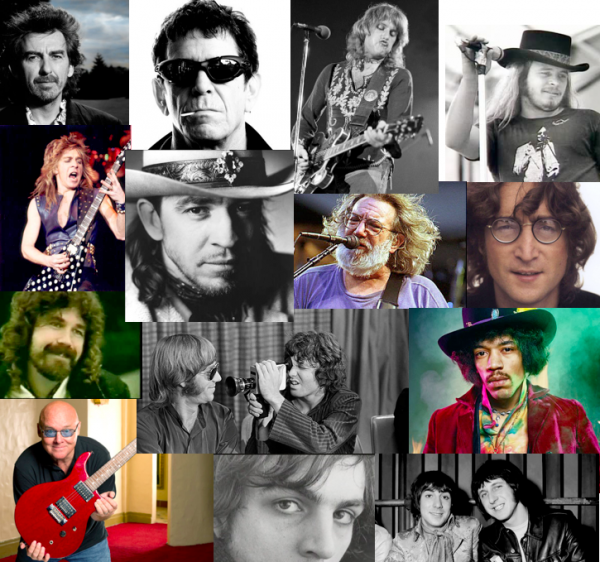
    Cry of Love- On the Hunt- New York City 8-93

    As we prepare to honor Southern Rock pioneers Lynyrd Skynyrd on the fiftieth anniversary of Nuthin’ Fancy next week, here is an example of their long shadow cast two decades later with an uncanny cover of that album’s “On the Hunt” by Carolina band Cry of Love. This was performed in SONY Studio in New York City in August 1993 by Cry of Love while promoting their excellent Brother debut album, totally live with no overdubs, and to my knowledge was never released. –Redbeard

  • More Echoes In the Studio- pt 4

    More Echoes In the Studio- pt 4

    In part four of Echoes In the Studio,  our annual Memorial Day Weekend tribute to fallen classic rockers, you will hear tributes to John Lennon, Lou Reed, Freddy Mercury, Bon Scott of AC/DC, Rick Wright of Pink Floyd, and Cliff Burton of Metallica by Brian May and Roger Taylor of Queen, Angus Young of AC/DC, and James Hetfield and Kirk Hammett of Metallica. Now we have to add dear Malcolm Young to the “in memoriam” list along with two others here paying tribute, George Harrison and David Bowie. Part  four  theme “Heroes” by Little America. –Redbeard

  • Lynyrd Skynyrd- Second Helping- Gary Rossington, Ed King, Leon Wilkeson
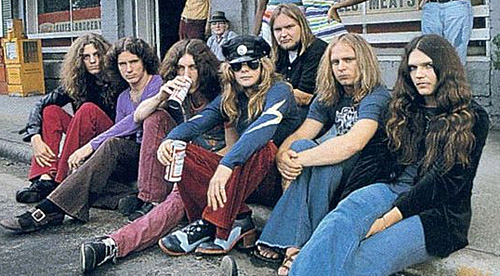
    Lynyrd Skynyrd- Second Helping- Gary Rossington, Ed King, Leon Wilkeson

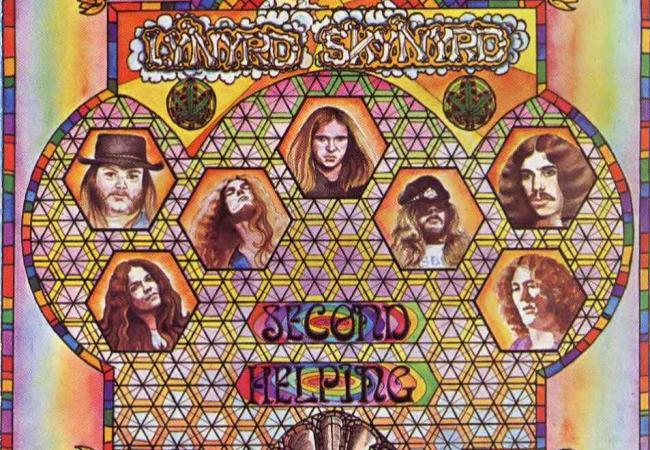
    The Lynyrd Skynyrd April 1974 release Second Helping  was the breakthrough album which introduced the Southern Rock rowdies to mainstream America, not their 1973 debut Pronounced. But don’t take my word for it: my classic rock interviews with Lynyrd Skynyrd co-founder the late Gary Rossington, dearly departed Leon Wilkeson, and composer of “Sweet Home Alabama” the late Ed King, all set the table for Second Helping.

    Sure, the Lynyrd Skynyrd legend inevitably circles back to their first album Pronounced  and the epic “Free Bird”, but don’t let revisionist history fool you: this April 1974 follow-up, Second Helping,  is the incredibly strong album which busted them wide open, & not just because of the rebel singalong “Sweet Home Alabama”. Just look at this tune stack: “Don’t Ask Me No Questions”,”Workin’ for MCA”,”The Needle and the Spoon”, their definitive version of the late J.J.Cale’s “Call Me the Breeze”, and two songs unlike anything on the first Lynyrd Skynyrd album, “The Ballad of Curtis Loew” and the achingly bluesy “I Need You”. Original guitarists Gary Rossington (died 3/5/23)  joinedme In the Studio, plus archival comments from the departed Ed King and excerpts from bass player Leon Wilkeson’s final national radio interview, for a Second Helping  of southern- fried  Southern Rock. –Redbeard

  • Lynyrd Skynyrd- Sweet Home Alabama- Memphis 10-30-73
    Lynyrd Skynyrd- Sweet Home Alabama- Memphis 10-30-73

    From the In the Studio archive, here is Lynyrd Skynyrd’s earliest known recording of “Sweet Home Alabama” before a live Ardent Studio audience in Memphis October 30, 1973. Note that nobody claps in recognition during the opening guitar lick, because the song would not be released until almost six months later on Second Helping. This was undoubtedly the last time that would ever happen! – Redbeard

  • History of Southern Rock pt 2- Gregg Allman, Gary Rossington, Doug Gray, Hughie Thomasson, Henry Paul, Donnie Van Zant, Charlie Daniels, Steve Earle

    History of Southern Rock pt 2- Gregg Allman, Gary Rossington, Doug Gray, Hughie Thomasson, Henry Paul, Donnie Van Zant, Charlie Daniels, Steve Earle

    This is my History of Southern Rock pt 2, a labor of love that captures the heart and soul of the musicians who long ago made it possible one day in 2018 to watch Chris Stapleton and Sturgill Simpson perform “Midnight Train to Memphis”, or Brandi Carlile completely blow me away in October 2021 with “Broken Horses”, both on Saturday Night Live.

    Listen to these stories from my classic rock interviews of the late Gregg Allman, writing the lyrics to “Midnight Rider” with charcoal match heads on an ironing board cover; Henry Paul and the late Hughie Thomasson of The Outlaws on the evolution of the song “Green Grass and High Tides“; Marshall Tucker Band singer Doug Gray and the late reed man Jerry Eubanks with “Heard It in a Love Song”; Donnie Van Zant and Jeff Carlisi of 38 Special on carrying the torch into the Eighties with “Hold On Loosely”; Southern Rock patriarch the late Charlie Daniels on the devastating losses of Duane Allman, Berry Oakley, Ronnie Van Zant, Tommy Caldwell and Toy Caldwell; the world premiere of Hughie Thomasson’s “Once an Outlaw, Always an Outlaw” just months before his death in 2006; and Steve Earle jump-starting it all over again in 1987 with “Guitar Town”. –Redbeard

  • History of Southern Rock- Gregg Allman, Dickey Betts, Gary Rossington, Henry Paul, Doug Gray
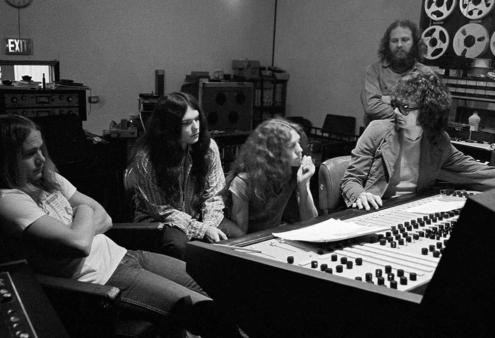
    History of Southern Rock- Gregg Allman, Dickey Betts, Gary Rossington, Henry Paul, Doug Gray

    Had the plane carrying Georgia soul singer/writer Otis Redding and several of his Bar Kays band members not plunged into that icy Wisconsin lake in December 1967, it’s highly unlikely that Redding’s Macon GA-based manager Phil Walden would have been actively looking to develop new, unknown bands in 1969 for his new Capricorn Records label, and thus enable a sound known as Southern Rock. Redding was poised to cross over from the soul/r & b world to a wider (and yes, whiter) mainstream audience at the time of the tragic plane crash, evidenced by his “Sitting on the Dock of the Bay” going #1 on the pop charts in early 1968.

    Growing up in the segregated American South near Nashville TN and later Jacksonville, FL in the 1950s and early 1960s, the late Gregg Allman, the younger sibling of the Allman Brothers Band which included gifted lead guitarist Duane Allman, had a friend named Floyd Miles. “He took me, literally, across the (railroad) tracks of town,” Gregg told me. “Back then, maybe 1960, it wasn’t cool to go over to ‘Black Town’, you know what I mean? He took me to this combination drugstore-barber shop- convenience store-record shop. All in one room. And there was this big bin in there full of records, and they were on sale for, I think, like a buck! And he (Floyd) saying ‘This is Sonny Boy Williamson, and this is Jimmy Reed, this is Otis Redding, this is Howlin’ Wolf.’ And the music was gutsy, man, and it had something to hold onto,” Gregg Allman confessed. “I just became totally infatuated with it. And every dime I got went to that record store. And I’d set at home learnin’ them licks, learned to play.” Songwriter/organist/singer Gregg Allman and his older brother, guitarist Duane, were at the creative epicenter of the Southern Rock genesis, forming the Allman Brothers Band in March 1969 with a repertoire of blues standards by Muddy Waters, T-Bone Walker, and Willie Dixon – black Americans all. It’s clearly evident that the ABB was integrated from the outset, musically and otherwise, which continued to their final day. While true that the group would soon become augmented with original songs by the 21 year-old Gregg, how ironic that the Southern Rock movement, led by the Allman Brothers Band on Walden’s Capricorn Records and later often associated with white Dixie flag-waving good ol’ boys, was actually borne from the musical success, and timely misfortune, of Otis Redding, a black American. In the Studio‘s History of Southern Rock is part one of two. – Redbeard

  • Lynyrd Skynyrd- Workin’ for MCA- Memphis 10-30-73

    Lynyrd Skynyrd- Workin’ for MCA- Memphis 10-30-73

    Rare live-in-the-studio performance of unreleased “Workin’ for MCA” (their record label) by Lynyrd Skynyrd in Memphis’ Ardent Studio in late October 1973, broadcast live on the radio between their debut but before their second album, Second Helping . –Redbeard

    L-R Ronnie Van Zant, Gary Rossington, Allen Collins, producer Al Kooper, 1973

  • Lynyrd Skynyrd- Pronounced- the late Gary Rossington, Ed King, Leon Wilkeson

    Lynyrd Skynyrd- Pronounced- the late Gary Rossington, Ed King, Leon Wilkeson

    One of the all-time Southern Rock staples, Pronounced leh-nerd skin-nerd  by Lynyrd Skynyrd turned fifty in 2023, which meant we got to share one of the most-requested interviews from the In the Studio vast classic rock archive. My in-depth conversations with Lynyrd Skynyrd guitarists/songwriters Gary Rossington and Ed King plus bass player Leon Wilkeson, all gone now, will tell the origin story framed against the days leading up to, and the  making of, the first album Pronounced and “I Ain’t the One”,”Gimme Three Steps”, “Simple Man” (which they had to fight to get it on the album), and “Free Bird”.

    There is a remarkable story to be told even before any of  us first heard Pronounced leh-nerd skin-nerd a half century ago. Gazing on the cover of Jacksonville FL young bucks Lynyrd Skynyrd’s Pronounced album, lots of little things come to mind which, taken individually, might appear insignificant. The digitally enhanced cover photo and graphics pictured here were not so richly hued on the original, which arrived without fanfare in the mail at my Findlay Ohio radio station. When I first removed the record to audition it, the pale yellow label at the center had a logo which proclaimed “Sounds of the South”, looking a bit hand-drawn, almost amateurish. As the first Lynyrd Skynyrd songs played, including “I Ain’t the One”, “Tuesday’s Gone”, “Gimme Three Steps”, and “Simple Man” on side one, the songwriting appeared strong and the band tightly rehearsed, but honestly the sound from the shallow grooves seemed a little thin, not as muscular and full bodied as we can now hear on hi-rez remastering. Taken as a whole, these small items gave Pronounced   an indie “otherness” feel to the entire package. Lynyrd Skynyrd could not yet be touted as the “Three Guitar Army” because original bass player Leon Wilkeson (pictured far left seated on the cover with sunglasses & trademark cap) had split before recording commenced because he didn’t trust New York producer and Sounds of the South label owner Al Kooper, which forced the only non-Jacksonville member, Ed King, to fill the bass slot. And the epic-length song “Free Bird”, which would one day define this album, this band, and (to many people) the sound of Southern Rock itself, was buried as the last song on side two and, at over nine minutes in length, doomed forever never to be a single for Top 40 consideration.

    Over time the perception seems to have become that Lynyrd Skynyrd had a date with destiny, an almost Shakespearean drama of dreams, aspirations, triumph, and tragedy to which all of us were immediately and keenly aware from the moment of Pronounced‘s release,which is no more true than imagining Will Shakespeare did not toil, struggle, and starve in relative obscurity in his time. Ronnie Van Zant, Gary Rossington, Allen Collins, Billy Powell, Bob Burns, and Ed King of Lynyrd Skynyrd had a collective vision even then, but it would be several more years before millions would share it. And that debut album has actually grown in esteem relatively over the decades, with the latest edition of Rolling Stone magazine’s Top 500 Albums of All Time bumping Pronounced leh-nerd skin-nerd up to #381.Standing outside their Dallas hotel in September 1987 beside the giant gleaming Lynyrd Skynyrd Tribute Tour bus, even the drone of the idling diesel engine could not drown out the echoes in my mind of the final notes of the final show which had occurred barely 12 hours earlier. Watching Lynyrd Skynyrd original guitarist Ed King bear hug each departing member of the band and crew as they boarded the bus was a touching moment which I will never forget. Later, Ed King sat down with me In the Studio  with those powerful emotions still raw in his voice to do this interview, and Gary Rossington (died March 5, 2023) and the late Leon Wilkeson were all here, too in these classic rock interviews. – Redbeard