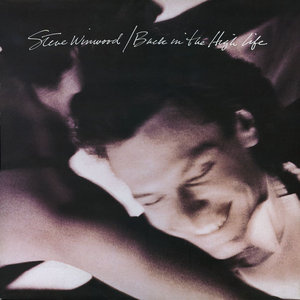
A real timeless gem from four decades ago, quiet, resigned blue-eyed soul man Steve Winwood scored a monster of a hit album in June 1986 with Back in the High Life. Winwood was surrounded with some of the finest musicians, including guests Joe Walsh, Nile Rodgers, and James Taylor, top-notch sound, and his deepest well of Will Jennings co-written songs including “Higher Love” (#1 Billboard), “Freedom Overspill”, “The Finer Things”, “Take It as It Comes”, “Split Decision”, and the delightful title song “Back in the High Life Again”.
Steve Winwood joins me In the Studio in my rare interview covering the biggest album in his long illustrious career, Back in the High Life (three Grammys, over three million sold US), on its fortieth anniversary the week of June 15. – Redbeard
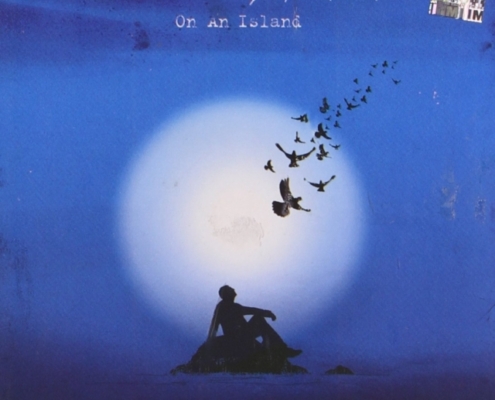
In mid-2005 David Gilmour had been hard at work on only his third solo album, which eventually would be released as On an Island in March 2006, when he got a call from Pink Floyd: The Wall movie leading man and Live Aid organizer Bob Geldof: would David agree to perform with Nick Mason, Rick Wright, and Roger Waters regrouped as Pink Floyd for the one-off Live Eight charity concert in Wembley Stadium and broadcast worldwide?
All past loyalties aside, according to David Gilmour, it wasn’t an easy decision.
“In fact, I initially turned it down,” Gilmour admitted here In the Studio, “because I thought it would distract from the project I had been working on. And I wasn’t unaware of the sort of hornet’s nest that would get opened up by doing it. But you know, there’s something more important at stake, so obviously it was better to get in there and do it, and deal with a certain amount of rubbish at the same time. The important thing was taking part in that event in order to try and persuade the leaders of those eight countries so that they should put their hands in their pockets and dig out some cash and free a lot of (African) countries from the burdens of servicing the debts that they had. And all the other (media) rubbish pales into insignificance alongside of that.”
Coming as it did in March 1984, David Gilmour’s second solo album, About Face, marked a distinct period of spectacular worldwide success with Pink Floyd, capped off byThe Wall, only to be followed by the inglorious thud of the aptly titled The Final Cut, Pink Floyd’s last with Roger Waters and described to me by Gilmour as “pure torture” to make. Mercifully, the band disintegrated, but as Waters and Gilmour were soon to find, years of deliberate marketing of Pink Floyd as an image, without a recognizable front man, would soon make solo careers surprisingly daunting. So whatever David Gilmour did next, it needed to be considered, and he probably should call his “A” list friends to help, which is why About Face has contributions from Pete Townshend (lyrics on “All Lovers are Deranged” and “Love on the Air”), Deep Purple organist the late Jon Lord, Toto drummer the late Jeff Porcaro, keyboardist Steve Winwood, orchestration the late Michael Kamen, and produced by The Wall‘s Bob Ezrin.
Throughout his long illustrious career David Gilmour has often sung the thoughts and lyrical observations of others, whether interpreting Roger Waters’ second-person ruminations from fifty years ago on Pink Floyd’s Wish You Were Here, or singing a verse which lyricist wife Polly Samson wrote last night. “It takes thought and it takes concentration,” David admits. “With most of Roger’s (Waters) brilliant lyrics and with Polly’s lyrics too, I find that I can do that. I hope that I do it justice. But it is something you often think about. But, ya know, you’re forced to be that person who is using those words as if they were your own. I’m only borrowing them. I mean I’ve written enough songs with words of my own to know how it’s done.”” I think there is still an enormous amount of prejudice against all sorts of people: women, people of different sexual orientation, religions”, David points out. ” The world is rife with prejudice still, and we’re deluded if we think it’s gone away… I think it will take centuries for a lot of the prejudice at the core of people’s being to go away. I think we’ll get there in the end, but I think the mind moves way ahead of the instinct, or what one might call the instinct. I think I’d call the instinct probably the result of years of being indoctrinated in one way or another. And what we think is our instinct is more prejudice. Harmless, and very light in most people in most ways. But it’s still there.” –Redbeard
When I sat down In the Studio in Autumn 1990 with Steve Winwood to talk about his then new release Refugees of the Heart, he had already established himself with the breakthrough album Arc of a Diver ten years prior. Then between those, Steve Winwood released Back in the High Life, one of the biggest albums commercially as well as critically in the Eighties, followed by Roll With It.
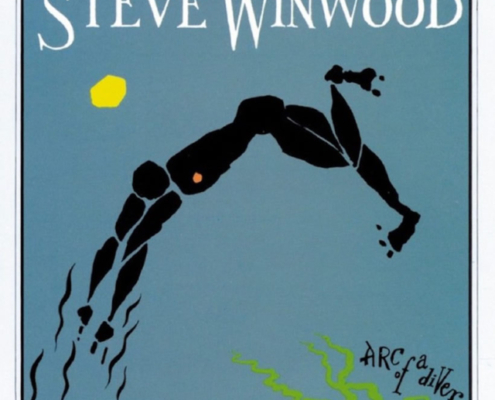
In my in-depth classic rock interview to mark the dual album anniversaries of Arc of a Diver and Refugees of the Heart, the shy quiet-spoken Steve Winwood covers a lot of musical as well as personal ground: eschewing the music business altogether through the mid-Seventies after a misdiagnosed illness at the end of the Traffic days almost killed him; his 1977 under-appreciated solo debut, Steve Winwood, with “Hold On” and “Time is Running Out”; 1980’s hit “While You See a Chance” and the title song “Arc of a Diver”; Winwood’s long successful collaboration with Texas songwriter Will Jennings; and reconnecting with Traffic mate the late Jim Capaldi to write “One and Only Man”, a Top 20 hit from Refugees of the Heart. –Redbeard
Listening now to Music from Big Pink, plus the eponymous second effort from The Band, and August 1970’s Stage Fright, it is hard for me to remind myself that Robbie Robertson, the fulcrum upon whose songs The Band leveraged rock music so magnificently for so many years, is no longer amongst the living. Robertson’s musical tales, and the places and characters who inhabited them, seemed so vividly alive and timeless that, by extension, I imagined that the composer somehow would be, too.
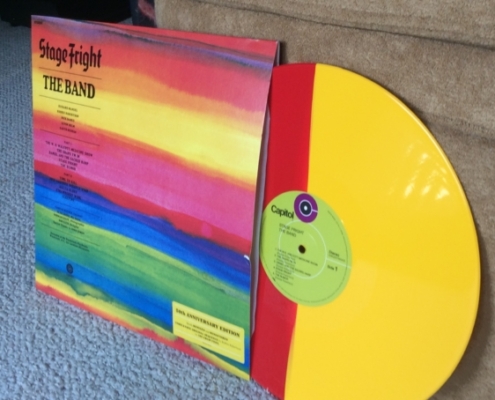
The Band’s 1968 initial offering, ranked at #34 on that list. That was almost twenty places higher than The Beatles‘ debut, and the eponymous 1969 second album The Band landed almost as high at #45 all time. Then completing the trifecta, the sublime third effort, Stage Fright, released in August 1970, went Top 5 and sold over a million copies. When The Call’s main songwriter/singer Michael Been passed away suddenly in 2010, a quote was attributed to him in his obituary where he claimed to have seen The Band in concert at age 18, which set Been on a life’s course of music literally until the day that he died. Watching Martin Scorsese’s The Last Waltz, The Band’s Thanksgiving 1976 swan song , shows how that kind of epiphany could happen. But the earliest work of this quintet with the generic name is no less impressive. As Robertson and I convened for another session, this time upstairs at LA’s Village Recorder just off Sunset Boulevard, when I snagged Rock and Roll Hall of Famer Robbie Robertson for In the Studio episode #11, I was keenly aware that The Band’s Music from Big Pink debut album was even then enjoying classic status. In that and subsequent interviews, we discussed in great detail both this most eclectic stand-alone unit with main songwriter/ guitarist Robertson, fellow Canadians keyboardist Garth Hudson; singer/pianist Richard Manuel ; singer/ bass player Rick Danko; and Arkansan singer/ drummer/ mandolin player Levon Helm; plus as the touring band who supported folk singer Bob Dylan during his highly controversial transition to an electric rock’n’roll presentation. In his best-selling autobiography, no less than the great Eric Clapton confesses to having one musical mission after Cream broke up: joining The Band.! And apparently it was no idle passing fancy, because Clapton journeyed from London to upstate New York’s sleepy village of Woodstock to offer his services. At some point he realized that they already had a guitar player in Robbie Robertson, and Eric returned to his Hurtwood manor to jam with Steve Winwood and form Blind Faith instead. Widely viewed along with Bob Dylan, The Byrds, and Gram Parsons as fathers of the Americana musical movement, The Band also may have been one of rock’s first alternative groups. In part one of this classic rock interview, main songwriter Robbie Robertson (“The Weight”,”The Night They Drove Ol’Dixie Down”,”Up on Cripple Creek”,”The Shape I’m In”) helps me make that case for this band, members all of the Rock’n’Roll Hall of Fame. “The Weight”, “Chest Fever”, and a haunting acapella version of Dylan’s “I Shall Be Released” featuring the uncanny vocal harmonies of Manuel, Danko, Robertson and Helm, all now silenced by time but preciously preserved here in this essential classic rock interview show. Robbie Robertson has died after a long struggle with prostate cancer. Robbie was 80 when he passed; his soul seemed centuries older. – Redbeard
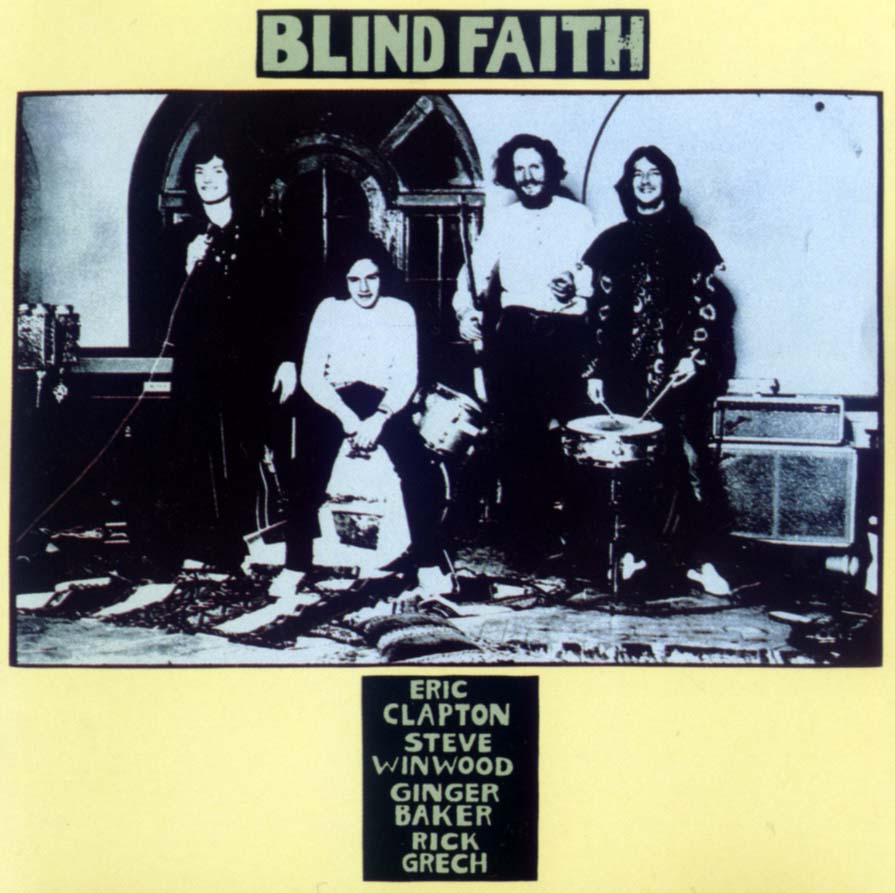
Two titans of rock’s last half century, Eric Clapton and Steve Winwood, join me In the Studio to explore the days in 1969 surrounding the one-off Blind Faith, a #1-seller in both their native UK as well as America. Until recently, the two friends chose not to talk much about the short-lived Blind Faith experience. Maybe it was the fact that the media hype of what Time magazine dubbed as “rock’s first supergroup” resulted in a single solitary studio album. Maybe it was the frustration with anemic concert sound which they were provided, supported in Summer 1969 by Free, Rory Gallagher’s Taste, and a “family band” which would figure prominently in Clapton’s near future, Delaney and Bonnie. Or maybe the reticence stems from the riots that ensued between Blind Faith concert goers and local police in several US cities. As Clapton admits in his best-selling autobiography, Eric was uncomfortable with his former Cream mate, the late Ginger Baker, as Blind Faith’s timekeeper.
Despite these considerable complications, the flame for the brief Blind Faith music and the obvious potential for more, never extinguished in the fifty-plus years since its August 1969 release. This was evidenced by the enormous positive response to Steve Winwood sharing the stage with Eric Clapton at the latter’s 2007 Crossroads Guitar Festival in Chicago that year, which eventually resulted in a popular 2008 tour. Hear their thoughts in my rare classic rock interview on the times and the music which resulted, including “Had to Cry Today”, “In the Presence of the Lord”, the melodic “Sea of Joy”, and the timeless classic “Can’t Find My Way Home”. –Redbeard
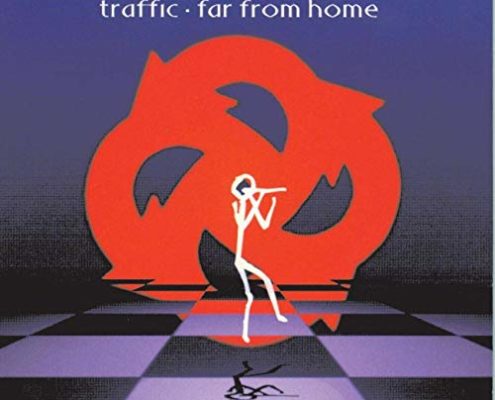
Thirty years ago it was my great honor to co-produce and host the North American radio premiere of what was the first new Traffic album in two decades, the band’s eighth and, as it turned out, final studio effort, Far from Home. It is an overlooked, almost forgotten chestnut of strong songwriting by Steve Winwood and Jim Capaldi, a terrific recording that should be on Stereophile magazine’s annual “Records to Die for” audiophile list, and a veritable tour-de-force for Winwood, who sang and played everything except Capaldi’s drum kit.
Far from Home spent a solid month in the Top 30 sales in their native UK that Summer 1994, making it Traffic’s most commercially successful album there since John Barleycorn Must Die almost a quarter century before it. And Far from Home charted almost as high (#33 Billboard Album) while selling even more Stateside.. Before later passing away from stomach cancer in early 2005, Jim Capaldi joined Steve Winwood here In the Studio for the last Traffic jam. –Redbeard
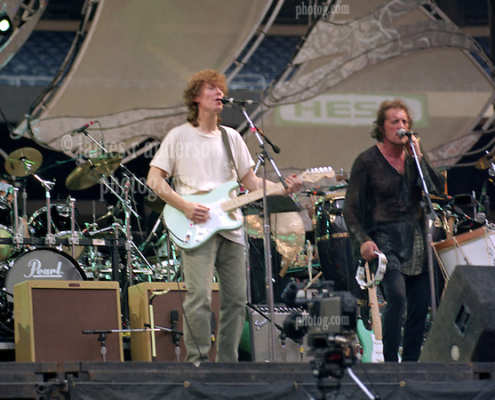
Steve Winwood and Traffic, with Rosko Gee and others, Live at Giants Stadium 03 August 1994
With the thirtieth anniversary of the last Traffic album coming in a special interview here next week In the Studio, we wanted to get the Traffic jam flowing with the ultra-rare “No Spark” unplugged version of the Low Spark of High-Heeled Boys title song performed by Steve Winwood and the late Jim Capaldi in February 1994. This is primal stuff stripped of any artifice, just two masters in the zone. –Redbeard
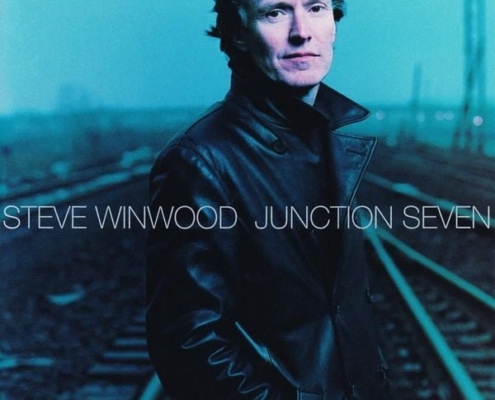
“Narada Michael Walden says that each decade has its own rhythm,” Steve Winwood informed me here In the Studio about his 1997 Junction Seven co-producer . “He says that’s what separates the music of the ’60s,’70s,’80s, and ’90s.” Walden certainly would know, having impressed providing percussion with stints in John McLaughlin’s Mahavishnu Orchestra, Weather Report, Jeff Beck, Robert Fripp, Carlos Santana, and Journey as well as music producer for Aretha Franklin, Whitney Houston, and Jefferson Starship to name just a few. Steve Winwood talks about his seventh solo album, Junction Seven, and how a so-called “solo” album inevitably isn’t at some point in the creative process, in my classic rock interview. -Redbeard
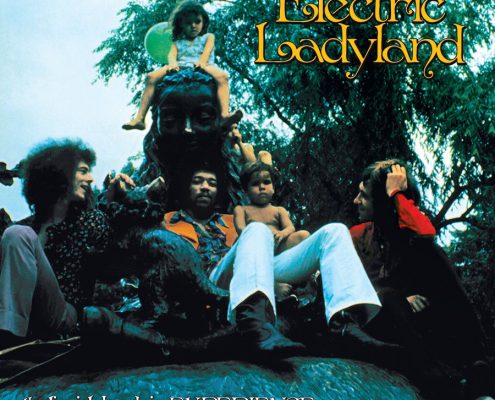
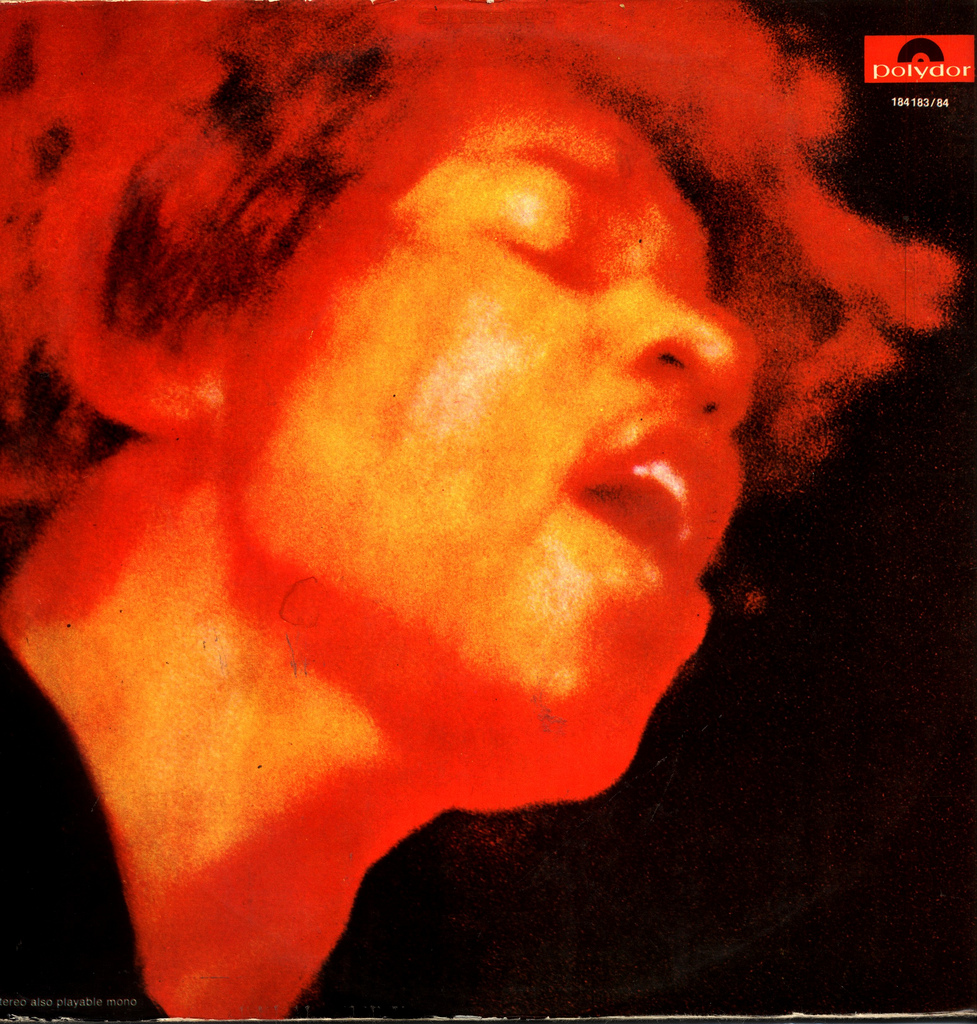
Jimi Hendrix and his British trio the Experience created a landmark double album in 1968 called Electric Ladyland, but now this deep into the 21st century it may be difficult for many to fully understand the context in which it was made and the world into which it was subsequently released. When Hendrix had been “discovered” by Animals bass player Chas Chandler only two years earlier in a New York City Greenwich Village club on the equivalent of “open mic night”, Jimi was fresh off the chitlin circuit purely as an anonymous sideman. After relocating to London with the veteran Chandler as mentor/co-manager/producer, Hendrix released two game-changing albums before returning back to America.
But as you will hear in the conclusion of this classic rock interview with biographer/ reissue producer John McDermott plus one of the last interviews with Jimi Hendrix Experience drummer Mitch Mitchell, neither Chandler nor Experience bass player Noel Redding were on board with the change. Hendrix’s joy to be back is apparent in his embrace of many formative musical influences including soul, rhythm and blues, and jazz, but the fact that the April 1968 assassination of the leader of the American civil rights movement, the Rev. Dr.Martin Luther King jr, which had touched off violent race riots across many major U.S. cities, shattered any naivete that here was an African-American leading an otherwise all white band on tour across the U.S., including the heavily segregated South, during the most violent year in America since World War II. –Redbeard
By Spring 1968 Jimi Hendrix had returned triumphantly to the US from London after fifteen months, having electrified the rock world with two smash albums, the revolutionary debut Are You Experienced? and Axis: Bold as Love. It was all being organized by veteran English musician Chas Chandler of The Animals who had given up pop stardom after discovering Jimi Hendrix struggling in New York’s Greenwich Village a scant two years earlier. Wagering everything, Chandler took Jimi to London, put a band together for him, financed the project out of his own pocket, and mentored the young raw Hendrix through those first two groundbreaking recordings. But practically everything about this third album Electric Ladyland would be different.
For starters, Electric Ladyland was double in size. The album’s covers (there were several, front, back, and inside, and not without controversy) looked different than either RUX? or Axis. Electric Ladyland‘s sound was quite varied, at times more muscular, earthier, bluesier, jazzier, less psychedelic, more…well…American sounding. “A fever dream of underwater electric soul…” is how Rolling Stone editors describe the double album when ranking Electric Ladyland at #55 on their Top 500 Albums of All Time.
Hendrix’s return to the homeland security of New York City, after living and recording Are You Experienced and Axis: Bold As Love in London, is reflected in his embracing so many Afro-American musical touchstones on Electric Ladyland. These very un-British touches include the falsetto background vocals of “Crosstown Traffic”, the rave up rhythm ‘n’ blues of Earl King’s “Come On pt 1”, the jazz of “Rainy Day Dream Away/ Still Raining, Still Dreaming” with Buddy Miles laying down an Elvin Jones-like groove, and the steamy hot midnight blues of “Voodoo Chile” featuring the thunderous bass of Jefferson Airplane’s Jack Casady, the soulful Hammond organ of Traffic’s Steve Winwood, and the wettest, widest lead guitar ever captured on tape courtesy of James Marshall Hendrix. Biographer and reissue producer John McDermott is featured along here along with one of the last interviews with dear sweet Experience drummer John “Mitch” Mitchell, in the first of our two-part In the Studio special on Electric Ladyland. –Redbeard