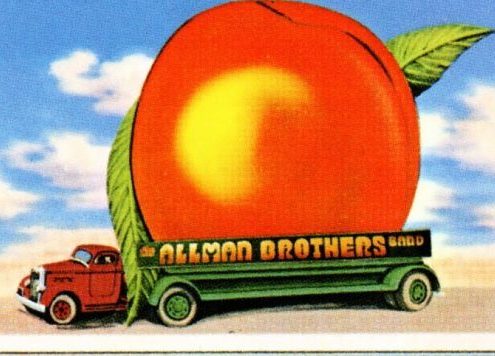
The legendary Allman Brothers Band had officially disbanded even prior to the deaths of drummer Butch Trucks and singer/organist Gregg Allman in 2017, but to this day I still marvel how it all could have possibly continued for almost half a century after what happened so early on at a critical launching point in the band’s career during the making of their fourth album, Eat a Peach.
Older sibling Duane Allman already was a veteran studio player on hit sessions at Muscle Shoals Studio. Duane was the American slide guitarist who traded lick for lick with the great Eric Clapton as Derek & the Dominoes on the legendary Layla album. Again, it was Duane Allman who formed and led the Allman Brothers Band, and behind them an entire new Southern Rock movement. But on October 29 1971 midway through the recording of what would become Eat a Peach, Duane died riding his beloved motorcycle.
Yet with almost superhuman resolve, singer/songwriter/organist Gregg Allman and the rest of the original group would not only continue but reach even greater heights, eventually inducted into the Rock & Roll Hall of Fame. In this interview marking the fiftieth anniversary of this bittersweet album, Gregg Allman (who died May 2017) and ex-guitarist Dickey Betts (died 4/18/24) reveal how the music sustained the brotherhood. -Redbeard
Before you can perform and record an iconic live album such as The Allman Brothers Band 1971 Live at Fillmore East, first you have to actually get there. The life of a professional rock musician is synonymous with a certain restless existence (the late Doors singer/ lyricist Jim Morrison is quoted as saying that Doors songs were “about life, death, and travel…”). Only the formally trained one percent of musicians can make a living staying in one location playing in an orchestra or doing regular recording studio session work, so after the standard equipment of guitars, amps, and drums are acquired, the next essential equipment to graduate from the garage for every band is a van or box truck to haul it all, for a series of road trips doing one night stands in bars, bar mitzvahs, and nightclubs. In the case of the Allman Brothers Band Live at Fillmore East, my guests were there for all of it: guitarist/singer the late Dickey Betts and the late great Gregg Allman.
By July 1971, the Allman Brothers Band had migrated from North Florida to their record company/manager’s home base of Macon GA. They too had been following the time honored tradition of long, arduous road trips from gig to gig by van. In those days, acts that scored Top 40 hits could travel by single engine plane to make far flung one nighters, and tragically some of our greatest talents of all time, including Buddy Holly, Patsy Cline, Otis Redding, Jim Croce, and Lynyrd Skynyrd all would have to fall out of the sky before artist managers, booking agents, and concert promoters finally realized that they were putting their most precious assets at risk night after night by such illogical tour routing. Without a hint of romance, the late Gregg Allman recalled those days in my classic rock interview.
( Duane Allman 7/31/71 in a cornfield in North Baltimore OH)
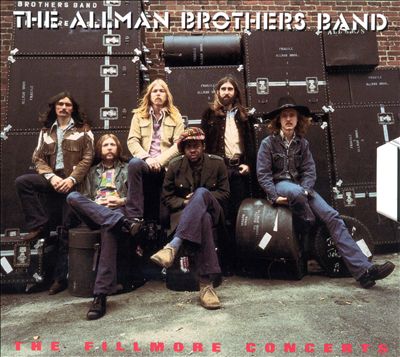
The original Allman Brothers Band had to be seen and heard live to be fully appreciated, and in 1971 I was fortunate to see them… twice. Now we know that year to be both the apex of the original band and yet bittersweet, a time of commercial and critical breakthrough as well as tragic heartbreak, but before either transpired, that March13 the Allman Brothers Band played multiple shows at Bill Graham’s Fillmore East music hall in New York City which were recorded. By that time the second Allman Brothers Band album Idlewild South had breached the Top 40 sales plateau for the first time, and bandleader Duane Allman had by then recorded the now-legendary Layla album with Eric Clapton as Derek and the Dominos. As a result, Duane Allman quickly was gaining a reputation as the premiere slide guitarist, and the band fronted by him and younger sibling Gregg Allman on vocals and organ headlined four shows over two nights on March 13-14 at the Fillmore East, as well as the venue’s closing night in late June 1971. Even if you have collected the original Allman Brothers Band Live at Fillmore East (ranked impressively at #49 all time by Rolling Stone magazine on it’s Top 500 All Time list), theEat a Peachlive sides, the Duane Allman Anthologies 1 and 2, and the Dreams box set, there were fifteen additional live performances at the Fillmore East in 1971 that had never been released on vinyl until 2014 as The 1971 Fillmore East Recordings. Available as four vinyl records on the 45th anniversary of the original’s release, it is every note by the Allmans from the March and June shows. Notably, the entire first show on the first night, never available before, now comprises the entire first disc. In this classic rock interview, the late Gregg Allman and original guitarist along with Duane, former member Dickey Betts, recall the legendary performances. – Redbeard