Tag: Ray Davies

  • The Kinks- Lola 55th Anniversary- Sir Ray Davies

    The Kinks- Lola 55th Anniversary- Sir Ray Davies

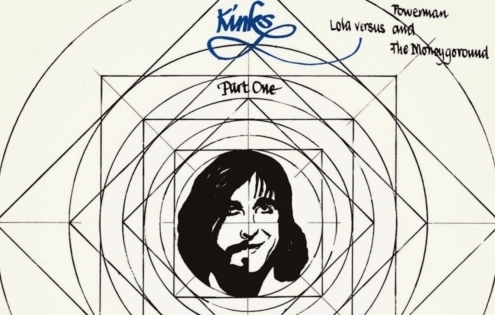
    In Autumn 1970 The Kinks presented the all-powerful, very conservative British Broadcasting Corporation with their new single, “Lola”, which sang of a transvestite lover who “walks like a woman but talks like a man…” and whose sweet kisses “taste just like Coca Cola…”.

    “Well now, that simply won’t do,” said the BBC censors. “You are banned from radio airplay unless you change the offending lyrics.” So composer Ray Davies re-recorded the shocking lyrics, this time singing about a trans lover who tasted not of Coca Cola but “cherry cola” instead.

    “Much better,” replied the BBC. You can’t make this stuff up.

    Fifty-five years ago The Kinks’ lead singer/songwriter Ray Davies kast a keen eye on his kompatriots in the music business with the koncept album Lola vs Powerman and the Money-go-Round, sending up not only their peers The Beatles and the Rolling Stones but us in the music press taking it all so seriously. Sir Ray joins me here In the Studio  for a droll, witty, incisive look back at the hits “Lola” (Top Ten in both US and UK), and “Apeman” (#5 UK).

    My dear friend  Patrick Moore, a retired Inspector with the London Metropolitan Police (Scotland Yard) as well as a guitarist and keen music fan, writes,”My personal and professional experience of Sir Ray Davies was his being cantankerous and willfully contrary (though I still love the Kinks’ music). As a Londoner, I think they produced the best collection of ‘London songs’...”

    Patrick’s  assessment of Sir Ray notwithstanding, the relative importance of The Kinks as somewhat less than The Who and Small Faces may be a prevailing one for the UK,  at least in the US the band’s import musically is absolutely seminal. This inspired me to share one of several classic rock interviews I’ve had with Ray Davies about the essential band, The Kinks’ earliest  years, and their musical legacy on the double-nickel anniversary of Lola vs Powerman….Redbeard

  • Kinks- One for the Road- Ray Davies

    Kinks- One for the Road- Ray Davies

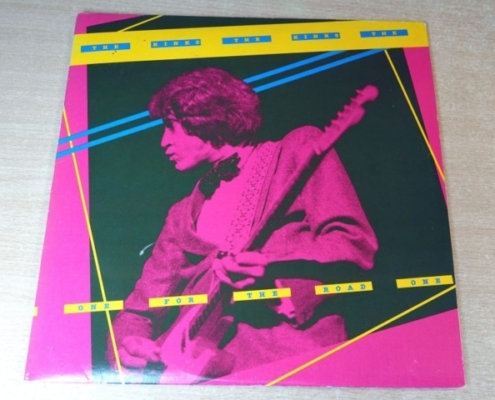
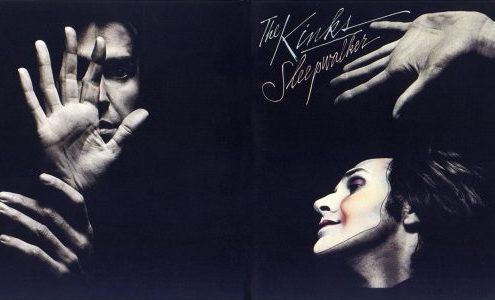
    The Kinks finally were able to mount a sold-out headlining American tour following the late Seventies triple crown of studio albums Sleepwalker, Misfits, and Low Budget, and the recordings from that tour were released  as the double album One for the Road. “When we’re on stage is the only time when it’s not serious,” muses Kinks kingpin Ray Davies, the seminal band’s lead singer and masterful songwriter. “There’s so much recording nowadays that’s gotten to be so high tech and so intense. (Recording live) took some of the pressure off of it, because the guys in our band, they’re pretty good. I’m probably the worst musician in the band…”

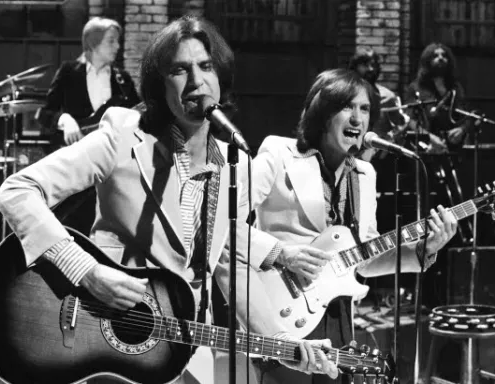
    “The Kinks have always been a very good live band,” continues Sir Ray, now officially a “Well Respected Man” after being knighted by (then Prince) King Charles. “We’re not fond of studio recording, we never have been, because we started off as a dance band, really, getting gigs at colleges and things. We find it boring recording tracks.”

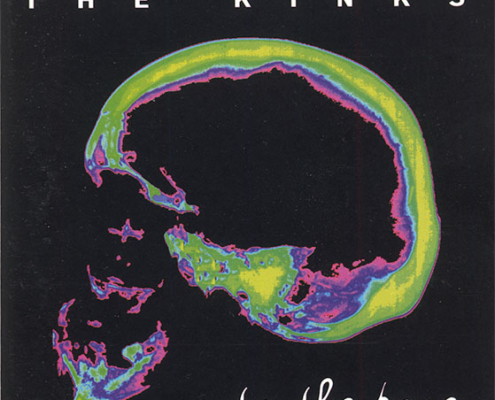
    One of the best features of the Kinks’ 1996 double live/unplugged album To the Bone was the balance of material, across the distinct eras and multiple record labels, by   the veteran British Invasion band that became harbingers of heavy metal with “You Really Got Me” and “All Day and All of the Night”, progenitors of punk rock with “Lola” and “David Watts”, and purveyors of perfect pop with “Waterloo Sunset” and “Celluloid Heroes”. “I think there’s an energy in The Kinks’ shows that goes kind of a step further,” continues Ray Davis in my In the Studio classic rock interview. “The audience is very much a part of what we do. It’s a subliminal thing that goes on. The audience is a very important factor in what we’re doing. It’s not just us going out, (you) seeing bands, you like their hits and (hearing them ) duplicate their hits, ‘Thank you and good night’, and go home. There’s more to it than that. There’s something else that goes on in a Kinks show. Sometimes it’s nice, and sometimes it’s hell out there! But you never know until we’re on stage. It’s similar I think to going to a football game,” the Poet Laureate of Rock points out. “You know who might win, but you never can tell until the final whistle. It’s a bit like a Kinks concert.”

    Part one of two. –Redbeard

  • Kinks- Picture Book- London 1996

    Kinks- Picture Book- London 1996

    “The Kinks are a really good live band. We’re not so keen on recording studios,” Ray Davies told me. Maybe that’s why the Kinks have owned their own studio in London for so long, in order to minimize  many of the irritants from recording in public facilities for hire. Whatever the case, this live-in-the-studio version of “Picture Book” by The Kinks in 1996 is a real gem. -Redbeard

  • The Pretenders- Chrissie Hynde

    The Pretenders- Chrissie Hynde

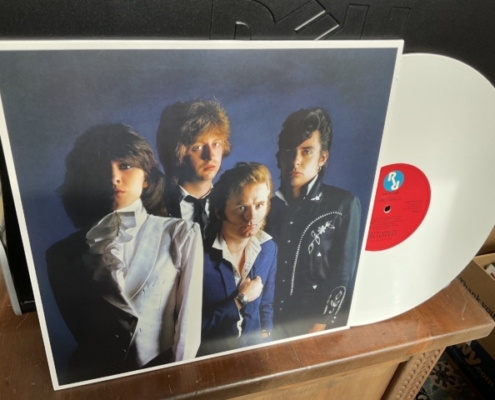
    We had never met anyone in rock music quite like The Pretenders’ bandleader Chrissie Hynde, and honestly, in the  forty-plus years since The Pretenders debut, I still haven’t. And if anyone tried to tell her story, you would swear it was some punk rock fairy tale dreamed up by a screenwriter with an over-active imagination. That’s why I have Chrissie Hynde here to speak for herself In the Studio  about The Pretenders/ Pretenders II, one of rock’s most important one-two Post-Punk punches.

    To be completely honest, the almost instant appeal of The Pretenders debut, practically  from the outset in January 1980, caught me and not just a few of my American radio brethren off guard. Rock’n’roll in general, and rock radio in particular, being such a boys club back then, we could understand Pat Benatar’s brand of Eighties feminism singing, “Hit me with your best shot” all the while gyrating pixie-style in a skimpy leotard (in fairness, not her idea). But the woman out front of The Pretenders clearly wore the pants in the family, and those were LEATHER pants behind that electric guitar.

    I’ll never forget my first two encounters with The Pretenders singer/songwriter. The first was my live radio interview on ROCK 103  while in Memphis during their first U.S. tour April 4, 1980. Although the band had been there less than 24 hours, Chrissie had already spent the night in a Memphis jail, but not before she kicked out the rear window of a police cruiser which had been called to escort her away in handcuffs from the local TGI Friday’s restaurant. To say that our initial live interview was tense the next day is an understatement. In the course of discussing “Precious”,”Mystery Achievement”, The Pretenders’ cover of The Kinks’ “Stop Your Sobbing”, and Chrissie’s authentic portrayal of a greasy spoon diner waitress in the video to “Brass in Pocket”, I must admit that I was intimidated by how this supposed rock rookie took control of the conversation, and bristled indignantly at any perceived slight by the interviewer.

    Nevertheless, she and original members guitarist James Honeyman-Scott, bass player Pete Farndon, and drummer Martin Chambers quickly followed up the impressive debut with an Extended Play mini-album containing three of my personal Pretenders favorites, the propulsive rocker “Message of Love”, the jangly wistful waltz “Birds of Paradise”, and the brilliantly compact, surprisingly mature “Talk of the Town”. The subsequent full album Pretenders II  would peak at #7 UK, #10 in Billboard, but sadly it would be the final effort of the original band, the reasons Chrissie Hynde delves into quite frankly in my classic rock interview.
    My next encounter with Ms.Hynde was five years later, backstage at the Live Aid concert in Philadelphia on July 13 1985, where I was interviewing rock’s biggest stars including Eric Clapton, Jimmy Page & Robert Plant, Phil Collins, Tom Petty, Ozzy Osbourne, Bryan Adams, even movie stars Tim Robbins & Jack Nicholson. I spotted Chrissie Hynde standing in the doorway of her dressing room trailer, looking very sharp in a tailored sky-blue suit, with red henna highlights in her hair. As I approached her with my microphone in hand, suddenly I became aware of her steely stare & what felt to be an invisible force-field that projected about five feet in front of her that announced, “Do NOT put that thing in my face unless you want it embedded in your ear.”
    I decided to go talk to Jack Nicholson instead, much less intimidating.

    But another 13 years later it seemed that motherhood & maturity allowed Chrissie Hynde to “wear it well”, & as you will hear, I found her to be frank, thoughtful, & gracious in recounting her very beginnings from growing up in Akron, Ohio to eventually coming full circle…literally… to the Rock and Roll Hall of Fame just an Uber ride north in Cleveland. –Redbeard

  • Kinks- Low Budget- Sir Ray Davies

    Kinks- Low Budget- Sir Ray Davies

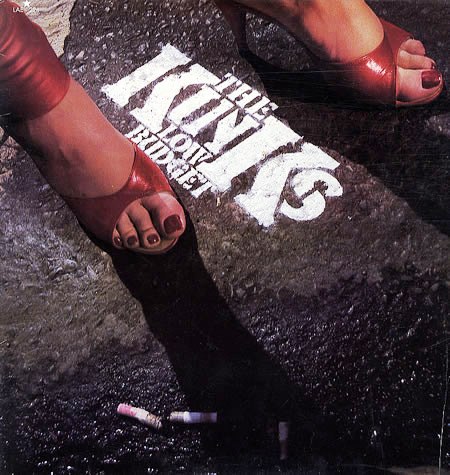
    Generally regarded as classic rock godfathers shoulder-to-shoulder with the Beatles, Rolling Stones, and The Who, my guest In the Studio Ray Davies explains here why the Kinks were almost a decade behind their British Invasion peers in America when The Kinks released the trifecta of Sleepwalker, Misfits, and their biggest seller, Low Budget, back-to-back in 1977-79.

    With Low Budget, the Kinks’ July 1979 biggest seller in their long storied career, it becomes apparent that The Kinks were the ultimate slacker band. Led by the Poet Laureate of Rock, Sir Ray Davies, it certainly wasn’t for lack of creative brilliance, but for a dearth of ambition.

    The Kinks were probably a lock for Rock and Roll Hall of Fame induction for their British Invasion Sixties output alone, but the  1970s were tough going for them until reclaiming their rock bona fides with a trifecta of revitalized rock on 1977’s Sleepwalker,  1978’s Misfits,  and their biggest seller ever, Low Budget   in July 1979. The Kinks’ leader and poet laureate of rock, Sir Ray Davies, joins me In the Studio for the stories behind “Juke Box Music”,”Sleepwalker”,”Live Life”, the best Ray ballad since “Celluloid Heroes” with “Rock and Roll Fantasy”, Low Budget‘s “Gallon of Gas”,”(Wish I Could Fly Like) Superman”,”Catch Me Now I’m Falling”, and the title song.- Redbeard 


  • Kinks- Sleepwalker/Misfits- Ray Davies

    Kinks- Sleepwalker/Misfits- Ray Davies

    The Kinks were probably a lock for Rock and Roll Hall of Fame induction for their British Invasion Sixties output alone. But then the first half of the Seventies was tough sledding for them until reclaiming their rock bona fides, starting with February 1977’s Sleepwalker, the Kinks’ sixteenth (!!) studio album, and much of what turned up on 1978’s Misfits. The Kinks’ leader and poet laureate of rock, Sir Raymond Douglas Davies, joins me In the Studio for the stories behind “Juke Box Music”,”Sleepwalker”,”Live Life”, “Rock and Roll Fantasy” (the best Ray Davies ballad since “Celluloid Heroes”),  and the title song on Misfits.

    Historically lumped into the mid-Sixties British Invasion bands with The Beatles, Rolling Stones, and The Who, London’s lovable Kinks nevertheless took a considerably different, albeit unintended, path into the Seventies, particularly in America. At the era-defining iconic rock events from 1967 to 1977…Monterey Pop Festival, Woodstock, Altamont, Isle of Wight Festivals, Watkins Glen, Day on the Green…where were The Kinks?

    Inexplicably, this band who had reeled off a string of Top Ten hits in both the UK and US with “You Really Got Me”,”All Day and All of the Night”,”Tired of Waiting for You”,”Sunny Afternoon”,”Victoria”,”Apeman”, and the timeless “Lola, all which had helped to define rock’n’roll on radio in the latter half of the Sixties, went MIA there, seemingly sleepwalking through much of the Seventies. But it certainly was not for lack of trying. The exquisite “Celluloid Heroes” appeared on The Kinks’ 1972 album Everybody’s in Showbiz,  yet still had disappointing US sales. Ray Davies then wrote a series of musical shows, including 1973’s Preservation Act 1 (a double album, no less); Preservation Act 2  followed a year later; and Soap Opera bubbled up in 1975. Not a one broke into the US Top Fifty sales.

    When the opportunity to record for veteran record man Clive Davis’ Arista label appeared in 1976, it came with a corporate caveat: no concept albums. Songs including “Sleepwalker” and “Juke Box Music”, with Ray Davies giving the good-natured nod to critics who felt that his preceding five year output had been too precious for rock’n’roll, helped to put The Kinks back on influential US rock radio in 1977, which in turn permitted them to headline major US arenas for the first time. The momentum continued into the legendary band’s  Misfits in early Summer 1978. –Redbeard

  • Kinks- To the Bone Best Of pt 2- Ray Davies

    Kinks- To the Bone Best Of pt 2- Ray Davies

    “Recording companies are worse than ex-wives, I think. They hang onto things longer, and they get more cruel and more trivial the more that you deal with them. Especially when you leave them. They like to hang onto everything,” quips my guest, singer/songwriter Ray Davies of The Kinks. In the mid-90s when The Kinks decided to release a comprehensive career “best of” called To the Bone, recorded live in concert as well as intimately unplugged, no one knew that the century-old business model of the recorded music industry was about to disintegrate barely ten years later, virtually overnight, in large part due to the digital disruption of the internet. But what both sides of the equation, the musicians and the record labels which recorded and distributed the music, did know then was that practically all of the British Invasion cash cows like The Beatles, Rolling Stones, The Who, and The Kinks were about to have their record company copyrights expire after twenty-five years, and the ownership rights to these iconic songs revert back to the bands.

    When I good-naturedly poked Sir Ray about the Kinks’ reputation as being, shall we say, mercurial on tour from night to night, he didn’t deny it. “Well, even when we’re inconsistent we’re the best band in the world,” Ray Davies chuckles.”I remember doing Madison Square Garden (in New York City) for two sold out nights. I walked on stage, tripped over a microphone lead (cord), and fell into the orchestra pit! ‘Rock star’ isn’t something that you can associate with The Kinks, because it’s everything that we’re ‘anti-‘. We’ve always been that way, and the more various managers and record companies have tried to make us posture and make us rock gods, there’s something that turns us off of that. Even among our peers (Beatles, Rolling Stones, The Who) we’re regarded as outsiders, which is fine by me.That’s why I think a lot of newer bands that come along, they kind of identify with The Kinks. I suppose if they are the ‘children of a family’, then we are a lot like older relatives. The Kinks are sort of vagrant uncles that come back to the house on Sunday for the free meal!” Part two of two. – Redbeard