Tag: top selling albums 1972

  • Van Morrison- His Band & Street Choir 55th Anniversary

    Van Morrison- His Band & Street Choir 55th Anniversary

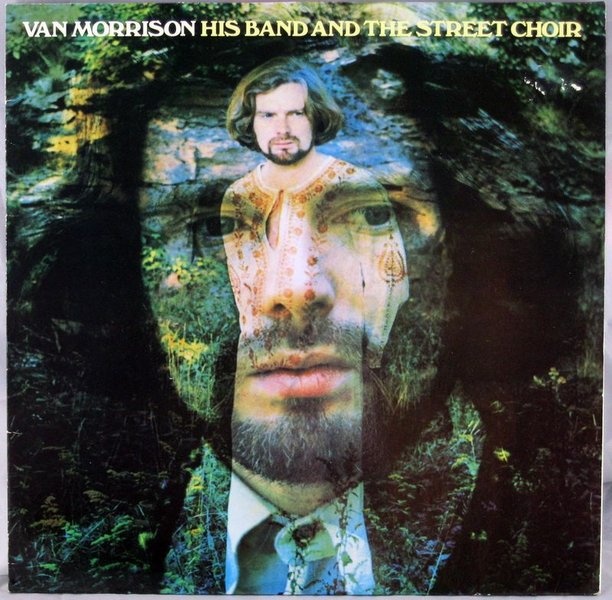
    Not even a quarter way into his six decade career, Irish singer/songwriter Van Morrison was already stringing together a series of soon-to-be-classic albums including November 1970’s His Band and Street Choir. This album followed closely on the heels of the revered Astral Weeks and Moondance, with their obvious folk and jazz influences, with a decidedly rhythm’n’blues feel on songs such as the horn-driven “Domino” and “Blue Money”.

    This rare 2012 classic rock interview was conducted in Belfast by the BBC’s intrepid John Bennett. If you are tired of all of the “eyes wide shut” Access Hollywood-type glitz and glam representations of the pop music business, then you really owe it to yourself to listen to this knowing blunt trauma confessional from Van Morrison, who  had a front row seat with Garage Rock grandfathers Them, then an all-access pass to rock’n’roll fame with Bert Berns’ Bang Records and “Brown Eyed Girl”, before reeling off a string of legendary solo albums including Astral Weeks, Moondance, Tupelo Honey, His Band and the Street Choir.
    With Belfast-born Van Morrison’s July 1972 sixth album Saint Dominic’s Preview, the mainstream rock audience finally caught up to the quality jazzy, folksyrhythm’n’blues Morrison had been belting out consistently since critics began lauding his  Astral Weeks four years earlier. When radio listeners heard “Jackie Wilson Said”, “Gypsy”, “Listen to the Lion”, and the title song “Saint Dominic’s Preview”, produced by Ted Templeman with some of San Francisco’s finest studio side musicians including Ronnie Montrose, they rewarded Van Morrison with Top 15 sales, his best seller for almost forty years.-Redbeard

  • Moody Blues- Seventh Sojourn- Justin Hayward, John Lodge
    Moody Blues- Seventh Sojourn- Justin Hayward, John Lodge

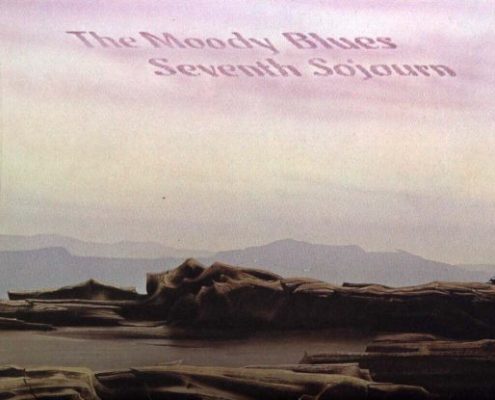
    Time, the true arbiter of art, has been most kind to the Moody Blues’ Seventh Sojourn over more than five decades since its November 1972 release, which cannot necessarily be said for all of the band’s releases up until then. When the subject of rock star excess and decadence is broached, the last band that could possibly come to mind would be Birmingham England’s Moody Blues. After all, singer/lead guitarist Justin Hayward, the late bass guitarist/singer John Lodge, keyboardist Mike Pinder, the late flautist/singer Ray Thomas, and dearly missed drummer Graeme Edge spent their first seven albums searching for Truth with a capital “T” through music, love, and Transcendental Meditation. Yet by the time  their late 1972 album Seventh Sojourn became a worldwide #1 seller, the enormous success that had supplanted the Moody Blues’ abject poverty immediately prior to releasing 1967’s Days of Future Passed only five years earlier, had transformed their lives. But according to Justin Hayward, it wasn’t always for the better.

    “I joined the band when I was nineteen,” confesses Hayward. “I did all of my growing up in the band. (By 24) I didn’t have any life (outside the Moody Blues). I didn’t exist as a person.”

    John Lodge of the Moody Blues remembers vividly a powerful moment on what became the longest, highest-grossing concert tour to date in rock history in 1973-74. “We’d chartered our own Boeing 707 and hired a keyboard player to play (on the huge four-engine jet) in a disco floor…for just the five of us! We had our own butler. And I remember walking from the front of the 707 to the back restroom…past the organist playing, a bartender making drinks, past a sitting room with a fireplace, past two bedrooms. And when I was in the toilet I thought, ‘I’ve never been so lonely in my life! This is ridiculous. I don’t really want to be on this plane’.” Along with Jethro Tull’s #1 seller Thick As a Brick   and Close to the Edge  by YES,  the third jewel in 1972’s triple crown of progressive rock, Seventh Sojourn,  comes from the Moody Blues. Rock historians are quick to point out that, with the Beatles two years gone, the Rolling Stones , The Who, and Led Zeppelin were vying for the unofficial title of World’s Greatest Rock Band then. Yet it’s the Moody Blues who were equaled only by  the Beatles in placing two albums in the Top Five sales chart simultaneously when Seventh Sojourn  went to #1 in the U.S. in 1973, along with a grassroots radio revival of Days of Future Passed.

    Moreover, the Moody Blues’ appeal was so worldwide that they embarked on the longest extended tour in history up to that time and in so doing revolutionized the concert tour industry. However, the price of superstardom from such songs as “Isn’t Life Strange”,”Lost in a Lost World”,”For My Lady”,”New Horizons”, and “I’m Just a Singer in a Rock & Roll Band” turned out to be exceedingly high in karmic cost, as you will hear from the Blue Jays, Justin Hayward and John Lodge. –Redbeard</em

  • Emerson, Lake, and Palmer-Trilogy- Carl Palmer, the late Keith Emerson & Greg Lake
    Emerson, Lake, and Palmer-Trilogy- Carl Palmer, the late Keith Emerson & Greg Lake

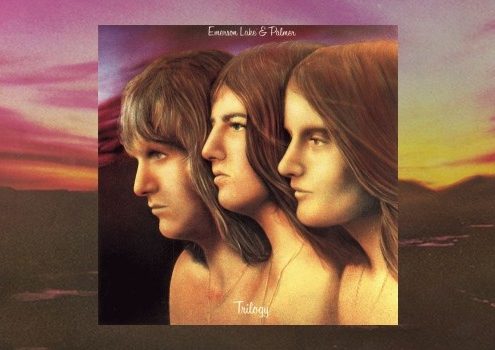
    Trilogy, Emerson, Lake, and Palmer’s third studio album, and fourth overall in barely two years, was released  in July 1972, a high watermark peak for Progressive Rock’s quality as well as massive popularity ( #2 UK, #5 Billboard in the US ). “Lucky Man” from their debut Emerson, Lake, and Palmer may have remained their most famous song, and their fourth studio album Brain Salad Surgery may have been their best seller, but Trilogy has remained a favorite over these many changes in rock music as the place where Keith Emerson, Greg Lake, and Carl Palmer’s ambitions to expand the palette of rock music were perfectly balanced by terrific songwriting and production on “The Endless Enigma”, “From the Beginning”, a terrific concert showstopper cover version of Aaron Copland’s “Hoedown” from the stage musical Oklahoma!, and the title song opus.

    The late Greg Lake and sole survivor Carl Palmer continue this in-depth conversation with some hilarious stories, including how the late Keith Emerson accidentally invented the mosh pit!                                                  Carl Palmer (l), Keith Emerson (c), Greg Lake (r).

    Keith Emerson died suddenly at age 71. Keith was a pioneer in progressive rock, and a true gentleman. I am truly saddened that he is gone. And few knew at that time that Greg Lake was terminally ill, and Greg’s cherubic smile and choirboy voice were stolen about six months later, leaving Carl Palmer to serve here as the legacy historian of  Emerson, Lake, and Palmer’s  Trilogy on its golden anniversary, which soared to the #5 seller in the US shortly after release in July 1972.- Redbeard

  • The Eagles- the late Glenn Frey & Randy Meisner
    The Eagles- the late Glenn Frey & Randy Meisner

    Down through the history of mankind, first flights such as The Eagles first sortie in 1972 are revered: the Montgolfier brothers in Paris in 1783 with their hot air balloon; the Wright brothers in 1903 with powered flight; Charles Lindbergh’s first transatlantic flight; Yuri Gagarin first into space in 1961, Alan Shepard first American to do so, and Apollo 11’s Neil Armstrong, Buzz Aldrin, first to land on the Moon and return with Michael Collins in July 1969; and on Earth, Dick Rutan and Jeana Yeager flew around the world in 1986 without ever landing!

    In June 1972, when the debut album by a Southern California-based band The Eagles was quietly released, it had none of the anticipated date-with-destiny public spectacle shared by all of the aforementioned events. But history proved that the original quartet’s first flight would quickly allow a career to take wing that would soon soar, resulting in The Eagles becoming the most popular American band ever. By June 1972 America’s musical continental drift had shifted dramatically westward, in part a reaction to the psychedelic sounds of the Summer of Love five years earlier. Bob Dylan had put upstate New York’s Woodstock into his rear view mirror, headed for Nashville’s skyline, while The Band likewise bailed for Malibu California a continent away. David Crosby, Stephen Stills, and Graham Nash had left their respective internationally established bands to convene in Los Angeles’ Topanga Canyon where The Byrds already had flocked around newcomer Gram Parsons. Dylan’s “Lay Lady Lay”,”Teach Your Children” by Crosby, Stills, Nash, and Neil Young, and John Sebastian’s Lovin’ Spoonful hit “Nashville Cats” all had snuck pedal steel guitar onto U.S. Top 40 radio, but these were anomalies rather than a trend, as AM pop stations were peppering in more rock singles in response to new competition from FM progressive rock stations in 1972. Despite those few exceptions, it is impossible to overstate just how rigidly segregated musically the pop and country music establishments were when the first Eagles album was released in June 1972. The Roy Acuff-era Nashville-centric radio format, officially known then as Country & Western, was so autocratic that they considered Buck Owens’ Bakersfield recordings almost heretical. And Willie and Waylon who? Thus in Summer 1972 the rock media viewed the “country rock” hybrid as an orphan, while Nashville’s all-powerful Music Row mafia rejected the bastard spawn as patently illegitimate. It was into this musical migration westward that rode two independent, unheralded, and very young musicians, Don Henley  (2nd from right) from Northeast Texas and Glenn Frey (far right) from Detroit Michigan, who would meet at country rock’s nexus in Southern California where they would recruit country rock pioneers Bernie Leadon(far left) from the Flying Burrito Brothers and Randy Meisner  ( 2nd from left) of Poco. Frey, who spoke to us before his shocking passing in January 2016,  and Meisner join me in this classic rock interview recalling the Eagles’ debut, impressively containing two Top 10 hits “Take It Easy” and “Peaceful Easy Feeling”, plus the Top 20 ” Witchy Woman”. – Redbeard

  • Jethro Tull- Thick As a Brick- Ian Anderson

    Jethro Tull- Thick As a Brick- Ian Anderson

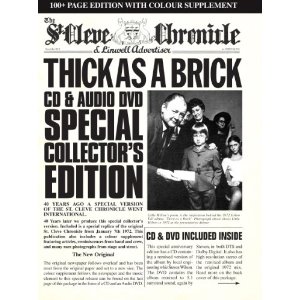
    Unquestionably and uniquely in a category all its own, Jethro Tull’s 1972 epic Thick As a Brick  is the only album in music history to attain #1 sales on Billboard containing only one song, albeit 43 minutes long! And as you will hear in this classic rock interview with my guest  composer/singer/flautist Ian Anderson, Thick As a Brick‘s ultimate irony  is that the album was conceived by Anderson as a total spoof of music critics purporting to ascribe imaginary meaning to Jethro Tull’s preceding Aqualung   album, as well as a send up of rock’s progressive darlings at the time.

    Redbeard:   As I was going back and researching our many previous conversations about your Jethro Tull body of work, I noticed that you’re very careful never to refer to Thick as a Brick,  the original, as a rock opera.  Why not?

    Ian Anderson: Well, it was a rock rambling, really. It was supposedly a spoof, a parody aspect of the original Jethro Tull Thick As a Brick. But it was supposed to be written by an eight year-old boy, a wannabe poet, who is having, I suppose, slightly beyond his years of rambling pre-puberty moment of gushing forth with  sort of grandiose ideas. And it was a fun thing.  This was the year (1972) of Monty Python, this was a year of the development of quite surreal British humor into an international phenomenon.  So it was quite timely in the sense that this particular album should be a spoof,  a parody, a send-up, a complete fiction into which people quite readily bought,  usually knowingly, but sometimes they didn’t get the joke and took it all absolutely seriously. But for the most part, I think people understood it was a British humor thing.  And my feeling back then was that it was a timely event.  It wouldn’t have worked a year or two earlier or it wouldn’t have worked a year or two later.  Because by then we were into a major change of music culture  in the U.K., particularly as the so-called punk year or two started to come around.  So this was not meant to be a rock opera, it was meant to be the ramblings of a young, precocious mind.  And I never really thought about it as being in any way a parallel perhaps to something like (The Who’s) Tommy  or even having the slightly mysterious (Pink Floyd) Dark Side of the Moon  kind of aura about it.  This was just whimsical light-hearted fun,  although  it had its serious moments embedded in there too.  But no, never a rock opera, just a bit of rambling surreal British humor. RB:     You  told me previously  that Thick as a Brick was conceived as a direct response to many critic’s assertions that Aqualung was a concept album, something that you have consistently denied ever since.  And that the original Jethro Tull #1 seller Thick as a Brick was this clever elaborate send-up of a concept album.  How long did it take you to realize that not everyone got the joke?

    IA: Well, I thought when I wrote the album prior to its release that it would be divided down the middle between those that got the joke immediately, even just reading the album cover,  they would know that there was a joke there.  And that other people wouldn’t immediately get it but most of them would, but not until after they parted with their money and actually bought the thing.  I’m just kidding.  But the reality was I suppose in some countries they never did get the joke, maybe not even to this day.  But I think it was immediately apparent in the U.K., maybe in Australia, maybe in one or two other places, it took a little longer maybe in the USA for some people to realize that it was a parody, it was a spoof and in some places as I suggested like Japan, or in countries that are notorious for a different culture, perhaps the inability to see humor in the same way as most of the rest of us.  But I don’t want to single out the Japanese, let me toss in the Germans, the Swiss and the Austrians as well ! But it maybe just wasn’t in their culture to see that kind of a humor at face value, it took ‘em awhile to figure it out.  If indeed they figured it out at all.  And it was interesting doing the multi-lingual translations of the lyrics of the 2012 Jethro Tull album Thick as a Brick 2, because I was working with Germans, Spanish, Italians, Russians, Czech,  so in a way trying to explain some of the elements of my often wordy and sometimes obscure lyrics…

    RB:     Yeah, good luck with that! IA:       … I did encounter  some deep levels of conflict with culture clash.  Ya know in the sense that it didn’t register, they didn’t have a word, or words to describe a certain thing that we understand, or might easily translate into Italian or Spanish, but the Germans didn’t have a word for it.  So yeah, it was kind of interesting, I think because I deal in words, that’s a big part of what I do, I’m quite fascinated in the semantic confusion that can so easily result and when you think about that , plays out in world politics.  How does ( former German Chancellor) Angela Merkel, who doesn’t speak a huge amount of English, how does she get the nuances of a conversation with the UK Prime Minister  or U.S. President? I mean, there are always a danger that these little elements of language can confuse with even literal translations working, ya know. I’m not suggesting we’re facing World War III, but it’s easy to see how people could get their knickers in a twist.” –Redbeard